 Farmers Advisory
Farmers Advisory
Farmers Advisory
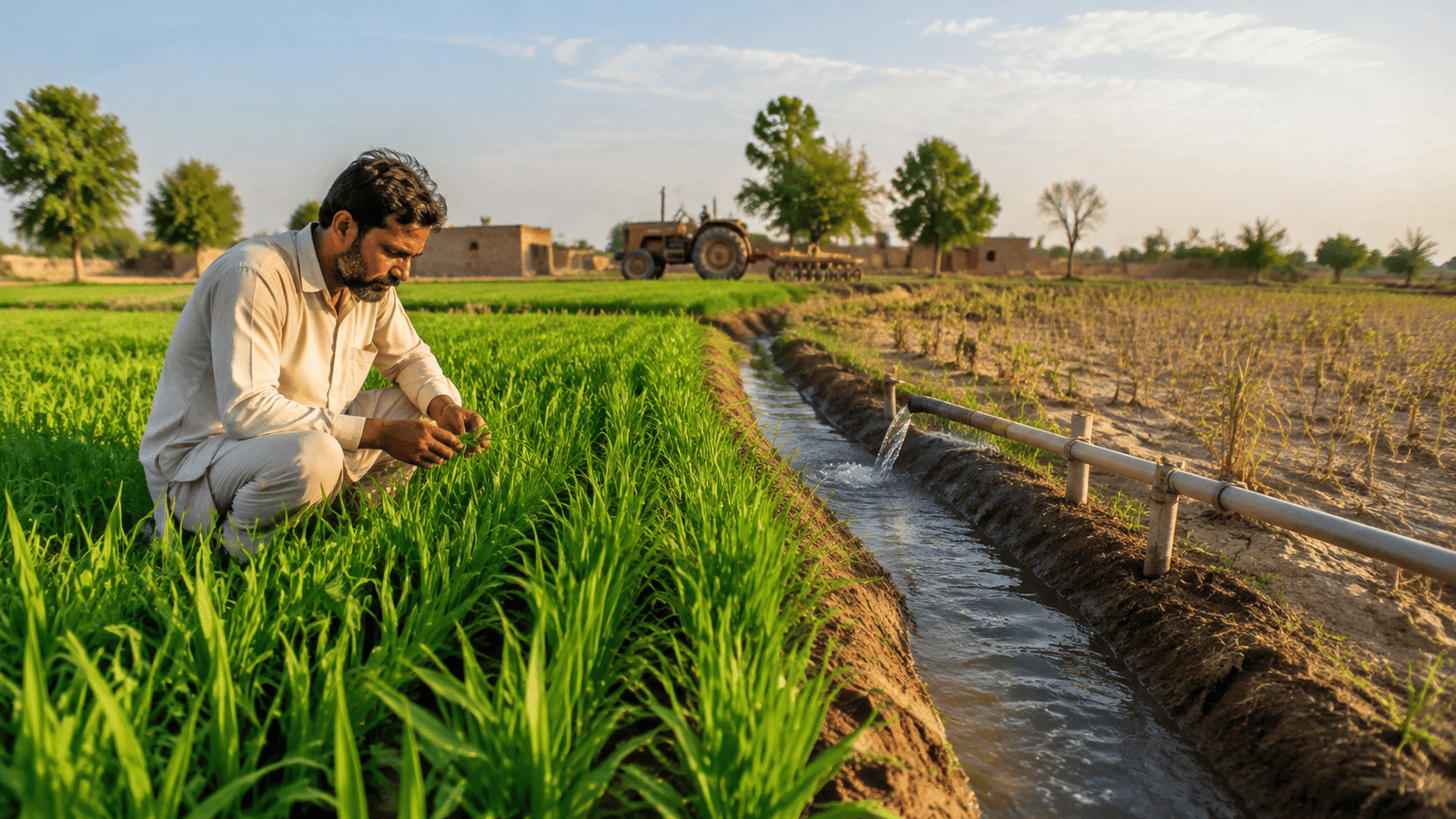
Deciding between irrigated farming and rainfed farming isn't really a question of which is objectively superior — it's a question of whether a farm's water access, soil, and budget can support the added infrastructure irrigation requires, and whether that investment pays off in more reliable yields. Irrigated farming reduces a farm's dependence on rainfall timing and can open up crop choices and cropping intensity that rainfed systems can't match, but it also brings real costs and risks that rainfed farming avoids entirely. This article lays out both sides.
| Factor | Irrigated Farming | Rainfed Farming |
|---|---|---|
| Water reliability | Controlled, scheduled by the farmer | Dependent on rainfall timing and volume |
| Yield stability | Generally more stable year to year | More exposed to drought and dry spells |
| Cropping intensity | Can support multiple crops per year where conditions allow | Usually limited to the rainy season |
| Upfront cost | Higher — infrastructure, pumps, energy | Lower — minimal water infrastructure |
| Ongoing cost | Higher — energy, maintenance, water fees | Lower — mainly labor and inputs |
| Environmental risk | Salinity, waterlogging, groundwater depletion if mismanaged | Lower water-related risk, higher drought-related yield risk |
The core advantage of irrigated farming is control: water can be applied when the crop needs it rather than whenever rainfall happens to occur. This matters most during a crop's most water-sensitive growth stages — germination, flowering, and grain or fruit fill — when a poorly timed dry spell under rainfed conditions can cut yield sharply even if total seasonal rainfall was adequate.
Because irrigated fields aren't waiting on rain to trigger germination or carry a crop through a dry week, crop establishment tends to be more consistent, and yields tend to vary less from year to year. Rainfed systems can still produce strong yields in good rainfall years, but they carry more year-to-year variability, since a single poorly timed dry spell can affect the whole season's outcome.
Reliable water access opens up crop choices that would be too risky under rainfed conditions, including crops with longer growing seasons or higher water demand during critical stages. It also supports multiple cropping — growing two or more crops in sequence on the same land within a year — where climate and rainfed water supply would otherwise limit farming to a single rainy-season crop. This depends on suitable climate and market demand for the additional crop, not just water availability.
Controlled water application also supports more precise farm planning generally — planting, fertilizing, and harvesting can be scheduled around the crop's needs rather than around unpredictable rainfall. Drip and micro-irrigation systems in particular support fertigation, applying fertilizer through the irrigation water in smaller, more frequent doses that can improve nutrient-use efficiency compared with broadcast fertilizing timed around rainfall.
Irrigated farms are better positioned to manage drought years, provided the water source itself remains available during the drought. This is an important caveat: irrigation reduces exposure to short-term rainfall variability within a season, but it does not eliminate risk if the underlying water source — a river, reservoir, or aquifer — is itself affected by prolonged drought or over-allocation.
Consistent water supply can improve crop uniformity and quality — more even sizing, fewer stress-related defects, and more predictable harvest timing, which can support better market access and pricing for some crops. Rainfed crops can achieve comparable quality in favorable rainfall years, but quality tends to be less consistent from season to season.
None of the benefits above come free. Irrigated farming requires infrastructure investment — pumps, pipes, or channels — along with ongoing energy costs to move water, plus regular maintenance. Poorly drained irrigated land is prone to waterlogging and salinity buildup over time, particularly in arid and semi-arid regions with high evaporation rates. Groundwater-fed irrigation, if used beyond the aquifer's recharge rate, can also deplete the resource that future seasons depend on. These are not hypothetical risks — they are well-documented consequences of irrigation systems that are mismanaged or over-extended relative to available water.
Irrigated farming tends to be worthwhile when several conditions hold at once: water is available in a sustainable, reliable quantity; the farm's soil drains adequately to avoid waterlogging and salt buildup; infrastructure and energy costs are manageable relative to the crop's value; and water quality is suitable for the crop being grown. Where any of these conditions is weak — for example, a shallow aquifer already near its sustainable extraction limit — the case for irrigation becomes much less clear cut, regardless of the yield benefits described above. Farmers weighing this decision should also review our guide to irrigation system types to understand the range of infrastructure options and costs involved.
No. Irrigated farming generally offers more reliable yields and broader crop choice, but it also carries higher infrastructure and energy costs, and can cause waterlogging or salinity if mismanaged. It's beneficial mainly where water is sustainably available and drainage is adequate.
Not entirely. Irrigation reduces exposure to short-term rainfall variability within a season, but if the underlying water source is affected by prolonged drought or over-allocation, irrigated farms remain at risk too.
Often yes, where climate and market conditions allow, since reliable water access removes one of the main constraints on multiple cropping. Rainfed systems are usually limited to a single rainy-season crop in many regions.
Mismanaged irrigation can lead to waterlogging, soil salinity buildup, and groundwater depletion, particularly in arid regions with high evaporation and limited drainage.
Generally yes in terms of upfront and ongoing costs — infrastructure, pumps, energy, and maintenance — though the actual return depends on crop value, yield stability gains, and local water and energy costs.
Irrigated farming offers real advantages over rainfed farming — steadier yields, broader crop choice, and better control over timing — but those benefits come bundled with infrastructure costs, energy demands, and environmental risks that rainfed systems simply don't carry. The decision comes down to whether sustainable water is available, whether the land drains well enough to avoid waterlogging and salinity, and whether the investment is justified by the crop being grown, not to any blanket claim that irrigation is the superior farming model in every setting.
Want more irrigated farming guidance delivered to your inbox every week?
Subscribe to Farmers AdvisoryData sources: FAO reports on irrigated versus rainfed agriculture and water management; USDA Economic Research Service irrigation and farm-water publications; university extension resources on irrigation costs, salinity, and drainage management. Figures represent general guidance; actual outcomes vary by region, crop, soil, and water source. Current as of August 6, 2026.