 Farmers Advisory
Farmers Advisory
Farmers Advisory
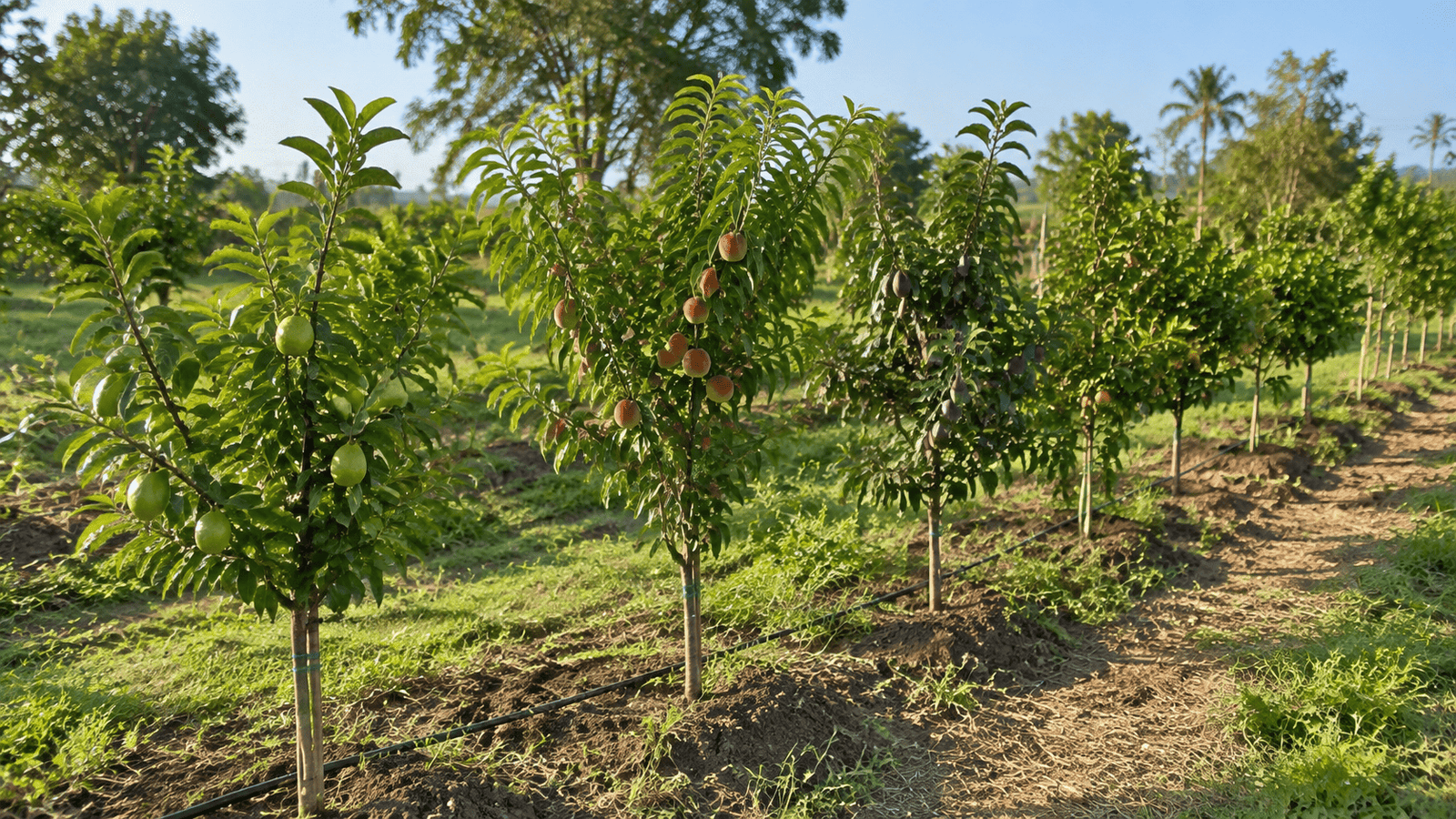
There's no single "best" fruit tree for a small farm — the right choice depends on your climate, available space, water access, and who you plan to sell to. What a small-acreage grower actually needs is a clear-eyed comparison of how different fruit trees stack up on the factors that matter: space per tree, time to first harvest, maintenance demands, and market appeal. This guide compares commonly grown fruit trees across those factors so you can match a crop to your specific farm rather than to a general "top fruit trees" list.
| Fruit Tree | Typical Space Need | Relative Time to First Fruit | Maintenance Level | General Market Demand |
|---|---|---|---|---|
| Apple (dwarf/semi-dwarf) | Moderate, high-density options available | Moderate | Moderate to high (pruning, thinning, pest pressure) | Consistently strong, many market channels |
| Peach / nectarine | Moderate | Relatively fast among tree fruit | High (pruning, disease and pest pressure) | Strong seasonal demand, short shelf life |
| Plum | Moderate | Relatively fast among tree fruit | Moderate | Solid regional demand |
| Pear | Moderate | Moderate to slower | Moderate, generally fewer pest issues than stone fruit | Steady, smaller niche than apples in many markets |
| Fig | Compact, container-friendly in cooler zones | Relatively fast | Low to moderate; cold protection needed outside warm zones | Growing niche/specialty demand |
| Citrus (orange, lemon, lime) | Compact to moderate | Moderate | Moderate; frost-sensitive outside warm climates | Strong where climate-appropriate |
| Mango | Large at maturity in warm climates | Slower among common fruit trees | Moderate; needs consistent warmth, frost protection | Strong in suitable climates and specialty markets |
| Cherry (sweet) | Moderate to large | Slower | High (rain-cracking, bird pressure, pruning) | Premium pricing, high demand where climate allows |
Table figures are general, relative comparisons for planning purposes only. Actual space needs, time to fruit, and maintenance vary by rootstock, variety, climate, and management — confirm specifics with a local nursery or extension office before planting. See our guide to how long fruit trees take to produce fruit for a closer look at timelines by species.
Space needs are driven far more by rootstock and training system than by species alone. A dwarf apple on a compact rootstock can be planted much more densely than a standard-rootstock tree of the same variety, letting a small farm fit substantially more trees — and more variety diversity — into the same acreage. Citrus and fig trees are naturally more compact than large stone fruit or mango trees at maturity, making them a reasonable fit for tighter spaces or even large containers in climates where they need winter protection.
Climate fit eliminates more options than any other single factor. Temperate fruit like apples, pears, cherries, and many plums generally need a cold dormancy period to flower and fruit properly, while citrus and mango are frost-sensitive and need consistently warm conditions. Soil requirements vary less dramatically between species, but nearly all fruit trees need well-drained soil — poor drainage is a common cause of failure across almost every fruit tree type listed here, not just one or two of them.
Stone fruit and citrus generally need consistent irrigation, particularly during fruit development, while fig trees are comparatively more drought-tolerant once established. Actual water demand for any species still depends heavily on local rainfall, soil type, and tree age, so these should be treated as general tendencies rather than fixed rules for irrigation planning.
Among commonly grown fruit trees, stone fruit like peaches and plums tend to bear their first fruit relatively sooner than pome fruit like apples and pears, which in turn are often faster than species like mango or sweet cherry. Rootstock plays a major role here too — dwarfing rootstocks generally bring trees into bearing sooner than standard rootstocks of the same variety. These are general tendencies, not fixed timelines; actual time to first fruit still depends on variety, rootstock, climate, and how well the tree is cared for in its early years.
Maintenance demands differ significantly by species. Peaches and cherries tend to need more intensive pruning, pest monitoring, and disease management than figs or many citrus varieties. New growers without extensive orchard experience may find lower-maintenance options like fig or certain pear varieties a more forgiving starting point, while higher-maintenance crops like stone fruit can still be worthwhile where the market supports the extra labor. Our guide to pruning fruit trees correctly and guide to protecting fruit trees from pests cover the ongoing care side of this comparison in more depth.
Yield potential generally increases as a tree matures, and mature yield figures vary too widely by variety, rootstock, spacing, and management to state as a single number here. Market demand is arguably more important than raw yield potential for a small farm — a crop with strong, confirmed local demand at a modest yield can outperform a higher-yielding crop with a weak or saturated local market. Apples and citrus tend to have broad, consistent market channels in suitable climates, while crops like fig or specialty stone fruit varieties often do best through direct or specialty channels rather than commodity wholesale.
For most small farms, semi-dwarf rootstocks offer a middle ground — meaningfully more compact than standard trees, without some of the more demanding support and lifespan tradeoffs of full dwarf rootstocks. The right choice still depends on the specific variety-rootstock combination and your local growing conditions, which is best confirmed with a reputable nursery or extension specialist.
This varies by climate, but fig and certain pear varieties are often considered comparatively lower-maintenance than stone fruit like peaches or cherries, which tend to need more intensive pest and disease management. Ease still depends heavily on your specific climate and soil.
This depends entirely on species, rootstock, and spacing — dwarf and high-density plantings can fit far more trees per acre than standard-rootstock trees of the same species. A nursery or extension specialist can recommend spacing for your specific variety-rootstock combination.
Among commonly grown fruit trees, stone fruit like peaches and plums, along with fig, tend to bear relatively sooner than pome fruit like apples and pears, though rootstock and growing conditions significantly affect the actual timeline for any given tree.
Both approaches are viable. Diversifying spreads weather and market risk across crops, while specializing allows deeper expertise and simpler equipment and labor planning. The right approach depends on your market access, labor capacity, and risk tolerance.
Many fruit tree varieties need a compatible pollinator variety to set fruit reliably, though some are self-fertile. Confirm pollination requirements for your specific varieties before planting, since this varies by species and even by cultivar within a species.
The most useful way to choose fruit trees for a small farm is to rule out anything that doesn't fit your climate and water access first, then weigh the remaining options against your available space, maintenance capacity, and — most importantly — a market you've actually confirmed exists. A tree that performs beautifully in a university trial three climate zones away isn't automatically the right choice for your specific farm. Working through the comparison factors above with a local nursery or extension agent will generally get you to a shortlist that's realistic for your conditions, rather than a generic "best fruit trees" list built for no farm in particular.
Want more fruit farming guides delivered to your inbox every week?
Subscribe to Farmers AdvisoryGeneral guidance referenced from publicly available university and government agricultural extension materials on fruit tree selection, rootstocks, and small-farm orchard planning. Space, timelines, and yield figures vary significantly by variety, rootstock, climate, and management — consult your local agricultural extension office for recommendations specific to your region. Current as of August 4, 2026.