 Farmers Advisory
Farmers Advisory
Farmers Advisory
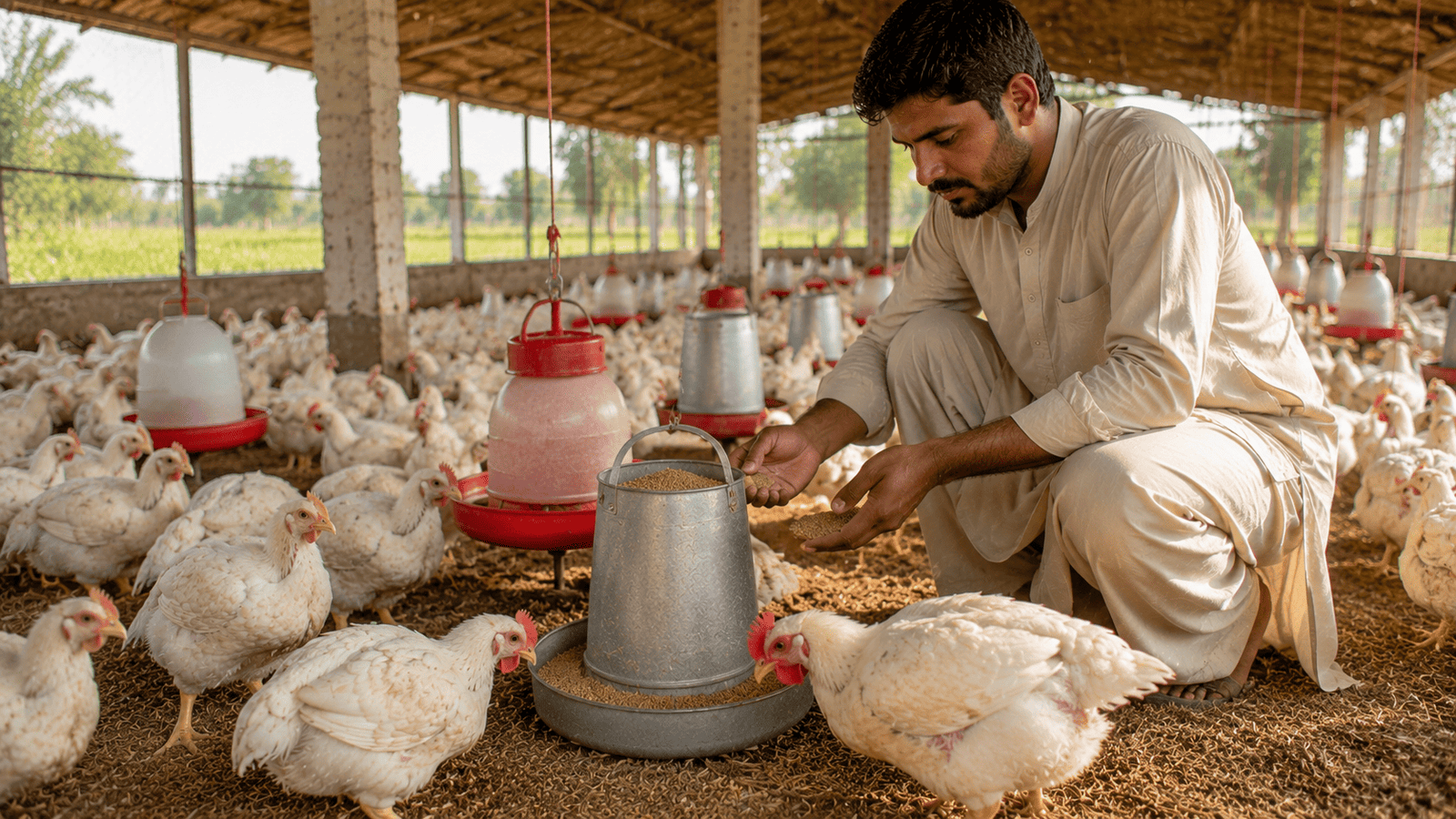
Standing in the feed aisle facing bags labeled starter, grower, finisher, medicated, and non-medicated can feel surprisingly high-stakes for a new poultry keeper — and the stakes are real. A chick isn't just a tiny chicken; it's in a short, intense growth phase where feed has a very specific job to do at each stage. This guide breaks down exactly how poultry feed for healthy growth should change from hatch to maturity in 2026, with the protein, energy, and calcium targets that actually matter at each phase.
| Stage | Crude Protein | Energy (kcal/kg) | Calcium | Av. Phosphorus |
|---|---|---|---|---|
| Starter | 22-24% | 3000-3050 | 0.9-1.0% | 0.45-0.50% |
| Grower | 20-22% | 3050-3150 | 0.8-0.9% | 0.42-0.45% |
| Finisher | 18-20% | 3150-3200 | 0.75-0.85% | 0.38-0.45% |
Ranges may vary slightly by source, breed, and production system.
Starter feed is formulated around 20-24% protein from hatch to roughly three to four weeks of age. Inadequate protein during this window can slow the muscle and skeletal development that defines this entire life stage, making it the least forgiving phase to underfeed.
As chicks enter the grower phase, protein needs decrease to roughly 18-22% (some guidance specifies 14-18% for slower-growing dual-purpose or pullet-raising programs). Growth continues rapidly, but the nutritional focus shifts toward bone strength and steady development rather than maximum early protein.
Finisher feed further reduces protein to 18-20% while increasing energy density through added fat sources, optimizing final weight gain and feed conversion as birds approach market weight.
Birds being raised toward egg production follow a different timeline than meat birds. Some layer programs keep pullets on a starter or starter-grower feed until around 18 weeks of age, only switching to layer feed (with its much higher calcium content) once birds are ready to begin laying — switching to high-calcium layer feed too early can actually harm skeletal development in young, non-laying birds.
A growing focus in 2026 poultry nutrition is early gut health support through organic acids and probiotics during the starter phase. Formic, lactic, citric, and butyric acids are increasingly included in starter formulations specifically to support gut microbiota establishment and early immune development, alongside easily digestible protein sources.
Beyond nutrient percentages on a label, physical feed quality affects real-world performance. Commercial feed quality protocols commonly include rapid mycotoxin screening, fat rancidity checks (targeting under 10 meq/kg), and starch digestibility measurements — useful benchmarks even for smaller operations sourcing feed from a mill or co-op.
| Bird Type/Age | Daily Feed (lbs) |
|---|---|
| Chick (0-4 weeks) | ~0.055 |
| Pullet (4-8 weeks) | ~0.15 |
| Layer hen (mature) | ~0.25 |
| Broiler (mature) | ~0.33 |
| Duck (mature) | ~0.40 |
Starter feed is typically formulated around 20-24% protein from hatch to about 3-4 weeks of age, supporting the rapid muscle and skeletal development that defines this life stage.
Most birds transition from starter to grower feed around 3-4 weeks of age, though layer-track pullets may remain on starter or starter-grower feed longer, sometimes until around 18 weeks.
Switching feed too early or too late can slow growth, stress birds, or create nutritional imbalances. High-calcium layer feed given to young, non-laying pullets can specifically harm skeletal development.
Grower feed (18-22% protein) emphasizes bone strength and steady growth, while finisher feed (18-20% protein, higher energy) optimizes final weight gain and feed conversion as birds approach market weight.
They're not strictly necessary but are increasingly used in starter feed formulations to support early gut microbiota establishment and immune development, particularly in modern 2026 poultry nutrition programs.
Healthy poultry growth depends on matching feed formulation to each life stage rather than treating "chicken feed" as one uniform product. Starter, grower, and finisher rations each serve a distinct purpose — and getting the protein, energy, and calcium targets right at each transition point does more for flock health and feed efficiency than almost any other single management decision. When in doubt, match feed to the bird's actual age and purpose, not just what's convenient to buy.
Want more poultry farming tips delivered to your inbox every week?
Subscribe to Farmers AdvisoryData sources: Farmonaut 2026 poultry feeding schedule guide (April 2026); Farmer Grows poultry feed formulation calculator (February 2026); PureGrubs chick starter feed ingredients guide (June 2026); Kreamer Feed grower feed guide (December 2025) and broiler feed breakdown (December 2025); ABC Machinery chicken feed formulation guide; Easy Chicken Poultry 3-phase broiler feed program guide; and Cedar Crest Farm and Feed hatch-to-harvest feeding guide (April 2026). Figures represent typical industry ranges and vary by breed, region, and production system. Current as of July 10, 2026.