 Farmers Advisory
Farmers Advisory
Farmers Advisory
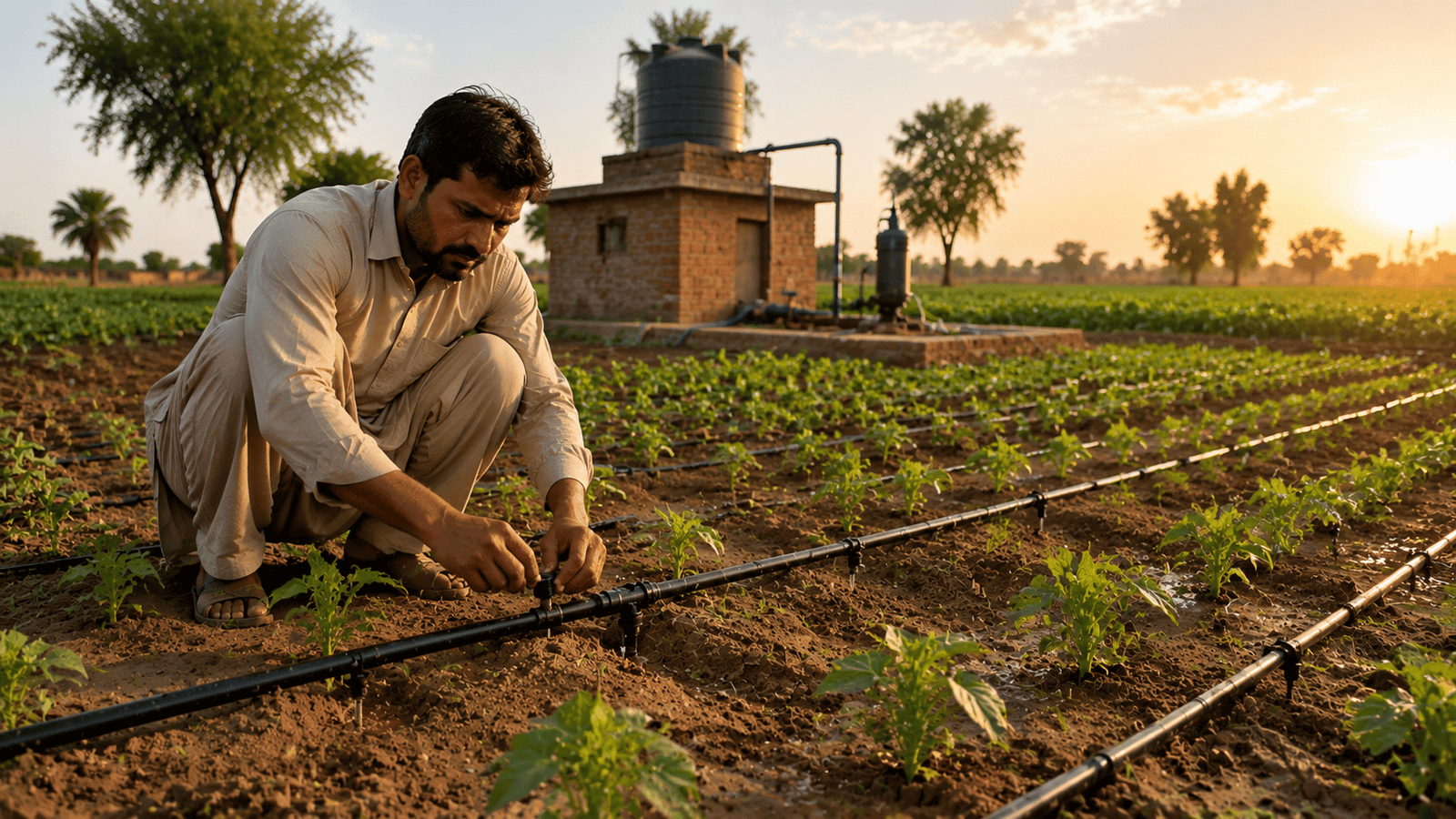
"Smart irrigation" covers a wide range of tools, from a simple soil moisture sensor that texts a reading to a phone, up to a fully automated system that adjusts valve timing on its own using weather forecasts. Not every farm needs the top end of that range. This guide walks through the smart irrigation technologies actually in use on modern farms today — how each one works, what it genuinely improves, where it falls short, and how to judge whether it's worth the cost on a given operation rather than assuming more technology is automatically better.
| Technology | What It Measures or Controls | Typical Best Fit |
|---|---|---|
| Soil moisture sensors | Water content at chosen root-zone depths | Any farm wanting data-driven scheduling |
| Weather stations | Temperature, humidity, wind, rainfall, solar radiation | Farms scheduling around evapotranspiration |
| Flow meters | Actual water volume delivered per zone | Farms tracking water use or billing by volume |
| Pressure sensors | System pressure at key points | Farms troubleshooting distribution problems |
| Automated valves | Zone on/off timing without manual operation | Multi-zone systems with frequent cycling |
| Smart controllers | Combines sensor and weather data into scheduling logic | Farms wanting less manual scheduling decision-making |
| Remote monitoring/mobile control | System status and control from a phone or computer | Larger farms or multiple dispersed fields |
| Satellite/remote sensing | Crop water stress or vegetation index across a field | Large-acreage or precision agriculture operations |
| Variable-rate irrigation | Different application rates within a single field | Fields with significant soil or elevation variability |
Soil moisture sensors measure water content directly in the root zone, using probes placed at one or more depths. Readings feed into scheduling decisions — either read manually or transmitted to a controller or phone app.
On-farm or regional weather stations track temperature, humidity, wind, solar radiation, and rainfall — the same inputs used to calculate reference evapotranspiration. Weather-based controllers use this data to adjust irrigation timing automatically as conditions change, rather than running a fixed schedule regardless of weather.
Flow meters track the actual volume of water delivered to a zone, while pressure sensors monitor system pressure at key points. Together they help confirm the system is delivering what it's supposed to, and flag problems like leaks or clogging before they show up as crop stress.
Automated valves open and close zones on a schedule without manual operation, while smart controllers combine sensor, weather, and scheduling data into automated decision logic.
Remote monitoring lets a farmer check system status, sensor readings, and alerts from a phone or computer, and in many systems make adjustments without a site visit.
Satellite and aerial remote sensing use vegetation indices and thermal imagery to estimate crop water stress across a field, without needing sensors physically placed in the ground.
Variable-rate irrigation applies different amounts of water across zones within a single field pass, based on known differences in soil type, elevation, or crop performance mapped ahead of time.
Some newer systems combine soil, weather, and crop data using machine-learning models to recommend or automate irrigation timing, aiming to improve on standard rule-based scheduling.
| Technology | Small Farm | Large Farm |
|---|---|---|
| Soil moisture sensors | Often worthwhile even at small scale | Worthwhile, typically deployed at multiple points |
| Weather-based scheduling | Worthwhile, especially via a shared regional station | Worthwhile, often with an on-farm station |
| Automated valves | Useful if managing several zones alone | Generally necessary for labor efficiency |
| Remote monitoring | Optional convenience | Valuable across dispersed or numerous fields |
| Satellite/remote sensing | Often unnecessary for a single small field | More justified at scale |
| Variable-rate irrigation | Rarely justified without significant field variability | Worthwhile on large fields with known variability |
Some of it is. Soil moisture sensors and weather-based scheduling tend to pay off even at small scale, while full automation, remote sensing, and variable-rate systems are usually more justified on larger or more variable operations.
It depends on the system. Some controllers operate locally and only need connectivity for remote monitoring, while others rely on cloud-based data processing that requires a stable connection to function fully.
It depends on the field's soil variability and size — a single sensor represents only its own location, so fields with variable soil types generally benefit from multiple sensor placements rather than one.
Not reliably. Sensor faults, connectivity gaps, and unusual conditions can all lead automated systems to a wrong recommendation, so periodic manual field checks remain a useful safeguard.
A basic timer runs a fixed schedule regardless of conditions. A smart controller incorporates live data — soil moisture, weather, or both — to adjust timing and volume as conditions actually change.
Results depend on the quality of the underlying data and the specific model — it isn't automatically superior in every situation. It works best as a supplement to sound field judgment rather than a full replacement for it.
Smart irrigation technology is genuinely useful when it solves a specific, real problem — knowing when soil is actually dry, catching a leak before it wastes a season's water, or managing dozens of zones without walking the whole farm daily. It becomes unnecessary overhead when it's adopted simply because it's available, on a farm too small or too uniform to need it. Start with the tools that give the clearest return — soil moisture sensing and weather-based scheduling — and add automation, remote sensing, or AI-assisted tools only once a specific gap justifies the added cost and complexity.
Want more precision irrigation and farm technology guides delivered to your inbox every week?
Subscribe to Farmers AdvisoryData sources: USDA Natural Resources Conservation Service, irrigation water management and technology guidance; university extension precision agriculture bulletins (University of Nebraska–Lincoln Extension, Texas A&M AgriLife Extension, Washington State University Extension); FAO guidance on irrigation scheduling and remote sensing applications in agriculture. Figures and recommendations represent general guidance and vary by farm scale, connectivity, and crop. Current as of July 10, 2026.