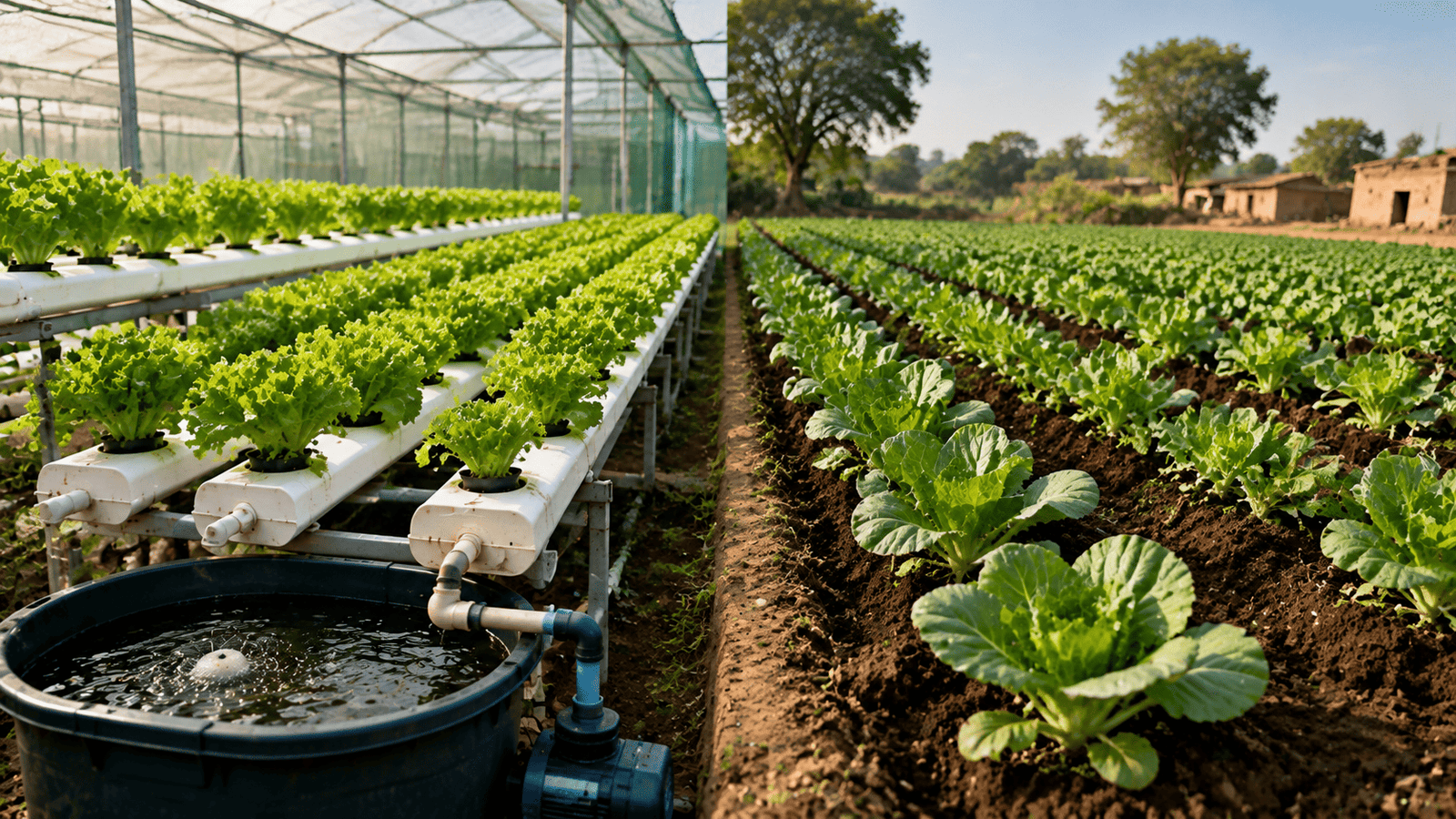
Best Vegetables to Grow Hydroponically: A Crop Comparison Guide (2026)
By Farmers Advisory Editorial Team ·
Published August 5, 2026 · Updated August 5, 2026 · 10 min read ·
Category: Hydroponic Farming
Not every vegetable performs equally well hydroponically — root size, light demand, and growth speed all affect how forgiving a crop is for a given system.
Some vegetables thrive in a hydroponic system with almost no fuss; others need more light, more
root space, or more troubleshooting patience than a beginner setup can comfortably provide. This guide
ranks the best vegetables to grow hydroponically in 2026 by difficulty, light and
nutrient demand, growth speed, and which system types actually suit them — so you can match your first
crops to your setup instead of the other way around.
Key Takeaways
Leafy greens like lettuce, spinach, and kale are the most forgiving hydroponic crops — fast growth, shallow roots, and lower light needs.
Fruiting crops like tomatoes, peppers, and cucumbers can be grown hydroponically but need considerably more light, larger root space, and more active management.
Not every vegetable performs equally well in every system — deep-rooted or heavy fruiting plants generally need more support than a basic DWC bucket provides.
Herbs are a strong beginner choice alongside leafy greens, particularly basil, which grows quickly and tolerates minor nutrient fluctuations.
Commercial-scale hydroponic operations favor leafy greens and herbs disproportionately because of their fast turnover and predictable space requirements.
Hydroponic Crop Comparison Table
Hydroponic Suitability by Crop (2026)
Crop
Difficulty
Light Needs
Growth Speed
Beginner Suitable
Lettuce
Very easy
Low-moderate
Fast
Yes
Spinach
Easy
Low-moderate
Fast
Yes
Kale
Easy
Moderate
Moderate
Yes
Arugula
Very easy
Low-moderate
Fast
Yes
Basil
Easy
Moderate
Fast
Yes
Other herbs (mint, cilantro)
Easy-moderate
Moderate
Fast
Yes
Cucumbers
Moderate
High
Moderate
With experience
Tomatoes
Moderate-hard
High
Slow to establish
With experience
Peppers
Moderate-hard
High
Slow to establish
With experience
Strawberries
Moderate
High
Slow to establish
With experience
💡 Quick Tip
Grow one easy crop successfully through a full cycle before adding a demanding fruiting crop to your system. It's much easier to diagnose problems with one variable at a time.
1. Leafy Greens (Easiest Overall)
Lettuce, spinach, kale, and arugula are consistently recommended as the best entry point into
hydroponics, and for good reason: their root systems stay relatively shallow and compact, they tolerate
minor pH and nutrient swings better than fruiting crops, and most varieties reach harvest size in a few
weeks rather than months.
Lettuce: the most commonly grown hydroponic crop worldwide, well suited to DWC, NFT, and drip systems alike
Spinach: fast-growing and cold-tolerant, though it can bolt (go to seed) quickly in warm, high-light conditions
Kale: more nutrient-hungry than lettuce but still manageable for beginners, with a longer harvest window since outer leaves can be picked repeatedly
Arugula: very fast-growing and tolerant, though its peppery flavor intensifies under stress such as high heat
2. Herbs
Herbs are a close second to leafy greens in beginner-friendliness and pair well with them in the same
system, since many share similar light and nutrient requirements.
Basil: fast-growing, high-value, and one of the most commonly paired herbs with hydroponic lettuce production
Mint: vigorous and tolerant, though its aggressive growth habit means it benefits from its own dedicated space
Cilantro: fast-growing but prone to bolting in heat, similar to spinach
3. Fruiting Crops (Tomatoes, Peppers, Cucumbers)
Fruiting vegetables are absolutely growable hydroponically — commercial greenhouse tomato and cucumber
production is hydroponic in many operations — but they demand more from a home setup than leafy greens do.
Significantly higher light requirements, generally needing supplemental grow lighting if grown indoors
Larger, more extensive root systems that need more space and support than a small net pot allows
Longer time to first harvest, meaning mistakes have more time to compound before you see the result
Often require trellising or staking as plants mature and set fruit
Nutrient needs shift noticeably between the vegetative and flowering/fruiting stages, requiring more active solution management
⚠️ Common Mistake
Assuming a tomato plant that struggled to establish will "catch up" on the same nutrient mix used for leafy greens. Fruiting crops generally need a different nutrient ratio once they move into flowering, and reusing a leafy-green formula can limit fruit set.
4. Strawberries
Strawberries can perform well in hydroponic systems, particularly vertical or tower-style setups that
make efficient use of space, but they're a moderate rather than beginner-easy crop. They're more sensitive
to nutrient balance during fruiting than leafy greens and take longer to establish before producing a
meaningful harvest.
5. Crops to Avoid as a First Attempt
Root vegetables (carrots, potatoes) are generally poor hydroponic candidates in typical home systems, since they need deep, stable growing medium that most beginner setups don't provide
Large vining crops like melons or squash need substantial space, support structures, and light that outgrow most first setups quickly
Any crop you're unfamiliar with growing in soil first — hydroponics changes root-zone management, but a plant's general light and temperature preferences carry over
6. Matching Crops to System Type
DWC: excellent for leafy greens and herbs; less ideal for large fruiting plants that need more root support and stability
NFT: well suited to fast-growing leafy greens grown in volume, since the shallow channel favors compact root systems
Drip systems: flexible enough for both leafy greens and fruiting crops, since medium and container size can be adjusted per plant
Wick systems: best reserved for small, low-demand herbs, since passive delivery can't keep pace with heavier feeders
Easy vs Demanding Crops
✅ Easy Crops (Leafy Greens, Herbs)
Fast harvest turnover, often within a few weeks
Tolerant of minor pH and EC fluctuations
Lower light requirements, workable with modest indoor lighting
Nutrient needs shift across growth stages, requiring closer monitoring
Frequently Asked Questions
What is the easiest vegetable to grow hydroponically?
Lettuce is widely considered the easiest hydroponic crop for beginners, thanks to its shallow root
system, fast growth, and tolerance for minor nutrient and pH fluctuations.
Can you grow tomatoes hydroponically at home?
Yes, but tomatoes are more demanding than leafy greens — they need more light, more root space,
and a nutrient mix that shifts as the plant moves into flowering and fruiting.
Are herbs good for hydroponic systems?
Yes. Herbs like basil, mint, and cilantro are generally beginner-friendly and often grown alongside
leafy greens in the same system due to similar light and nutrient needs.
Why don't root vegetables grow well hydroponically?
Root vegetables like carrots need deep, stable growing medium to develop properly, which most
standard hydroponic net pot or channel systems aren't designed to provide.
Do all hydroponic vegetables need the same nutrient solution?
No. Nutrient concentration and ratios vary by crop and growth stage — leafy greens and fruiting
crops in particular often need different nutrient formulations.
Conclusion
The best vegetables to grow hydroponically for a first attempt are the ones that forgive small
mistakes: lettuce, spinach, kale, arugula, and herbs like basil all reward consistency without demanding
perfection. Fruiting crops like tomatoes, peppers, and strawberries are entirely achievable hydroponically,
but they're a better second or third project once the fundamentals of pH, EC, and oxygenation feel routine
rather than a daily gamble.
Want more hydroponic farming guides delivered to your inbox every week?
General guidance referenced from university extension and controlled-environment agriculture programs,
including Cornell University's Controlled Environment Agriculture program, University of Arizona's
Controlled Environment Agriculture Center, and Purdue University Extension horticulture publications.
Crop performance varies by variety, system design, and environmental conditions. Current as of August 5, 2026.
 Farmers Advisory