 Farmers Advisory
Farmers Advisory
Farmers Advisory
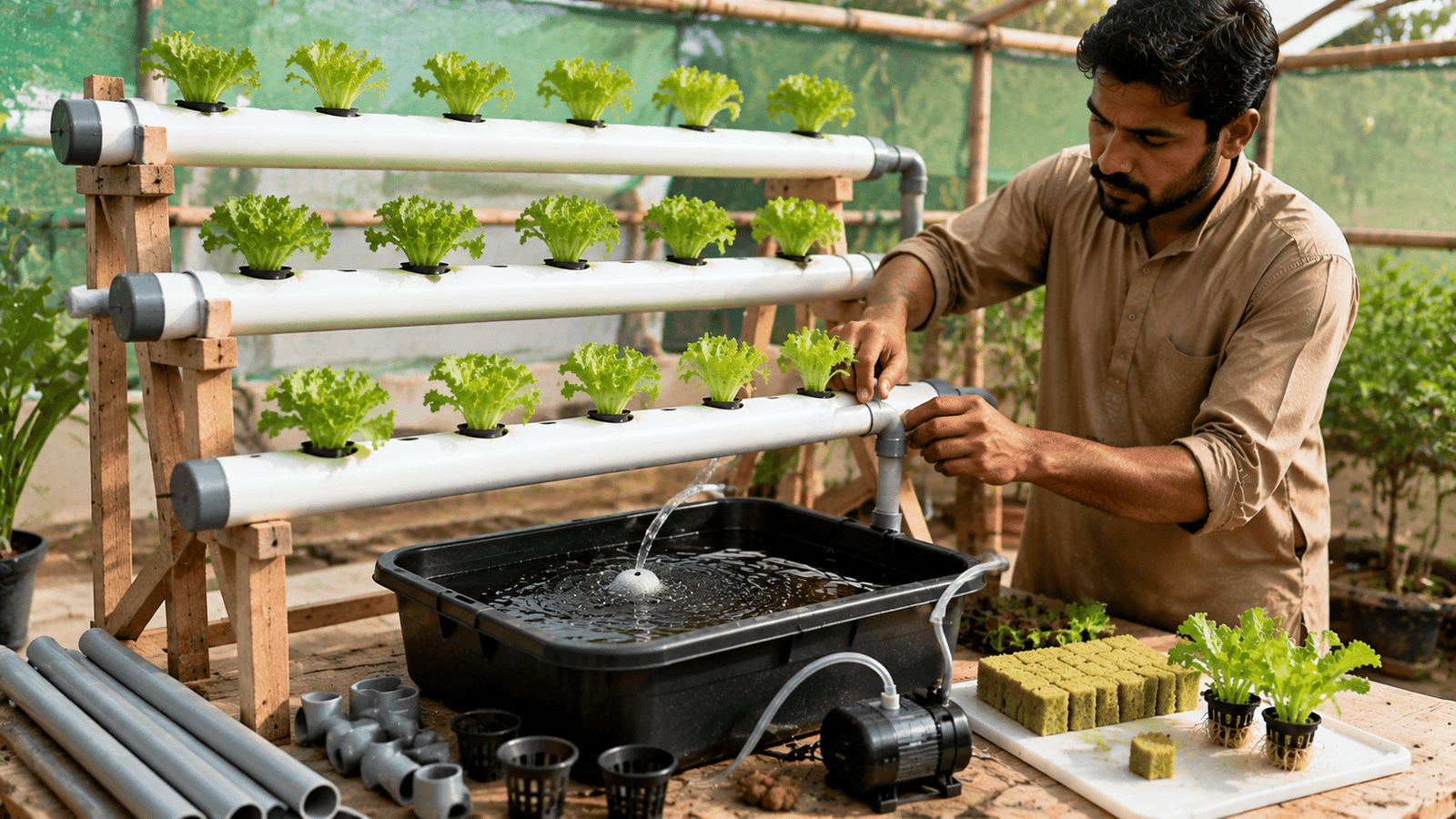
Every hydroponic grower eventually deals with wilting leaves, cloudy water, or a pump that's gone quiet. This guide walks through the most common hydroponic system problems in 2026 — root rot, algae, oxygen and temperature issues, pH and EC swings, equipment failures, and pest pressure — with the likely cause and fix for each, plus how to prevent it from recurring.
| Symptom | Likely Cause | Solution | Prevention |
|---|---|---|---|
| Brown, slimy roots | Root rot from low oxygen/warm water | Trim affected roots, increase aeration, cool reservoir | Maintain strong aeration and cooler water temperature |
| Green, cloudy water | Algae growth from light exposure | Clean reservoir, block light | Use opaque containers and light-blocking lids |
| Wilting despite full reservoir | Low dissolved oxygen or root damage | Check air pump/stones, inspect roots | Regularly test air stone output |
| Yellowing leaves | pH lockout or true nutrient deficiency | Test and correct pH first, then EC | Check pH/EC every 1-3 days |
| Leaf tip burn | Nutrient over-concentration (high EC) | Dilute solution, retest EC | Measure EC before adding more concentrate |
| No flow in NFT/drip lines | Pump failure or clogged line | Inspect pump, flush lines | Periodic line flushing and pump checks |
Symptoms: brown or slimy roots (healthy roots are typically white and firm), a foul odor from the reservoir, and wilting despite adequate water.
Likely cause: root rot is generally linked to low dissolved oxygen combined with warm water, which creates conditions favorable to root-rotting organisms.
Solution: trim visibly affected roots, increase aeration, and cool the reservoir if water temperature is elevated. In persistent cases, a full reservoir clean and system sanitation may be needed before replanting.
Prevention: maintain strong, consistent aeration and keep reservoir water on the cooler side, since warm water holds less dissolved oxygen and creates a more favorable environment for rot.
Symptoms: green, cloudy water; a slimy film on reservoir walls or tubing.
Likely cause: algae needs light to grow — clear reservoirs, tubing, or net pots that let light reach the nutrient solution create ideal conditions.
Solution: clean the reservoir and lines thoroughly, and switch to opaque or light-blocked containers going forward.
Prevention: block light from reaching the solution entirely — opaque reservoirs, covered lids, and light-proof tubing largely prevent algae before it starts.
Symptoms: wilting despite a full reservoir, slow growth, and increased susceptibility to root rot.
Likely cause: warm water holds less dissolved oxygen, and a failing or undersized air pump can't keep pace with the oxygen demand of a growing root system.
Solution: check air stones for clogging, verify the air pump is functioning at full capacity, and consider reservoir insulation or placement changes to reduce heat exposure.
Prevention: size air pumps appropriately for reservoir volume and plant count, and keep reservoirs out of direct, prolonged heat exposure.
Symptoms: inconsistent growth, leaf discoloration that doesn't match a clear nutrient pattern, and stalled development despite a seemingly adequate nutrient mix.
Likely cause: pH and EC both drift naturally as plants take up water and nutrients unevenly; infrequent monitoring lets this drift go uncorrected for too long.
Solution: test and correct in small increments, retesting after each adjustment rather than making one large correction.
Prevention: build pH and EC checks into a consistent routine — every 1-3 days for most home systems — rather than checking only when problems are already visible.
Symptoms: yellowing, leaf edge scorching, stunted growth, or unusual leaf coloring.
Likely cause: true nutrient deficiency or toxicity is possible, but incorrect pH locking nutrients out of availability is a very common alternative cause with nearly identical symptoms.
Solution: check and correct pH first; if symptoms persist at correct pH, review EC and consider whether the nutrient formulation matches the crop's current growth stage.
Prevention: consistent pH and EC monitoring, paired with a nutrient formula matched to the crop and growth stage.
Symptoms: no water movement in NFT or drip systems, silence from an air pump, or visibly still water in a DWC reservoir.
Likely cause: mechanical wear, power interruption, or a clogged line/air stone.
Solution: inspect and, if needed, replace the pump or air stone; flush clogged lines; verify power supply and connections.
Prevention: periodic inspection of pumps and lines, and where practical, a backup power or battery-powered air pump plan for outages.
Symptoms: visible insects, webbing, chewed leaves, or fungal growth on leaves or stems.
Likely cause: hydroponic systems avoid soil-borne pests but remain fully exposed to airborne pests (aphids, whiteflies, fungus gnats) and foliar disease, especially in humid indoor conditions.
Solution: isolate affected plants where possible, and use pest management appropriate for food crops in an enclosed growing environment.
Prevention: manage humidity and airflow around plants, and inspect new seedlings closely before introducing them to an established system.
Root rot is generally linked to low dissolved oxygen combined with warm reservoir water, which creates conditions favorable to root-rotting organisms.
Green, cloudy water is typically algae growth caused by light reaching the nutrient solution. Blocking light with opaque containers largely prevents it.
Not necessarily. Incorrect pH locking nutrients out of availability produces very similar symptoms to a true deficiency, so checking pH first is usually the faster diagnostic step.
In DWC systems especially, roots can lose meaningful oxygen within hours of aeration stopping, making pump failure one of the more time-sensitive problems to address.
Yes. Hydroponics avoids most soil-borne pests, but airborne pests like aphids and fungus gnats, and foliar disease in humid conditions, can still affect hydroponic crops.
Most hydroponic problems aren't mysterious once you know where to look — oxygen, pH, and equipment reliability explain the large majority of issues growers run into. A short daily visual check combined with regular pH and EC testing catches most problems while they're still easy fixes, well before they turn into a lost crop.
Want more hydroponic farming guides delivered to your inbox every week?
Subscribe to Farmers AdvisoryGeneral guidance referenced from university extension and controlled-environment agriculture programs, including Cornell University's Controlled Environment Agriculture program, University of Arizona's Controlled Environment Agriculture Center, and Purdue University Extension horticulture publications. Symptoms and causes can overlap, and diagnosis should account for specific system and crop conditions. Current as of August 5, 2026.