 Farmers Advisory
Farmers Advisory
Farmers Advisory
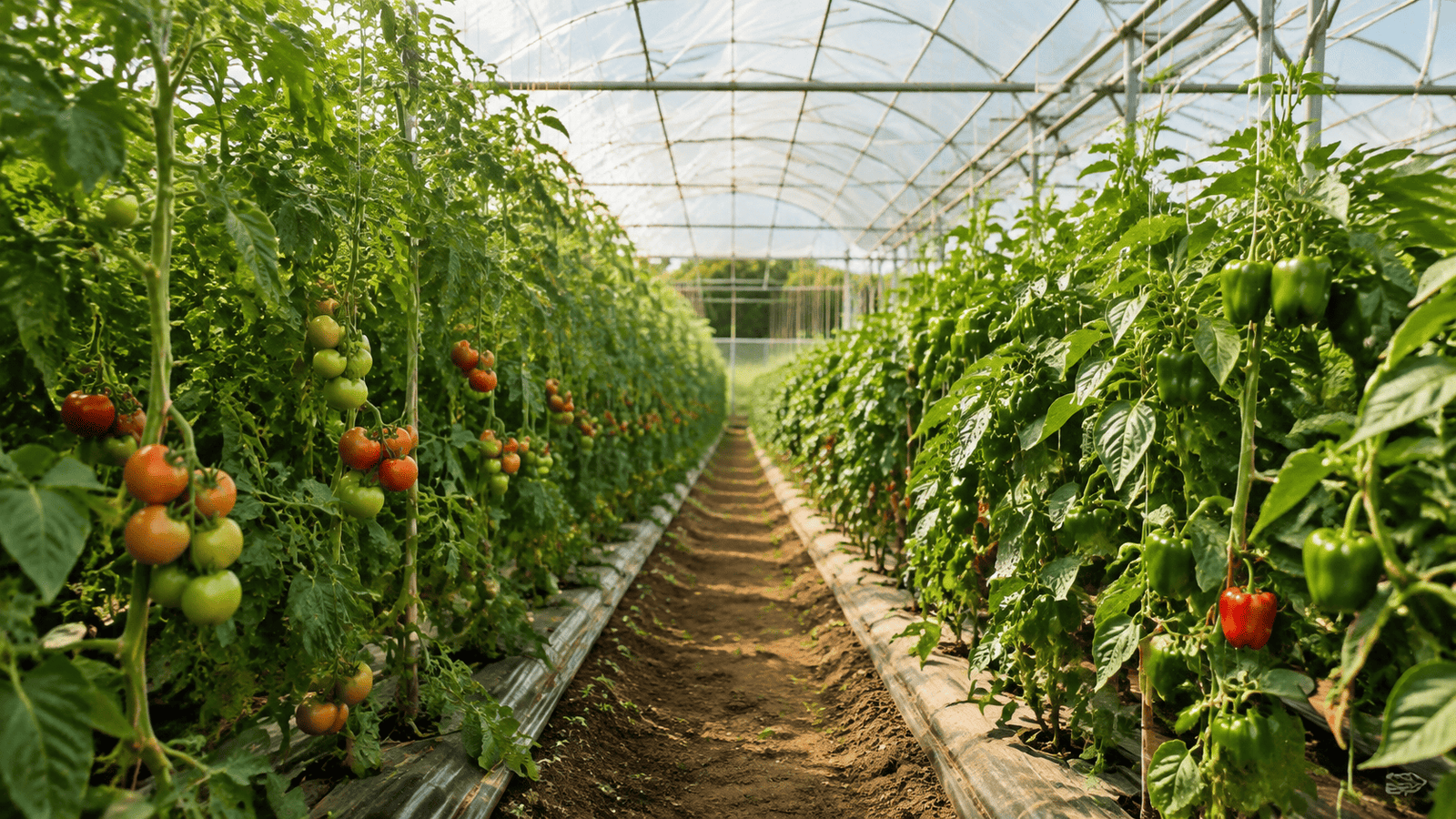
A greenhouse's biggest advantage — a controlled, protected environment — cuts both ways. Once a pest or pathogen gets established inside an enclosed structure, it can spread faster than it would in open air, with no wind or rain to disrupt it. The good news is that most greenhouse pest and disease management comes down to a manageable set of habits: sanitation, monitoring, and catching problems early, backed by integrated pest management rather than reflexive spraying. This guide covers prevention, the most common pests and diseases, and how to respond to each without creating new problems in the process.
Integrated Pest Management is a structured approach that combines prevention, monitoring, and a hierarchy of responses — starting with the least disruptive option and escalating only as needed, rather than defaulting straight to chemical treatment.
| Pest | Symptoms | Management Approach |
|---|---|---|
| Aphids | Curled leaves, sticky honeydew, clusters on new growth | Beneficial insects (ladybugs, lacewings), targeted treatment on hotspots |
| Whiteflies | Small white insects flying up when disturbed, yellowing leaves | Yellow sticky traps, screening, beneficial insects, prompt response since populations build quickly |
| Thrips | Silvery leaf streaking, distorted growth, tiny dark insects | Blue sticky traps, beneficial mites, sanitation of weeds and debris nearby |
| Spider mites | Fine webbing, stippled/speckled leaves, especially in dry conditions | Raising humidity slightly, predatory mites, avoiding water stress |
| Caterpillars | Chewed leaves and holes, visible frass (droppings) | Hand removal for low numbers, screening to prevent moth entry |
| Fungus gnats | Small flies near soil surface, larvae in overly wet growing media | Allow media to dry between waterings, remove decaying debris, sticky traps |
| Disease | Symptoms | Management Approach |
|---|---|---|
| Powdery mildew | White powdery patches on leaves and stems | Improve air circulation, reduce humidity, remove affected foliage |
| Botrytis (gray mold) | Gray fuzzy growth on flowers, fruit, or damaged tissue | Reduce humidity, remove infected material promptly, improve airflow |
| Damping-off | Seedlings collapse at the soil line shortly after emergence | Use clean growing media, avoid overwatering seedlings, ensure good drainage |
| Root diseases (root rot) | Wilting despite moist soil, discolored/mushy roots | Improve drainage, avoid overwatering, sanitize containers and tools |
| Bacterial diseases (various) | Water-soaked spots, wilting, or leaf lesions depending on pathogen | Remove infected plants, sanitize tools between plants, avoid overhead watering |
Many greenhouse disease problems are environmental at their root — the pathogen is often present at low levels regardless, and it's the conditions that determine whether it becomes a real problem.
Aphids and whiteflies are among the most commonly reported greenhouse pests, largely because enclosed, warm conditions let their populations build quickly once established.
Yellow sticky traps help monitor and reduce adult populations, screening on vents and doors limits new entry, and beneficial insects like parasitic wasps can provide biological control. Early response matters, since whitefly populations build quickly.
Powdery mildew is generally linked to humidity and airflow conditions. Improving air circulation, managing humidity, and removing already-affected foliage typically reduces recurrence more effectively than treatment alone.
Organic-labeled products still require following label directions carefully — they are not automatically harmless to beneficial insects, pollinators, or people. Treat them with the same care as any crop protection product.
IPM is a structured approach combining prevention, monitoring, and a hierarchy of responses — starting with the least disruptive options like sanitation and beneficial insects, and escalating to targeted treatment only when needed.
Yes, in some cases. The enclosed, stable environment that benefits crops can also let pest populations build without the natural disruption of wind, rain, and outdoor predators, which is why early monitoring matters so much in greenhouse settings.
Greenhouse pest and disease management is less about finding the perfect treatment and more about building habits that prevent problems from establishing in the first place: clean tools and debris removal, regular inspection, and humidity and airflow management that make your structure less hospitable to the pathogens that thrive in it. When intervention is genuinely needed, IPM's layered approach — starting light and escalating only as necessary — protects both the crop and the beneficial organisms working alongside your management. Most recurring problems trace back to an environmental condition worth fixing, not just a pest or pathogen worth spraying.
Want more greenhouse farming guidance delivered to your inbox every week?
Subscribe to Farmers AdvisoryGeneral pest and disease management framework informed by publicly available horticultural extension guidance on integrated pest management and greenhouse crop protection. Specific pesticide products, application rates, and beneficial-insect release rates are intentionally omitted — consult a local agricultural extension service or licensed crop advisor for treatment decisions specific to your crop and region. Current as of August 5, 2026.