By Farmers Advisory Editorial Team ·
Published August 4, 2026 · Updated August 4, 2026 · 10 min read ·
Category: Vegetable Farming
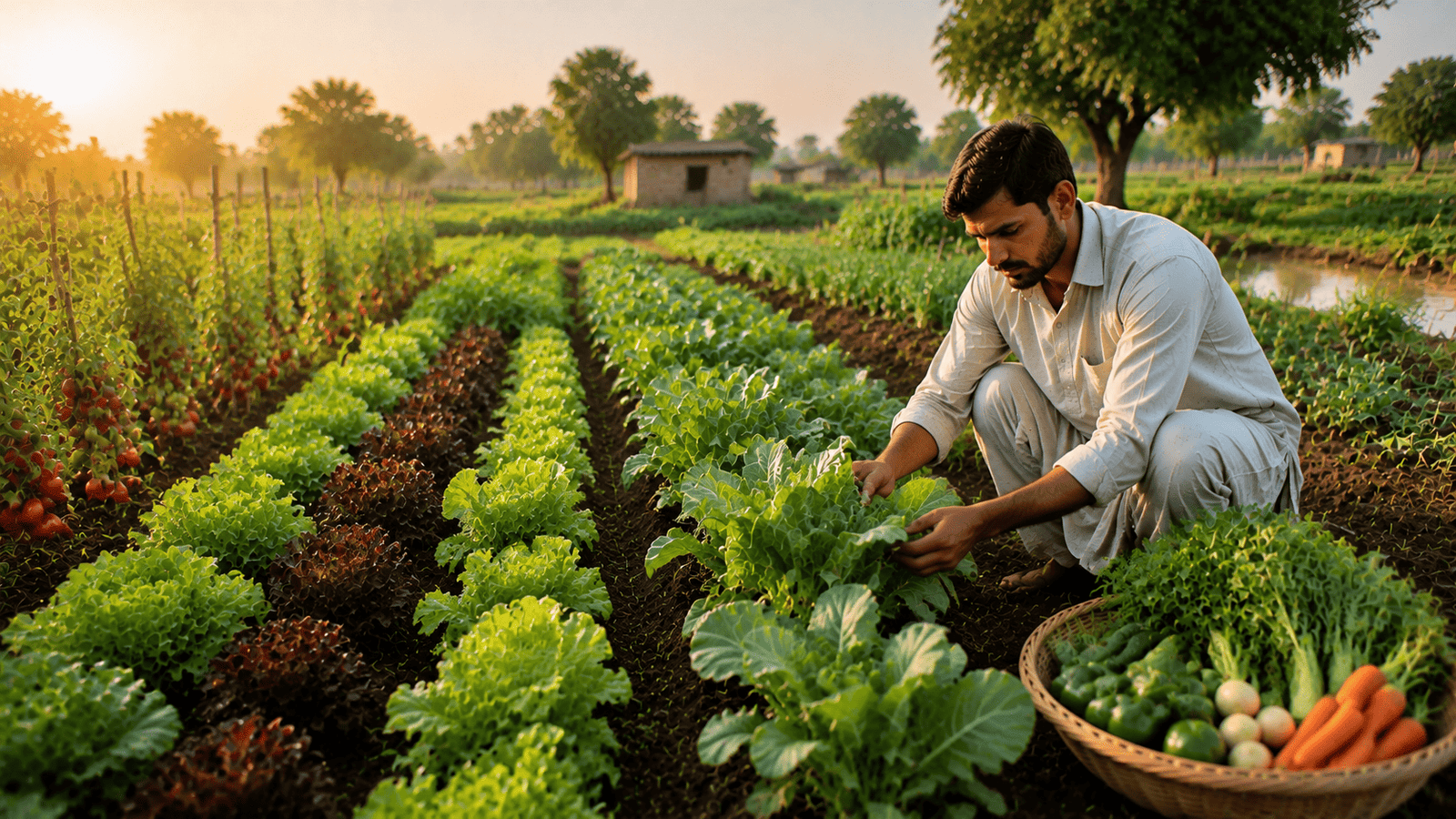
A small, intensively managed bed routinely outproduces a much larger traditional row planted once and left alone for the season.
Most gardens leave yield on the table not because of poor soil or bad luck, but because they're
planted once in spring and left to run their course. The techniques that separate an average harvest
from an exceptional one are less about growing bigger plants and more about growing more crops,
closer together, back to back, all season long. This guide covers practical
high-yield vegetable farming techniques for 2026 — intensive spacing, raised beds,
succession planting, interplanting, and irrigation that keeps it all consistent.
Key Takeaways
Raised beds let growers control soil quality, drainage, and spacing precisely — the exact variables that separate a mediocre harvest from an exceptional one.
Succession planting, or replanting a space as soon as one crop is harvested, is one of the most underused high-yield techniques — most gardeners plant once in spring and consider the season finished after the last tomato.
Square foot gardening assigns plant counts per square foot based on mature size rather than traditional row spacing — for example, one tomato plant, four lettuce plants, or sixteen carrots per square foot.
Intensively planted beds dry out faster than traditional rows, making consistent irrigation — typically drip or soaker hose — essential rather than optional for high yield.
Refreshing soil with 2-3 inches of compost between plantings is necessary to sustain fertility when a bed is producing two or three crops in a single season instead of one.
High-Yield Techniques at a Glance
Core High-Yield Techniques and What They Solve
Technique
What It Improves
Raised beds
Soil quality, drainage, and precise spacing control
Square foot / wide-row spacing
Plants per square foot without overcrowding
Succession planting
Continuous harvest instead of one seasonal glut
Interplanting
Using space between slow-maturing crops for fast ones
Vertical growing
Usable growing area on climbing/vining crops
Drip irrigation
Consistent soil moisture in densely planted beds
1. Raised Beds: The Foundation of Intensive Growing
Intensive planting depends on deep, fertile, well-drained soil, which raised beds make possible
even on a site with poor native soil.
Build beds at least a foot above the surrounding ground level, filled with a blend of quality topsoil, compost, and drainage-improving material
Keep beds no wider than 3-5 feet so the center is reachable from either side without stepping into the growing area and compacting soil
Keep beds no longer than a comfortable walking distance around, rather than a length that tempts gardeners to cut across the planting area
Raised beds warm up faster in spring than in-ground soil, effectively extending the usable growing season on both ends
2. Square Foot and Wide-Row Spacing
Traditional row spacing is designed around mechanical cultivation equipment, not maximum yield per
square foot — intensive methods space plants by their actual mature canopy size instead.
Divide beds mentally (or physically with string) into one-foot squares, then assign a plant count per square based on mature size rather than seed packet row spacing
As a rough guide: one tomato or pepper plant, four lettuce plants, or up to sixteen radishes or carrots per square foot, depending on the variety's spread
Wide-row planting — several rows spaced closely together rather than widely separated single rows — shades out weeds and uses bed space that would otherwise sit as bare walking paths
Avoid overcrowding beyond these guides — plants spaced too tightly compete for light and airflow, which increases both reduced yield and disease pressure
💡 Quick Tip
Assign plant spacing based on the crop's mature canopy width, not the size of the seedling or seed packet spacing meant for field rows. A packet's row-spacing number is built for tractor equipment, not for the tighter geometry of an intensive bed.
3. Succession Planting
⚠️ Common Mistake
Planting a bed once in spring and treating the season as finished once the first crop is harvested. Leaving a harvested bed empty for the remaining weeks of a growing season is one of the biggest yield losses in home vegetable gardening — and it's also one of the easiest to fix.
Replant a space as soon as a crop finishes, rather than leaving the bed idle — early cabbage or broccoli followed by snap beans or summer squash is a common pairing
Replace spring lettuce, radishes, and spinach with a second planting of carrots, beets, or a fall crop of the same greens once summer heat passes
Clear all weeds and old crop residue and refertilize before each new planting, treating it with the same soil preparation as an early spring bed
Stagger plantings of fast crops like lettuce and radishes every two to three weeks for a steady, continuous harvest rather than one large glut
4. Interplanting and Companion Planting
Interplanting places two or more crops with different maturity speeds in the same space — fast radishes tucked between slower-maturing chard, for instance, are harvested and cleared before the chard needs the room
Companion planting pairs crops that benefit each other — beans fixing nitrogen for a neighboring corn planting, or basil planted near tomatoes, are commonly cited combinations
Choose space-saving, compact, or bush varieties of naturally sprawling crops like cucumbers and squash to fit more productive plants into the same footprint
5. Vertical Growing
Train vining crops — cucumbers, pole beans, indeterminate tomatoes, and some squash — up a trellis, cage, or netting instead of letting them sprawl across the bed
Vertical growing multiplies usable growing area within the same footprint, since the crop's canopy occupies airspace rather than ground space
Elevated fruit also stays cleaner and drier than fruit resting on soil, which reduces rot and some fungal disease pressure as a secondary benefit
6. Consistent Irrigation
Densely planted beds dry out faster than traditional, more widely spaced rows, since more roots are competing for the same soil volume
Drip irrigation or soaker hoses deliver water directly to the root zone, keeping moisture consistent across a bed in a way hand watering rarely matches
Consistent moisture directly supports higher, more even yield — irregular watering is a common cause of reduced yield and fruit disorders in intensively planted crops, tomatoes especially
Set irrigation up before the season starts rather than retrofitting it later, since intensive beds get harder to access for hose placement once fully planted
7. Soil Renewal Between Plantings
A bed producing two or three crops per season draws down nutrients far faster than one planted once — refresh soil with 2-3 inches of compost between major plantings to sustain fertility
Add amendments a month or more before planting where possible, giving nutrients time to disperse through the soil before roots need them
Rotate crop families through beds season to season even within an intensive system, to limit the buildup of family-specific soil diseases and pests
8. Harvest Frequency and Variety Choice
Harvest regularly rather than letting mature produce sit on the plant — many vegetables, from beans to summer squash, signal the plant to keep producing only when fruit is picked promptly
Choose high-productivity varieties suited to the space — cherry or grape tomatoes, for example, often out-produce large slicing varieties per plant in a small footprint
Favor crops that offer repeat harvests over a single-harvest crop occupying the same space for an entire season, when space is the limiting factor
Frequently Asked Questions
What's the single most effective technique for increasing vegetable yield in a small space?
Succession planting is often the most underused and highest-impact technique — replanting a bed
as soon as a crop is harvested rather than leaving it idle for the rest of the season keeps
productivity continuous instead of limited to one seasonal harvest.
How close can I really plant vegetables in an intensive bed?
Spacing should be based on each crop's mature canopy size, not traditional row spacing built for
mechanical cultivation. As a rough guide, one tomato plant, four lettuce plants, or up to sixteen
radishes can share a single square foot, depending on the variety.
Do raised beds actually increase yield, or just make gardening more convenient?
Both. Raised beds give precise control over soil quality, drainage, and spacing — the same
variables that limit yield in poor native soil — and they warm up faster in spring, effectively
extending the growing season.
Is drip irrigation necessary for intensive vegetable gardening, or is hand watering enough?
Densely planted beds dry out faster than traditional rows and are harder to water evenly by hand.
Drip irrigation or soaker hoses deliver more consistent moisture, which directly supports higher and
more even yield.
How do I keep soil fertile when I'm growing two or three crops in the same bed each season?
Refresh the bed with 2-3 inches of compost between major plantings, and add amendments a month or
more ahead of planting where possible so nutrients have time to disperse through the soil.
Conclusion
High-yield vegetable farming isn't about a single trick — it's the compounding effect of several
simple habits working together: raised beds that give control over soil and spacing, plants placed by
mature size instead of habit, a bed replanted the moment it's cleared instead of left idle, and
irrigation and soil renewal consistent enough to support all of it. None of these techniques require
more land, only a shift from planting once a season to treating every square foot as productive
space for as many weeks of the year as the climate allows.
Want more vegetable farming tips delivered to your inbox every week?
Data sources: University of New Hampshire Extension, Intensive Vegetable Gardening; Harvest to
Table, Intensive Planting in the Vegetable Garden; French intensive gardening historical overview;
and current 2026 grower guidance from ECOgardener, FarmstandApp, and Anleolife on intensive raised-bed
techniques. Figures and spacing guidance represent general practice and vary by crop variety, climate,
and bed conditions. Current as of August 4, 2026.
 Farmers Advisory