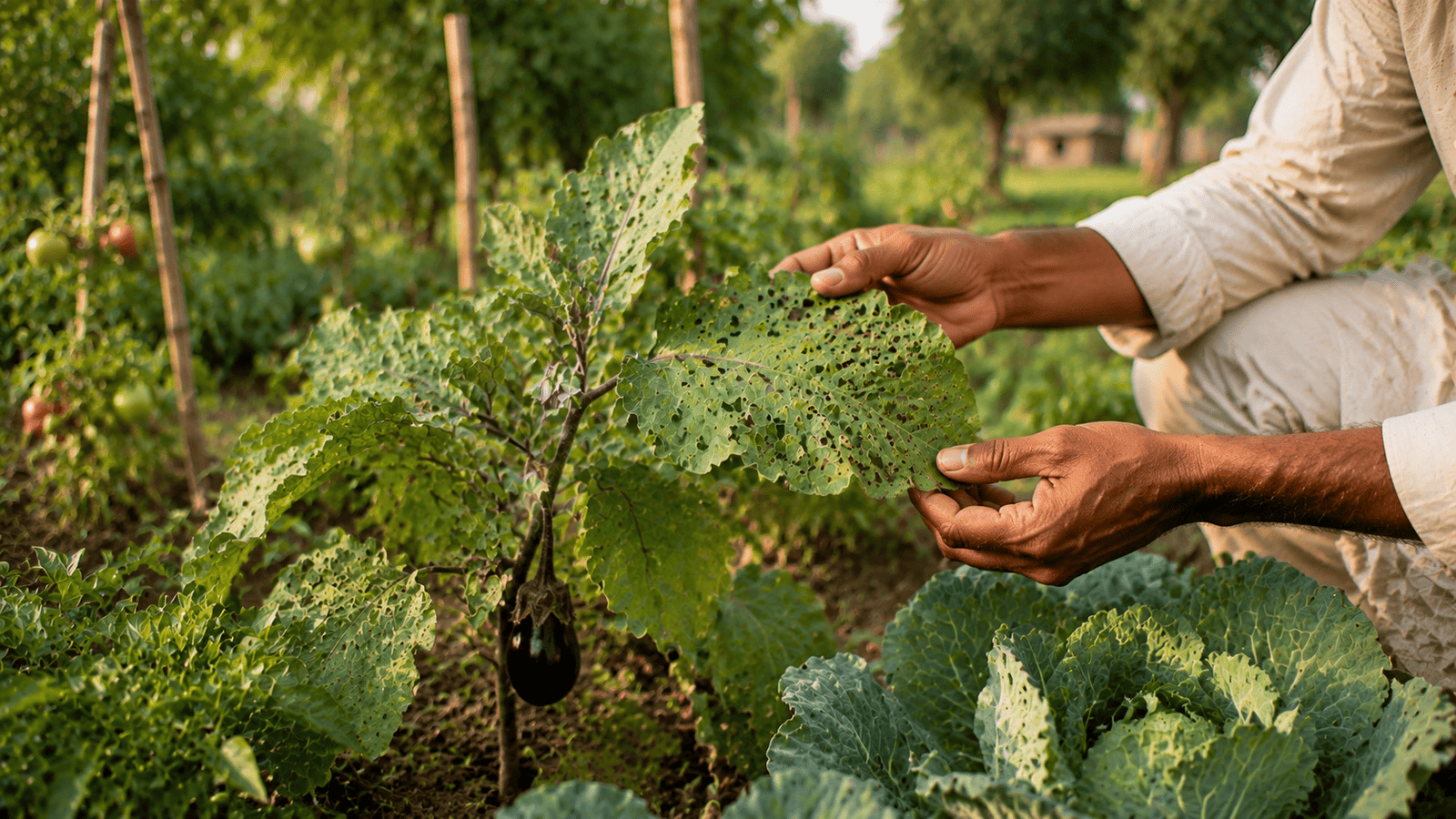
How to Improve Soil Fertility for Vegetable Crops (2026)
By Farmers Advisory Editorial Team ·
Published August 4, 2026 · Updated August 4, 2026 · 11 min read ·
Category: Vegetable Farming
Fertile vegetable soil isn't built with a single bag of fertilizer — it's built over seasons, through organic matter, tested pH, and nutrients matched to what's actually missing.
Vegetable gardens ask more of soil than almost any other planting, since the ground is disturbed
and replanted every single year. Left unmanaged, that steady disturbance drains organic matter and
nutrients faster than most soils can naturally replace them. This guide covers how to
improve soil fertility for vegetable crops in 2026 — starting with a soil test, then
building organic matter, correcting pH, and applying nutrients based on what your soil actually
needs rather than guesswork.
Key Takeaways
A soil test, repeated roughly every three years, is the only reliable way to know whether your soil actually needs more nutrients or organic matter — adding compost blindly can just as easily create an imbalance as fix one.
Most vegetables perform best at a soil pH of 6.0-6.8; outside that range, nutrients already in the soil become chemically locked up and unavailable to roots regardless of how much fertilizer is added.
Compost improves soil structure, water retention, and nutrient-holding capacity, but research shows cover crops often add more to soil organic matter over time than a single compost application.
Legume cover crops can add meaningful nitrogen to soil, with studies showing organic matter increases ranging roughly from 8% to well over 100% depending on species and conditions.
Nitrogen and potassium deficiencies typically show up on older, lower leaves first, since both nutrients move from mature to new growth inside the plant — a useful clue when diagnosing problems in the field.
Nutrient Deficiency Quick Reference
Common Macronutrient Deficiency Signs in Vegetable Crops
Nutrient
Where Symptoms Appear First
Typical Signs
Nitrogen (N)
Older, lower leaves
Overall pale yellow-green color, stunted growth
Phosphorus (P)
Older, lower leaves
Dark green or purple leaf color, delayed maturity, puckering
Potassium (K)
Older, lower leaves
Brown scorched leaf margins, underdeveloped or yellow-patched fruit
Iron (Fe)
New growth
Yellowing between leaf veins while veins stay green (often a high-pH symptom, not true deficiency)
Nitrogen, phosphorus, and potassium are all mobile within the plant, which is why deficiency
symptoms typically show up on the oldest leaves first — the plant moves what little it has toward new
growth. Micronutrient deficiencies like iron behave the opposite way, appearing on new growth instead.
1. Start With a Soil Test
Guesswork is the single biggest reason fertilizer and compost programs underperform. A lab soil
test is inexpensive relative to a season of fertilizer and tells you exactly what your soil has too
much or too little of.
Test every two to three years for an established vegetable garden, or before breaking new ground for the first time
A standard test reports pH along with nitrogen, phosphorus, potassium, and often secondary nutrients like calcium and magnesium
Compost and manure should also be tested periodically, since their nutrient content varies significantly by source and can throw off a fertility plan built on generic assumptions
Use your local cooperative extension office, which typically offers low-cost testing along with guidance on interpreting results for your specific crops and region
💡 Quick Tip
Take soil samples from several spots across the garden and mix them together before sending in a single sample — this averages out normal variation and gives a far more useful result than testing one small patch.
2. Correct Soil pH First
Soil pH controls how available nutrients are to plant roots, which is why it's worth correcting
before investing heavily in fertilizer or compost.
Most vegetables grow best in a pH range of roughly 6.0-6.8, where the majority of nutrients remain chemically available
Below pH 6.0, nitrogen, phosphorus, and potassium become progressively less available, and aluminum or manganese can rise to levels that damage roots
Above pH 7.5, phosphorus and several micronutrients — including iron, zinc, and manganese — become locked up again, often showing up as the interveinal yellowing typical of iron deficiency
Lime raises pH in acidic soil; elemental sulfur lowers pH in alkaline soil — a soil test will specify the actual rate needed rather than a generic amount
3. Build Organic Matter With Compost
Organic matter is one of the clearest indicators of soil fertility and resilience, improving
structure, water retention, and the soil's capacity to hold nutrients rather than lose them to
leaching.
Spread 1-3 inches of finished compost over the bed and work it into the top 6-8 inches of soil
Compost tends to have the largest effect on total, stable soil carbon, building fertility that persists over years rather than a single season
Well-composted manure works similarly, but avoid fresh manure, which can carry pathogens and introduce weed seed directly into the bed
A fall leaf mulch of 1-2 inches also adds organic matter and suppresses winter weeds, though leaves alone decompose quickly and contribute less lasting organic matter than a finished compost application
4. Use Cover Crops Between Plantings
Cover crops planted in the off-season protect bare soil from erosion and add biomass, often
outperforming a single compost application when it comes to building long-term soil biology and
nutrient cycling.
Legume cover crops such as vetch or winter peas can add substantial nitrogen and have been shown to raise soil organic matter anywhere from roughly 8% up to well over 100%, depending on species and site conditions
Non-legume cover crops like cereal rye or brassicas contribute smaller organic matter increases, typically in the range of 4-62%, but excel at scavenging leftover nutrients and suppressing weeds
Cut and incorporate cover crops before they set seed, giving the residue several weeks to break down before the next vegetable planting
Research on intensive vegetable systems suggests frequent cover cropping can improve nutrient availability and yield even more than compost alone over time
⚠️ Common Mistake
Adding compost or manure every season regardless of what a soil test says. Over-application, particularly of phosphorus-rich composts and manures, can build up nutrient levels to the point where they block the plant's uptake of other nutrients entirely — creating a deficiency by adding too much of something else.
5. Apply the 4Rs of Fertilizing
Once organic matter and pH are addressed, fertilizer decisions come down to a simple framework
used across commercial and home vegetable production alike.
Right source: match the fertilizer type — organic or synthetic, fast- or slow-release — to what the crop and soil test actually call for
Right rate: apply the amount the crop needs based on soil test results, not a flat, generic dose
Right time: supply nutrients when the crop can use them, such as a starter application at transplanting and a side-dress once fruit sets
Right place: place fertilizer where roots can access it, typically banded near the row rather than broadcast and left on the surface
6. Rotate Crops to Protect Fertility
Different vegetable families draw on nutrients differently — heavy feeders like tomatoes and brassicas deplete soil faster than lighter feeders like root crops and legumes
Rotating a nitrogen-fixing legume crop, such as beans or peas, through a bed helps rebuild nitrogen that heavy feeders draw down
Avoid replanting the same crop family in the same soil for at least two to three years, which also limits the buildup of crop-specific soil diseases and pests alongside fertility loss
7. Reading Nutrient Deficiency Signs in the Field
Between soil tests, visual symptoms can flag a developing problem early, though they should
prompt a soil test to confirm the cause rather than a fertilizer purchase on sight alone.
Pale, overall yellow-green color with stunted growth on older leaves usually points to nitrogen shortage
Dark green or purplish older leaves with delayed maturity often signal phosphorus deficiency, which is worsened by cold, wet soil or planting too early in the season
Brown, scorched leaf margins on older leaves, paired with underdeveloped fruit, typically indicate potassium deficiency
Yellowing between the veins of new leaves, with the veins themselves staying green, is the classic sign of iron deficiency — frequently a symptom of high soil pH rather than an actual shortage of iron in the soil
Frequently Asked Questions
How often should I test my vegetable garden's soil?
Roughly every two to three years for an established garden, and before planting for the first
time in new ground. Your local cooperative extension office typically offers low-cost testing and
help interpreting the results.
What's the ideal soil pH for most vegetables?
Around 6.0-6.8 for most vegetable crops. Outside that range, nutrients already present in the
soil become less chemically available to roots, regardless of how much fertilizer is applied.
Is compost or a cover crop better for improving soil fertility?
They work differently and complement each other. Compost tends to build stable, long-term soil
carbon, while cover crops — especially legumes — often add more nitrogen and short-term nutrient
cycling. Many growers use both in rotation.
Can adding too much compost or manure hurt vegetable soil?
Yes. Repeated applications without testing can build up phosphorus and other nutrients to levels
that interfere with the uptake of other nutrients, effectively creating a new deficiency. Test
compost and manure periodically rather than applying a flat amount every season.
How can I tell which nutrient my vegetables are missing just by looking at them?
Nitrogen, phosphorus, and potassium deficiencies usually appear on older, lower leaves first,
since the plant moves these mobile nutrients toward new growth. Micronutrient deficiencies like
iron usually show up on new growth instead. A soil test confirms the actual cause.
Conclusion
Fertile vegetable soil isn't the product of a single input — it's the result of testing before
guessing, correcting pH so nutrients can actually be used, and steadily building organic matter through
compost and cover crops rather than relying on fertilizer alone. Applied consistently across seasons,
this approach builds soil that needs less correction over time, not more, which is the real marker of
improving fertility rather than just masking a shortfall for one growing season.
Want more vegetable farming tips delivered to your inbox every week?
Data sources: Oregon State University Extension, Add Organic Matter to Improve Most Garden Soils and
Improving Garden Soils with Organic Matter (2026); SARE, Cover Crops at Work: Increasing Soil Organic
Matter; Penn State Extension, Soil Fertility and Management for vegetable crops; University of
Maryland Extension, Organic Matter and Soil Amendments and Nutrient Deficiency of Vegetable Plants;
University of Georgia CAES, Nutritional Deficiencies in Vegetables; and University of New Hampshire
Extension, Soil pH and Plant Growth. Figures represent general guidance and vary by soil type,
climate, and crop. Current as of August 4, 2026.
 Farmers Advisory