 Farmers Advisory
Farmers Advisory
Farmers Advisory
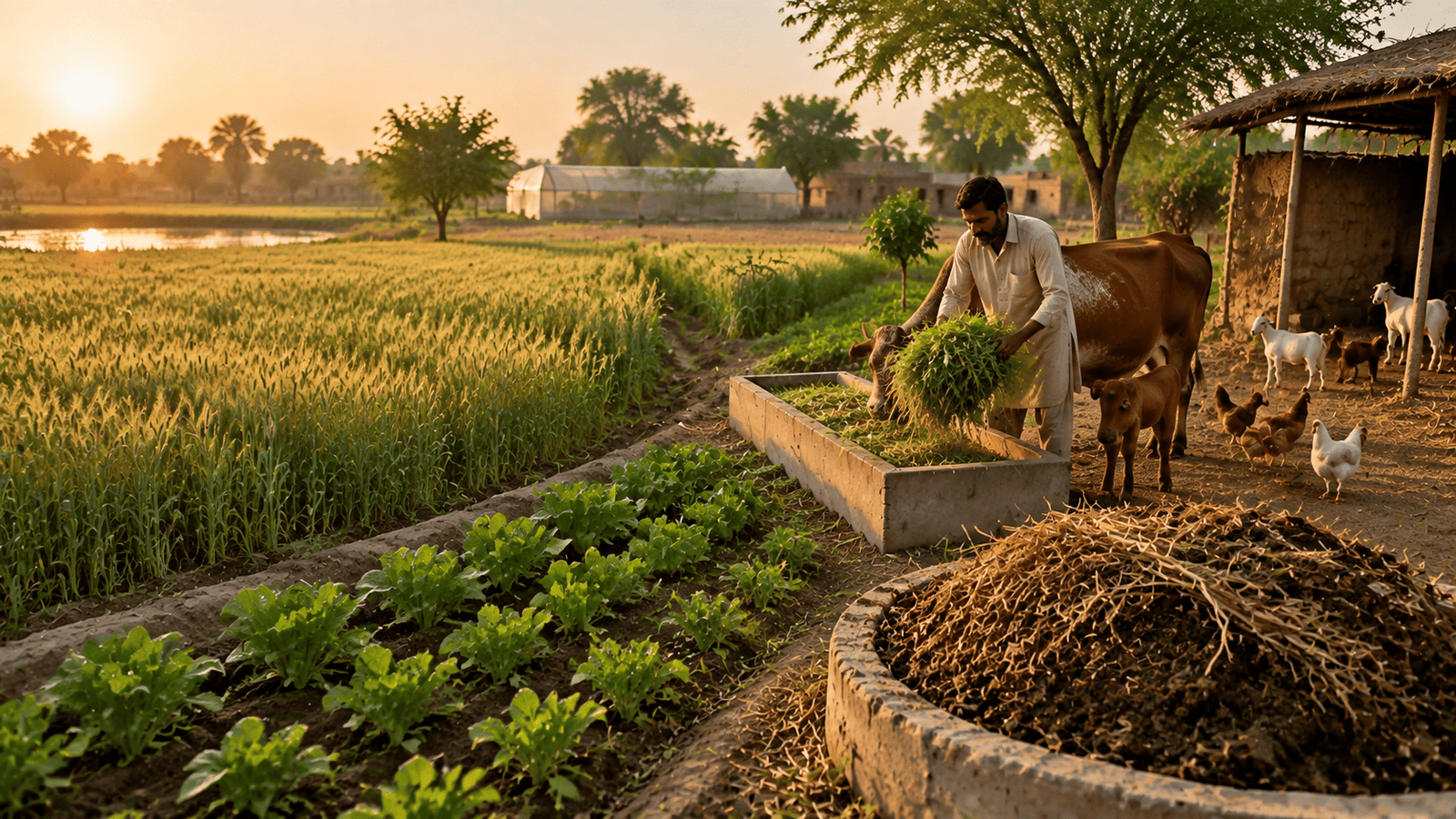
Crop-livestock integration pairs field or vegetable production with animal husbandry so that residue from the crop becomes feed and manure from the animals becomes fertilizer. It's the oldest and most widely practiced form of integrated farming, and it works at almost any scale from a single cow and a kitchen garden to a large mixed grain-and-dairy operation. This guide covers which crops and animals pair well, how to feed residue safely, how to manage manure without creating a pollution problem, and the land, labor, and economic planning the model actually requires.
Crop-livestock integration means deliberately connecting a farm's crop enterprise and its animal enterprise so each supports the other. This is different from simply owning both a field and a few animals; the integration comes from the deliberate movement of residue into feed troughs and finished manure into planting beds, on a schedule that matches when each side actually needs it.
The relationship runs in both directions. Crops supply livestock with grain, forage, and residue. Livestock supply crops with manure, plus draft power in systems where animals are still used for tillage or transport. Over multiple seasons, this cycling tends to reduce a farm's need for purchased fertilizer and purchased feed, though the reduction depends on herd size, crop area, and how tightly the two are matched.
Crop and livestock choices should be selected together, not independently, since the residue from the crop needs to suit the animals kept, and the manure output from the animals needs a crop area large enough to use it.
| Crop | Residue Produced | Compatible Livestock |
|---|---|---|
| Maize / corn | Stover (stalks, leaves), cobs | Cattle, goats, sheep (chopped stover) |
| Wheat / rice | Straw, husks, bran | Cattle, sheep (straw); poultry (bran, broken grain) |
| Legumes (beans, cowpea) | Vines, pods, haulm | Cattle, goats, sheep (high-protein forage value) |
| Vegetables | Culls, trimmings, outer leaves | Pigs, poultry, goats (in moderate amounts) |
| Sugarcane | Tops, bagasse | Cattle (tops); bagasse generally unsuitable as feed |
Cattle, goats, and sheep are the most common ruminant partners for crop residue because they can digest fibrous material that other livestock can't. Pigs and poultry pair better with grain by-products, culled vegetables, and kitchen or processing waste than with straw or stover.
Manure is the return half of the crop-livestock loop, and it needs handling with the same care as the feed side. Fresh manure applied directly to a field can burn seedlings with excess ammonia, introduce weed seeds, and carry pathogens that survive on unwashed produce.
Land allocation in an integrated crop-livestock farm has to balance three competing uses: land for cash or food crops, land for fodder or grazing, and space for animal housing and manure storage. A herd sized larger than the fodder area can support will end up depending on purchased feed anyway, undoing much of the intended self-sufficiency.
Integration adds recurring tasks: daily feeding, regular manure collection and turning, health checks, and coordinating crop and livestock calendars so residue is available when animals need it and manure is ready when fields need it. Farm records — feed used, manure applied, yields, and animal output — turn this from guesswork into a system that can be adjusted season to season.
A small mixed farm might allocate roughly half its land to a grain or vegetable crop, a smaller share to fodder grasses or legumes, and keep two or three cattle or a small goat herd housed near a composting area. Crop residue and fodder feed the animals through the dry season; composted manure, applied ahead of planting, supplies a meaningful share of the next crop's fertility needs; and milk, meat, or offspring sales provide income independent of the crop harvest. The exact ratio of crop to fodder land depends on local rainfall, crop yield, and herd size, and should be adjusted after the first full season based on actual feed consumption records.
No. Suitability depends on the residue type and the animal species — moldy, treated, or highly fibrous residue may be unsafe or indigestible for certain animals. Match residue to species before feeding.
Composting time varies with manure type, bedding material, and turning frequency — generally several weeks to a few months. A finished compost should be dark, crumbly, and no longer smell strongly of ammonia.
Cattle, goats, and sheep are common choices because they digest crop residue well; pigs and poultry pair better with grain by-products and culled produce than with straw or stover.
There's no fixed ratio — it depends on herd size, local rainfall, and crop yield. Size the fodder area to the herd's actual year-round feed need, not the other way around.
It can reduce purchased fertilizer volume over time as composted manure supplies part of soil nutrient needs, but it rarely eliminates fertilizer use entirely, especially for nutrient-demanding crops.
A crop-livestock model earns its "integrated" label through the actual residue and manure flows between its two halves, not through proximity alone. Matching crop residue to the right animal species, composting manure properly before field application, and sizing the herd to what the farm's fodder area can genuinely support are the three decisions that determine whether the system delivers real savings or just adds daily chores without the payoff. Start with a modest herd size, track feed and manure use for a full season, and scale from there.
Want more integrated farming guides delivered to your inbox every week?
Subscribe to Farmers AdvisoryGeneral background: FAO Plant Production and Protection Division, guidance on managing integrated crop-livestock systems and manure/nutrient cycling; FAO, "Mixed Crop-Livestock Farming: A Review of Traditional Technologies" (2001); FAO Climate-Smart Agriculture Sourcebook, Module B5. Feed values, composting times, and application rates vary by climate, species, and soil — treat figures here as a general framework and confirm rates with local extension guidance. Current as of August 6, 2026.