 Farmers Advisory
Farmers Advisory
Farmers Advisory
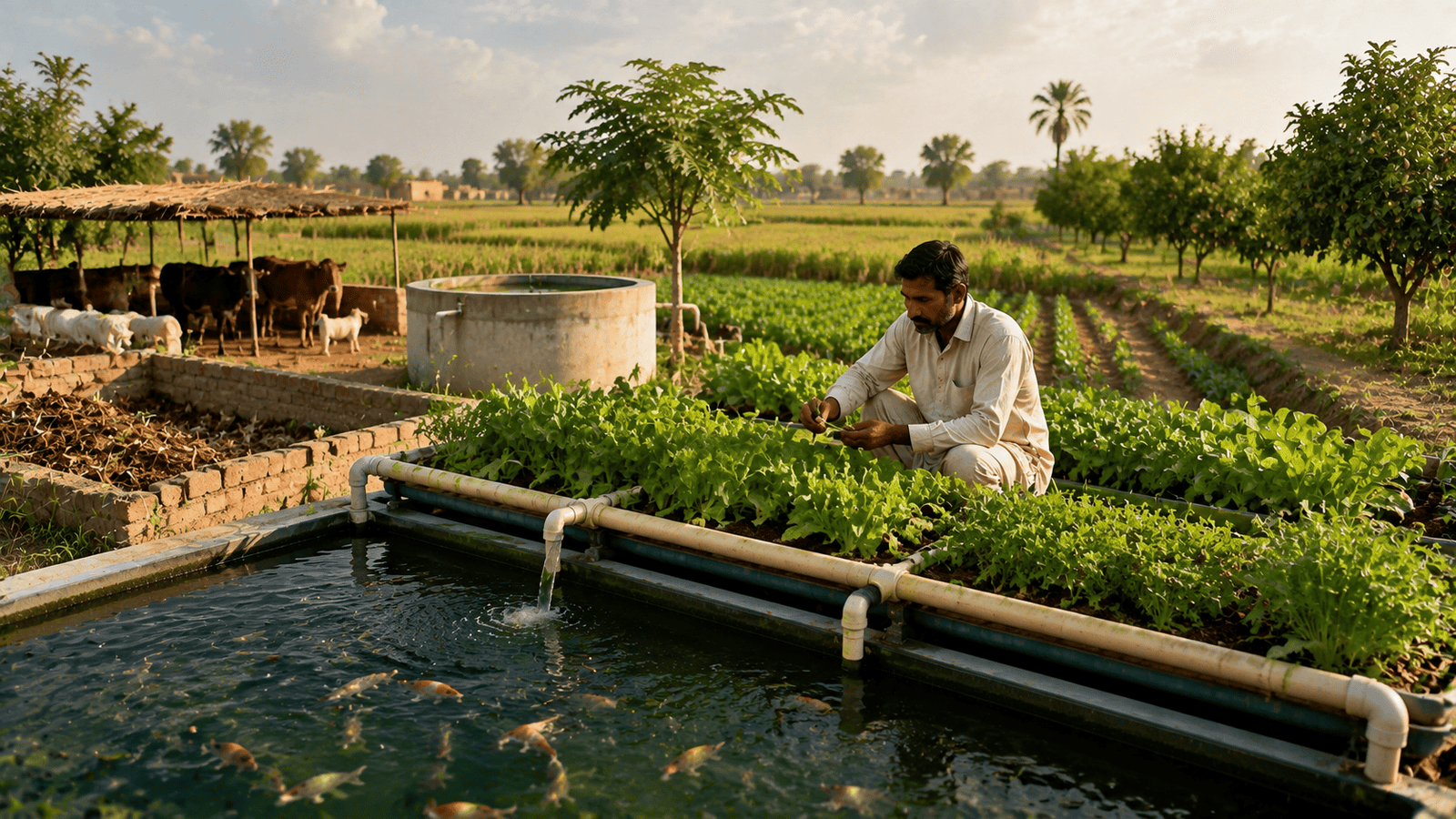
Integrated pest management (IPM) in a mixed farming system follows the same core principle as IPM anywhere — prevent first, monitor before acting, and use the least disruptive effective method — but with an added layer: whatever method is chosen has to be safe for the livestock, poultry, or fish sharing the farm. A pesticide that's routine on a specialized crop farm can be harmful to fish in an adjacent pond or to poultry foraging nearby. This guide covers the IPM toolkit and how to apply it responsibly when animals are part of the system.
An economic threshold is the pest level at which control action becomes worthwhile — below it, the cost of control exceeds the damage the pest would cause. Thresholds vary by crop, pest, and season, so they're best confirmed against current local extension guidance rather than assumed from a general rule. The key IPM principle is: don't treat automatically at the first sighting of a pest.
Choosing crop varieties bred for resistance to locally common pests or diseases reduces the pest pressure the farm has to manage in the first place, lowering reliance on other control methods. Resistant varieties vary by region and pest, so local agricultural extension recommendations are the most reliable source for what performs well in a specific area.
The same caution applies to fish ponds discussed in our fish-poultry farming guide — aquatic organisms are often more sensitive to certain chemicals than terrestrial ones.
| Problem Type | Common Cause | Monitoring Approach | Management Emphasis |
|---|---|---|---|
| Leaf-feeding insects | Pest buildup on a single crop grown repeatedly in the same plot | Regular field walks; sticky or pheromone traps | Rotation, beneficial insect habitat, targeted spot treatment only above threshold |
| Soil-borne disease | Continuous cropping without rotation; poor drainage | Watch for wilting or stunted patches; soil test if recurring | Rotation, resistant varieties, improved drainage, sanitation of infected debris |
| Stored-grain pests | Poor storage sanitation and inadequate drying before storage | Regular storage inspection | Clean storage, proper drying, sealed containers rather than broad chemical treatment |
Because livestock, poultry, or fish share the same land and water, and a pest-control method safe for a crop-only farm may still be harmful to animals sharing that space.
Yes. Drift and runoff can carry pesticide residue into pond water, and fish are often more sensitive to certain chemicals than land animals — buffer zones and careful timing reduce this risk.
Not necessarily. IPM recommends monitoring pest levels against an economic threshold before applying control, since treating too early wastes resources and unnecessarily affects beneficial organisms.
Supervised, limited access to a field between crop cycles can help reduce certain insect populations, but this needs balancing against the risk of crop damage and pesticide exposure.
Favor the least broadly toxic effective product, follow label instructions and withdrawal periods closely, and consult local extension or veterinary guidance for anything used near animals or water.
IPM on a mixed farm asks the same core questions as on any farm — is control actually needed, and what's the least disruptive effective method — with an added responsibility to protect the livestock, poultry, or fish sharing the land. Prevention, monitoring, crop diversity, and biological control should do most of the work, with pesticides reserved for situations that clearly need them and applied with buffer zones, timing, and product choice that account for the animals nearby. For broader planning that keeps pest management in mind from the start, see our guide to designing an integrated farming system.
Want more integrated farming guides delivered to your inbox every week?
Subscribe to Farmers AdvisoryGeneral background: FAO Plant Production and Protection Division, integrated pest management guidance; FAO Climate-Smart Agriculture Sourcebook, Module B5. Economic thresholds, resistant variety performance, and pesticide safety requirements vary by region, crop, and product — confirm site-specific guidance with local agricultural extension services and product labels before acting. Current as of August 6, 2026.