 Farmers Advisory
Farmers Advisory
Farmers Advisory
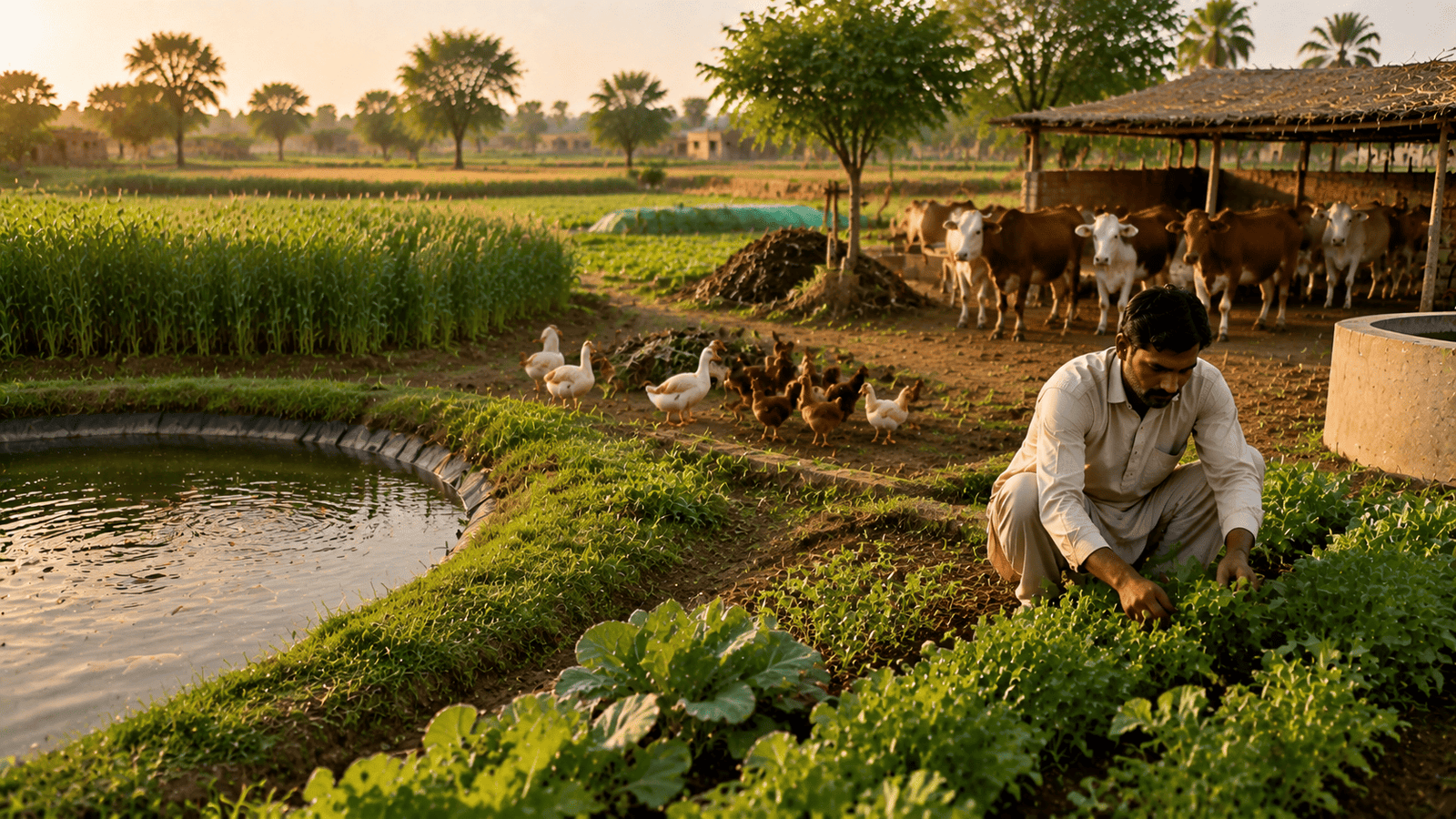
There isn't one "integrated farming system" — there's a family of models, each combining different enterprises in ways suited to particular land, water, and market conditions. Below are seven working examples, from the widely used crop-livestock pairing to less common three-way combinations, each with its resource flow, benefits, management needs, and risks. None of these is universally best; the right fit depends on the farm's own resources, covered in more depth in our guide to designing an integrated farming system.
Components: field or vegetable crop paired with cattle, goats, or sheep. Resource flow: crop residue to feed; composted manure to soil. Benefits: reduced feed and fertilizer costs over time; two income streams. Management requirements: fodder area sized to herd, manure composting, fencing between grazing and crop zones. Risks: overstocking beyond fodder capacity forces reliance on purchased feed, undoing much of the intended savings.
Components: a crop (often rice or vegetables) grown near or above a fish pond. Resource flow: field runoff and organic matter feed pond fertility; pond sediment can enrich soil. Benefits: added fish income from land that also grows a crop; some pest control if fish feed on crop pests in flooded systems. Management requirements: reliable water supply, pond construction, water-level management compatible with the crop's needs. Risks: pesticide use on the crop can harm fish if not carefully managed and timed.
Components: a poultry flock housed near a pond. Resource flow: controlled poultry droppings add nutrients supporting pond plankton, which feeds fish. Benefits: reduced fish feed costs; productive use of poultry waste. Management requirements: careful, monitored manure loading; regular water-quality checks (see our fish-poultry techniques guide for detail). Risks: nutrient overload causing oxygen depletion and fish kills if loading isn't controlled.
Components: a three-way system combining a crop, livestock, and a pond. Resource flow: crop residue to livestock; manure split between composted field application and controlled pond input. Benefits: the most diversified income and nutrient recycling of the models here. Management requirements: larger land and water base, and the skill to coordinate three components at once. Risks: the most management-intensive option — coordination failures in any one component can affect the others.
Components: a crop or vegetable garden with a small poultry flock. Resource flow: composted poultry manure to soil; crop by-products and kitchen scraps to poultry feed. Benefits: low startup cost and suited well to small landholdings; steady egg income alongside crop sales. Management requirements: composting manure before field use; predator-proof housing. Risks: uncomposted manure applied directly to crops risks pathogen contamination and nutrient burn.
Components: a crop plot paired with a small goat herd. Resource flow: crop residue and browse to goats; manure to soil. Benefits: goats tolerate marginal land and variable forage better than cattle, suiting drier or hillier plots. Management requirements: secure fencing, since goats are notably effective at reaching and damaging unprotected crops. Risks: inadequate fencing is the most common cause of crop damage in this pairing.
Components: a fodder or grain crop paired with dairy cattle. Resource flow: fodder crop and residue to cattle; manure composted for field use. Benefits: regular milk income complements seasonal crop income; manure supports fodder crop fertility in a closed loop. Management requirements: consistent fodder supply year-round, since dairy cattle need steady feed regardless of season; milking routine and, where sold, cold storage or fast delivery to market. Risks: a fodder shortfall in the dry season can force costly purchased feed or reduced milk output.
| Model | Water Need | Land Need | Management Intensity | Main Risk |
|---|---|---|---|---|
| Crop-livestock | Moderate | Moderate-large | Moderate | Overstocking beyond fodder supply |
| Crop-fish | High | Moderate | Moderate-high | Pesticide harming fish |
| Fish-poultry | High | Small-moderate | High | Nutrient overload and oxygen depletion |
| Crop-livestock-fish | High | Large | Very high | Coordination failure across components |
| Crop-poultry | Low | Small | Low-moderate | Uncomposted manure applied to crops |
| Crop-goat | Low-moderate | Small-moderate | Moderate | Fencing failure and crop damage |
| Crop-dairy | Moderate | Moderate-large | Moderate-high | Dry-season fodder shortfall |
Crop-poultry is often the easiest entry point — low startup cost, manageable at small scale, and lower water requirements than fish-based systems.
Crop-fish, fish-poultry, and crop-livestock-fish all depend on reliable water access for the pond component, making them unsuitable for farms with unreliable water supply.
Not necessarily. It offers more diversified output but also demands significantly more land, water, and coordination — profitability depends on whether the farm can manage that added complexity well.
Yes, some farms combine three or more components, but each addition increases labor and coordination requirements — most farms are better served by mastering two components before adding a third.
Goats are agile browsers capable of reaching and damaging crops that other livestock can't access, making secure fencing essential to protect the crop side of the pairing.
Each of these examples represents a different balance of water need, land requirement, management intensity, and risk — there's no single model that fits every farm. A dry, land-limited plot suits crop-poultry or crop-goat far better than a water-hungry fish-based system, while a farm with reliable water and more labor available can take on the added complexity of a three-way crop-livestock-fish model. Match the example to the resources actually on hand, not to whichever model sounds most impressive.
Want more integrated farming guides delivered to your inbox every week?
Subscribe to Farmers AdvisoryGeneral background: FAO Fisheries Technical Paper 407, "Integrated Agriculture-Aquaculture"; FAO, "Mixed Crop-Livestock Farming: A Review of Traditional Technologies" (2001); FAO Climate-Smart Agriculture Sourcebook, Module B5. Suitability of any model depends on local climate, water, land, and market conditions — treat these examples as illustrative starting points, not fixed blueprints. Current as of August 6, 2026.