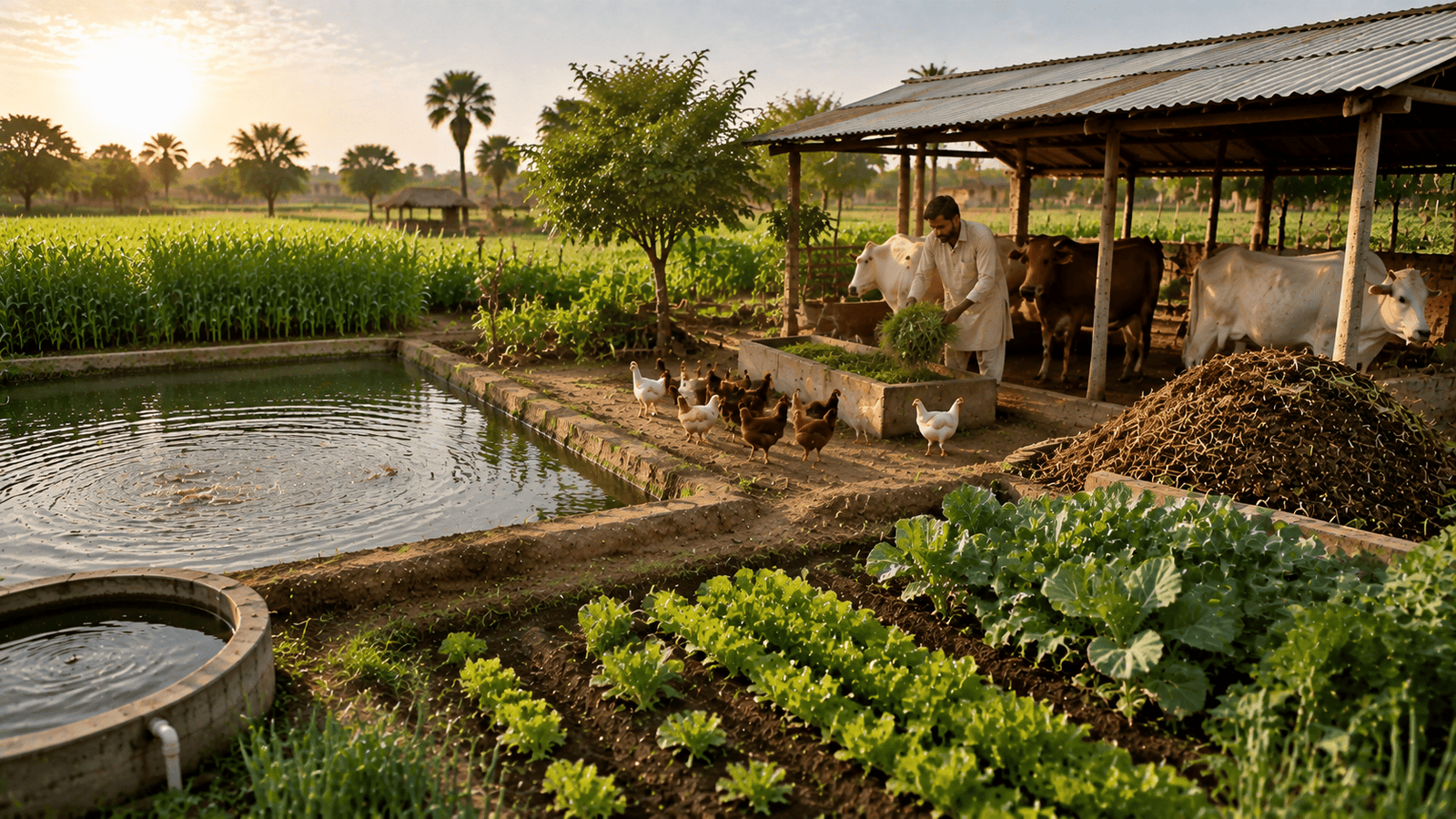
Integrated Fish-Poultry Farming Techniques: A Practical Guide
By Farmers Advisory Editorial Team ·
Published August 6, 2026 · Updated August 6, 2026 · 12 min read ·
Category: Integrated Farming
A well-designed fish-poultry system separates housing from open water while still allowing controlled, monitored nutrient transfer between the two.
Integrated fish-poultry farming pairs a poultry flock with a fish pond so that poultry droppings
contribute to the pond's natural fertility, supporting the plankton and small organisms fish feed on.
Done carefully, it can reduce the fish feed bill and put poultry waste to productive use. Done
carelessly — by dumping manure into the pond without regard for volume or water conditions — it causes
oxygen crashes and fish kills. This guide covers pond and housing design, how manure loading is
actually managed, water quality monitoring, stocking, disease prevention, and harvesting.
Key Takeaways
Poultry droppings can supply part of a pond's nutrient needs, but only when the amount is matched to pond size, fish biomass, and water conditions — not applied without limit.
Poultry housing is generally kept physically separate from open pond water, with only managed drainage or scheduled removal feeding nutrients into the pond.
Dissolved oxygen is the most critical water-quality parameter in a manured pond and should be checked regularly, especially in warm weather and at night.
Overloading a pond with manure is the leading cause of fish kills in these systems — when in doubt, apply less and monitor the response.
Biosecurity between poultry and fish components matters — sick birds or contaminated runoff can affect fish health and pond water quality.
1. What Integrated Fish-Poultry Farming Is
In a fish-poultry system, a poultry house is positioned near a pond so that manure — collected and
applied deliberately, or allowed to enter through controlled drainage — adds nitrogen and phosphorus to
the water. These nutrients support algae and zooplankton growth, which in turn become food for the fish,
reducing (though rarely eliminating) the need for purchased fish feed. The system works only when the
nutrient input is treated as a managed input, not a waste-disposal shortcut.
2. Pond Selection and Placement
Ponds with reliable water depth and some means of water exchange or replenishment perform more predictably than ponds dependent entirely on rainfall
Pond size should be assessed against realistic fish stocking levels and expected nutrient input — a small pond has far less capacity to absorb manure-derived nutrients than a large one
Site the pond where it can receive controlled drainage from the poultry area without being at risk of flooding from it during heavy rain
3. Poultry Housing and Placement
Raised housing (on stilts or a platform) above or beside the pond allows droppings to be collected or channeled in a controlled way rather than falling freely into open water
Adequate ventilation and dry litter in the poultry house reduce disease pressure that could otherwise be carried into the pond system through runoff
Housing should be positioned so birds are not stressed by pond activity (netting, harvesting) and vice versa
4. Managing Poultry Waste as Pond Nutrient Input
⚠️ Important
Manure loading into a pond must be matched to pond size, existing fish biomass, water temperature, and
oxygen levels — not applied on a fixed schedule regardless of pond conditions. Overloading depletes
dissolved oxygen as bacteria break down excess organic matter, which can kill fish within hours,
especially at night or during warm weather when oxygen levels are already lower.
Introduce manure gradually and observe the pond's response — water color, oxygen levels, and fish behavior — before increasing the amount
Reduce or pause manure input during hot weather, cloudy periods, or whenever oxygen readings are already low, since these conditions leave less buffer before a crash
Some systems compost or partially treat manure before it reaches the pond rather than allowing raw, undiluted waste to enter directly
Keep a simple log of how much manure is applied and when, so a fish-health problem can be traced back to a specific loading change rather than guessed at
5. Water Quality Monitoring
Key Water Quality Checks in a Manured Pond
Parameter
Why It Matters
Monitoring Approach
Dissolved oxygen
Drops sharply as manure decomposes; low oxygen is the main cause of fish kills
Check regularly, especially early morning and after manure additions
Water color/clarity
Very dark or pea-green water signals heavy plankton bloom and elevated risk
Visual check daily
Ammonia
Builds up from waste breakdown and is toxic to fish at high levels
Test periodically, particularly after loading increases
Fish behavior
Gasping at the surface or lethargy signals oxygen stress before a visible crisis
Observe at feeding time and during warm periods
6. Fish Stocking and Feeding
Stocking density should reflect pond size, oxygen supply, and how much of the fish's diet will come from natural pond food versus supplemental feed
Species that tolerate lower dissolved oxygen and feed well on plankton generally suit manure-fertilized ponds better than species requiring very clean, high-oxygen water
Supplemental feed is still typically needed for consistent growth — natural pond food from manure inputs supplements rather than fully replaces a feeding program
7. Disease Prevention and Biosecurity
Isolate sick birds immediately and avoid letting their waste enter the pond system until they've recovered
Keep poultry housing clean and dry to reduce the pathogen load in any runoff that does reach the pond
Watch fish for unusual mortality, lesions, or erratic behavior, which can signal either a water-quality problem or a disease issue requiring separate diagnosis
8. Pond Maintenance, Water Exchange, and Harvesting
Partial water exchange, where feasible, helps dilute accumulated nutrients and refresh oxygen levels in heavily loaded ponds
Periodic sediment removal prevents nutrient buildup at the pond bottom from overwhelming the system over multiple seasons
Harvest timing depends on the fish species and target size — plan harvest around water-quality conditions as well as growth stage, avoiding harvest stress during periods of already-low oxygen
Common Mistakes
✅ Good Practice
Gradual, monitored manure introduction with regular oxygen checks
Physical separation between housing and open water with controlled drainage
Reduced loading during hot weather or low-oxygen periods
❌ Common Mistakes
Allowing unlimited droppings to fall directly into the pond
Ignoring oxygen levels until fish are already visibly stressed
Stocking fish density based on pond size alone, without accounting for nutrient load
Frequently Asked Questions
Can I let poultry droppings fall directly into my fish pond?
This is generally discouraged. Uncontrolled manure input makes it impossible to manage loading
rates, and it substantially raises the risk of oxygen depletion and fish kills. Controlled, monitored
input is safer than unrestricted drainage.
How do I know if I'm overloading my pond with manure?
Watch for very dark or pea-green water, fish gasping at the surface, or declining dissolved
oxygen readings — these are early warning signs that loading should be reduced immediately.
Do fish in a fish-poultry system still need supplemental feed?
Usually yes. Manure-driven natural pond food supplements the diet but rarely provides complete,
consistent nutrition for steady growth on its own.
What time of day is riskiest for oxygen depletion?
Early morning, after oxygen has been consumed overnight by pond organisms and decomposing
organic matter, with no new oxygen yet produced by daytime photosynthesis.
Can sick poultry affect my fish?
Yes, if their waste or runoff reaches the pond. Isolating sick birds and preventing their waste
from entering the water reduces this risk.
Conclusion
Fish-poultry integration can genuinely reduce feed costs and turn poultry waste into productive pond
fertility, but the entire system depends on treating manure input as a carefully dosed nutrient, not a
disposal method. Match loading to pond size and monitor oxygen and water color routinely, keep poultry
housing and drainage under control, and be ready to reduce loading the moment fish show stress signals.
Farms combining fish-poultry with crops or additional livestock can find broader planning guidance in
how to design an integrated farming system.
Want more integrated farming guides delivered to your inbox every week?
General background: FAO Fisheries Technical Paper 407, "Integrated Agriculture-Aquaculture: A Primer";
FAO, "Small Ponds Make a Big Difference: Integrating Fish with Crop and Livestock Farming." Safe manure
loading rates, stocking densities, and oxygen thresholds vary by species, climate, and pond design —
treat this guide as a general framework and consult local aquaculture extension services for
site-specific limits. Current as of August 6, 2026.
 Farmers Advisory