 Farmers Advisory
Farmers Advisory
Farmers Advisory
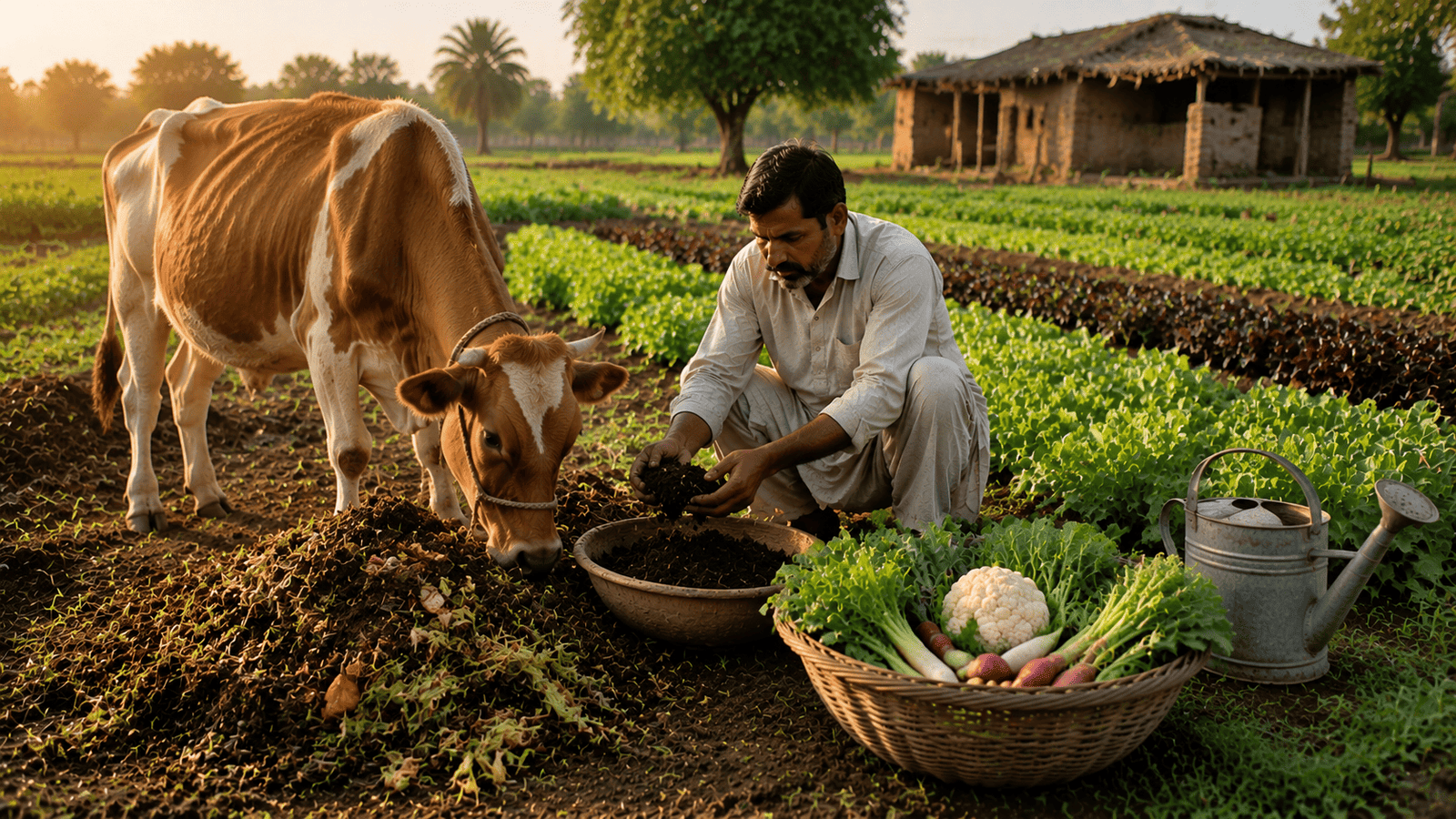
Organic and conventional farming are often framed as opposites, but the real distinction sits in how each system builds soil fertility and manages pests, not simply whether chemicals are involved at all. This comparison breaks down the practical differences between organic and conventional farming — inputs, labor, costs, yield, and environmental tradeoffs — so the choice can be made on facts specific to a crop, region, and market rather than on the reputation either system carries.
| Factor | Organic Farming | Conventional Farming |
|---|---|---|
| Fertility source | Compost, manure, cover crops, mineral amendments | Synthetic fertilizers (nitrogen, phosphorus, potassium) |
| Pest control | Prevention, rotation, biological controls, approved organic inputs | Synthetic pesticides and herbicides, often on a schedule |
| Weed control | Cultivation, mulching, rotation, cover crops | Herbicides, sometimes combined with tillage |
| Seed type | Organic seed required where available; GMO seed prohibited under most standards | Conventional or genetically modified seed permitted |
| Labor intensity | Generally higher, especially for weeding and monitoring | Generally lower per acre due to input-based control |
| Typical input costs | Lower purchased-input costs, higher labor costs | Higher purchased-input costs, lower labor costs |
| Certification | Required to legally use the "organic" label | Not applicable |
| Market positioning | Premium pricing common in direct and specialty markets | Standard commodity or conventional retail pricing |
Organic systems treat soil biology as the engine of fertility — compost, aged manure, and nitrogen-fixing cover crops feed soil organisms, which in turn make nutrients available to plants over time. Conventional systems typically apply synthetic fertilizer directly, delivering nutrients faster and with more precise, immediate control, but generally contributing less to long-term soil organic matter and biological activity unless paired with additional soil-building practices.
Conventional systems generally rely on synthetic pesticides and herbicides applied on a schedule or in response to a threshold, offering fast, predictable control. Organic systems substitute a combination of prevention (rotation, resistant varieties, habitat for beneficial insects), monitoring, and — when needed — approved organic-input products, which tend to act more slowly and require closer field monitoring to time correctly.
Most organic standards prohibit genetically modified seed and require organic seed where commercially available. Conventional farming has no such restriction, giving growers access to a wider range of seed traits, including some bred specifically for herbicide tolerance or pest resistance that pair with conventional input programs.
Organic weed and pest management is typically more labor-intensive, since mechanical cultivation, hand weeding, and closer field monitoring substitute for chemical control. Water management approaches can overlap significantly between the two systems, though organic soils with higher organic matter content often hold moisture somewhat better over time, which can modestly reduce irrigation frequency on farms that have built fertility over several seasons.
Cost and yield comparisons vary widely by crop, region, and farm management, so broad claims in either direction should be treated with skepticism. In general, organic systems tend to have lower purchased-input costs but higher labor costs, while conventional systems tend to have the reverse. Yields for some crops under conventional management can be higher in the near term, particularly during an organic farm's transition years before soil biology stabilizes; that gap can narrow over time as organic soil health improves, though the extent varies significantly by crop and site.
Organic systems generally aim to reduce synthetic pesticide and fertilizer runoff and to build soil organic matter over time, which can support water retention and biodiversity. Conventional systems can achieve higher yields per acre, which some analyses point to as reducing the total land area needed for a given amount of food production. Neither system has a universal environmental advantage across every metric — the outcome depends heavily on specific practices, region, and crop, not just the organic or conventional label alone.
Conventional farming carries no certification requirement. Organic farming requires certification through an accredited body to legally use the "organic" label in most countries, involving inspection, documentation, and ongoing annual costs. In exchange, certified organic products often command a price premium in retail and direct markets, though the size of that premium varies by crop, region, and distribution channel.
Neither system is universally better — each has tradeoffs in cost, labor, yield, and environmental impact that vary by crop, region, and market. The right choice depends on the specific farm's goals and constraints.
Not always, but yields for some crops can be lower under organic management, particularly during the transition period before soil biology stabilizes. The gap varies significantly by crop and can narrow as organic soil health improves over time.
This is a widely debated and researched question with mixed findings depending on the specific nutrient or contaminant studied. This article focuses on farming practices rather than nutritional or health outcomes.
Higher labor costs, certification expenses, and often lower per-acre yields for certain crops contribute to higher prices, offset in part by the price premium organic products often command in the market.
Some farms operate split systems, with certified organic fields separate from conventionally managed fields, though this requires careful management to prevent cross-contamination and meet certification buffer requirements.
It depends on the specific metric and practices used. Organic systems often reduce synthetic input runoff and build soil organic matter; conventional systems can produce more food per acre. Neither has a universal advantage across every environmental measure.
The organic-versus-conventional debate is less useful as a search for a universal winner and more useful as a framework for matching a farming system to a specific crop, market, and set of resources. Organic farming trades purchased inputs for labor and management, generally at a cost premium recovered through market pricing where that premium exists. Conventional farming trades that labor intensity for input cost and faster, more predictable control. Understanding those tradeoffs — rather than assuming either system's reputation applies universally — is what actually determines which one fits a given operation.
Want more organic farming guidance delivered to your inbox every week?
Subscribe to Farmers AdvisoryGeneral guidance drawn from published agricultural extension and organic standards comparisons. Cost, yield, and environmental outcomes vary significantly by crop, region, climate, and farm management — figures here are general patterns, not universal statistics. Current as of August 5, 2026.