 Farmers Advisory
Farmers Advisory
Farmers Advisory
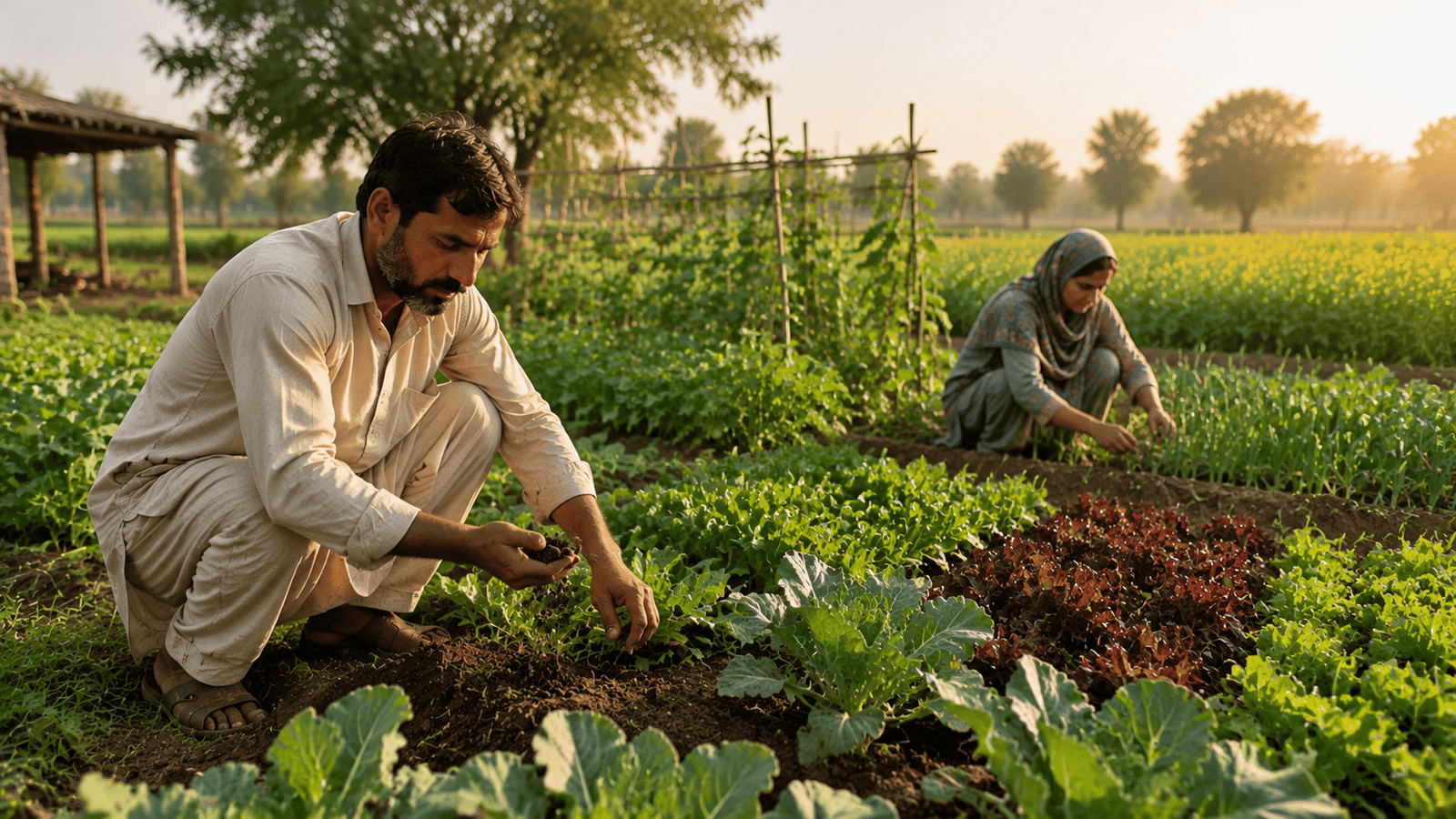
Starting organic farming is less about swapping synthetic inputs for natural ones and more about rebuilding the way a farm functions from the soil up. Anyone can stop spraying; building a system that stays productive without synthetic fertilizers and pesticides takes planning. This guide walks through how to start organic farming step by step — from assessing land and soil through conversion, fertility building, pest management, record keeping, and the eventual decision on certification — so a new grower knows what order to tackle things in and what mistakes to avoid.
Organic farming manages a farm as a living system rather than a set of inputs to control. Its core principles generally include building soil fertility biologically (through compost, manure, and cover crops rather than synthetic fertilizer), managing pests and disease through prevention and biological balance rather than routine chemical spraying, maintaining crop and habitat diversity, and avoiding synthetic pesticides, herbicides, and genetically modified seed. The specific rules that define "organic" for labeling purposes vary by country and certifying body, but the underlying farming philosophy is broadly consistent: healthy soil grows healthy, resilient plants, which reduces the need for outside intervention.
Land selection sets the ceiling for everything that follows. Before planting anything, walk the property and gather information rather than assumptions.
Irrigation water quality matters as much as soil quality, particularly for certification and food safety. Test water for contamination, salinity, and pathogen risk if it comes from a well, pond, or shared irrigation source. Confirm the water right or access is secure and consistent for the growing season, since organic systems generally rely more on consistent moisture to keep biological fertility active than on periodic heavy chemical intervention.
Land that has been conventionally farmed cannot usually be marketed as certified organic immediately. Most standards require a conversion (or transition) period — commonly around three years, though the exact length, starting point, and requirements vary by country and certifying body — during which the land must be managed organically before its output can be certified.
Even growers who don't plan to certify benefit from treating this as a real transition: soil biology, pest balance, and weed pressure typically take one to three seasons to stabilize after synthetic inputs stop.
Most organic standards require organically produced seed and planting stock when it's commercially available in the needed variety and quantity, with exceptions permitted where it isn't. Look for seed suppliers who explicitly sell certified organic seed, and keep purchase records and seed tags, since seed sourcing is commonly checked during inspection.
Organic systems replace synthetic fertilizer with biological and mineral fertility sources, built up over time rather than applied as a quick fix.
Retest soil every one to three years to track whether fertility is trending in the right direction, and adjust the plan rather than repeating the same inputs regardless of results.
Rotation is one of the most consistently useful tools in organic systems because it interrupts pest and disease cycles tied to a single crop family, spreads nutrient demand across different rooting depths and needs, and helps manage weed pressure. A basic starting rotation might alternate a heavy-feeding crop, a legume or cover crop, and a lighter-feeding crop across different fields or beds each season, adjusted for the specific crops and climate involved.
Organic pest and weed management leans on prevention first, intervention second.
Some certified-organic pest and disease products exist for use when prevention isn't enough, but standards differ on which substances are approved, so check the applicable list before applying anything.
Record keeping is unglamorous but foundational — for certification, for tracking what's actually working, and for troubleshooting problems later. Keep records of every input applied and its source, seed and planting material purchases, field activities and dates, and harvest and sales data. Building this habit from the very first season avoids a scramble to reconstruct history later.
Certification isn't required to farm organically — it's required to market and label a product as "organic" in most countries. Many small growers who sell directly to customers at a farmers market or through a subscription box operate organically without certification, since their customers can ask directly about practices. Growers who want to wholesale, export, or use the word "organic" on packaging generally need certification through an accredited body, which involves inspection, documentation review, and ongoing annual renewal. Certification requirements and costs vary significantly by country and standard, which the certification-specific article in this series covers in more depth.
Post-harvest handling for organic produce follows many of the same food-safety basics as conventional produce, with the added requirement of avoiding cross-contamination with non-organic product or prohibited substances during storage, packing, and transport if certified. Marketing options range from direct sales (farmers markets, community-supported agriculture, farm stands) to wholesale and cooperative arrangements, each with different price premiums, volume expectations, and documentation needs.
| Step | Action | Typical Timing |
|---|---|---|
| 1 | Soil and water testing | Before land use decisions |
| 2 | Confirm prior land use and buffer needs | Before conversion starts |
| 3 | Begin conversion period, stop prohibited inputs | Season 1 |
| 4 | Source organic seed, plan rotation | Season 1 |
| 5 | Build fertility with compost/cover crops | Seasons 1-3 |
| 6 | Set up records and input tracking | From season 1 onward |
| 7 | Apply for certification (if needed) | Near end of conversion period |
| 8 | First certified harvest and marketing | After conversion period ends |
Farming organically can start immediately once synthetic inputs stop. Selling output as certified organic typically requires a multi-year conversion period first, commonly around three years, though the exact length depends on the certifying body and standard.
No — certification is only required to legally market or label a product as "organic" in most countries. Growers selling directly to customers without using that label can farm organically without certifying.
Soil and water testing, done before choosing crops or making input decisions. Fertility and pest planning both depend on knowing the site's actual starting conditions.
Many home gardening fertility practices — composting, mulching, cover cropping — carry over directly. Scaling them to farm size and matching them to certification input rules, if certifying, is the main adjustment.
Generally yes, particularly for weed and pest management, since organic systems substitute labor and management for synthetic chemical inputs. The degree varies by crop and scale.
Crops with fewer pest and disease pressures and shorter growing cycles — many leafy greens and legumes, for example — tend to be more forgiving for a first organic season than high-pressure crops, though the right choice depends heavily on local climate and market demand.
Starting organic farming comes down to sequencing: understand the land and water before choosing crops, build fertility before expecting high yields, plan the conversion period before assuming certified sales, and keep records before they're needed rather than after. None of these steps is complicated on its own — the difficulty is usually in skipping one under time pressure and paying for it later in weed pressure, poor fertility, or a certification delay. Farms that treat the first two to three years as a genuine transition, rather than a quick input swap, tend to reach stable organic production with far fewer setbacks.
Want more organic farming guidance delivered to your inbox every week?
Subscribe to Farmers AdvisoryGeneral guidance drawn from principles published by organic certification standards and agricultural extension services. Specific conversion periods, input rules, and certification requirements vary by country and certifying body — always confirm current requirements with the relevant certifying organization or agricultural authority before making certification decisions. Current as of August 5, 2026.