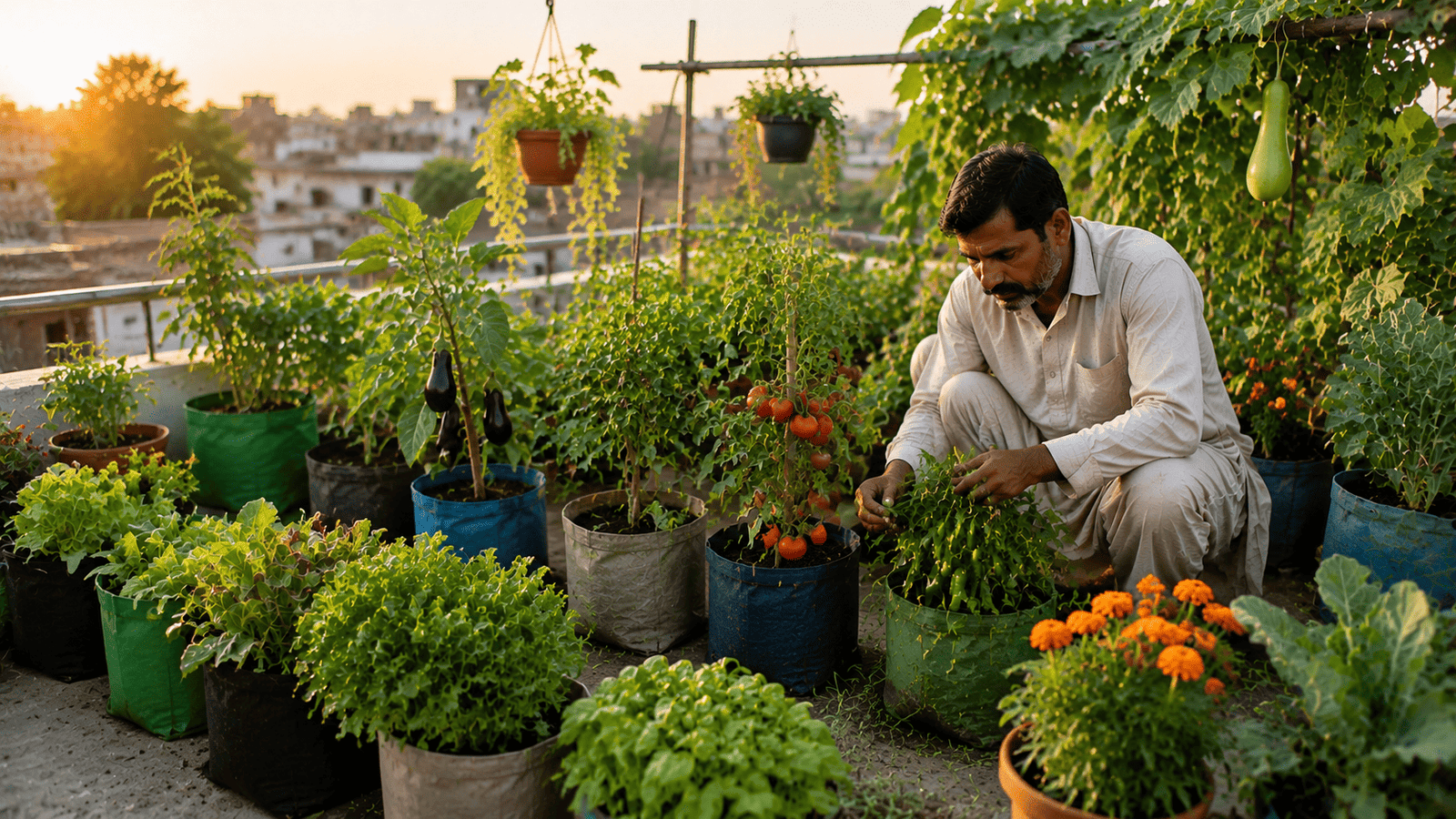
Common Vegetable Plant Diseases and Their Solutions (2026)
By Farmers Advisory Editorial Team ·
Published August 4, 2026 · Updated August 4, 2026 · 11 min read ·
Category: Vegetable Farming
Most vegetable diseases fall into one of three categories — fungal, bacterial, or viral — and each spreads and responds to treatment differently.
Nearly every vegetable garden runs into disease eventually, and most cases trace back to one of a
small handful of repeat offenders rather than something exotic. Knowing which category a disease
falls into — fungal, bacterial, or viral — changes both how it spreads and what actually stops it.
This guide covers the common vegetable plant diseases and their solutions that
gardeners and small growers encounter most often in 2026, across leafy greens, cucurbits, beans, and
brassicas.
Key Takeaways
Powdery mildew appears as white powdery coating on leaf surfaces and thrives in dry, warm conditions; downy mildew appears as fuzzy gray-purple growth on leaf undersides and thrives in cool, humid conditions — despite similar names, they need different treatment.
Damping-off kills seeds and seedlings at the soil line and is best prevented before it starts, since infected seedlings rarely recover once symptoms appear.
Bacterial wilt can be confirmed with a simple field test: cut the stem and dip it in water — milky white bacterial threads streaming out confirm the diagnosis.
Viral diseases like mosaic virus have no chemical cure once a plant is infected; management is entirely about preventing spread through insect vectors and infected tools.
Good spacing, airflow, watering at the soil line instead of overhead, and crop rotation prevent more vegetable disease than any spray applied after symptoms appear.
Common Vegetable Diseases Quick Reference
Common Vegetable Diseases, Type, and Crops Most Affected
Disease
Type
Commonly Affected Crops
Powdery mildew
Fungal
Cucumbers, squash, melons, peas
Downy mildew
Oomycete (water mold)
Cucurbits, lettuce, spinach, onions, basil
Damping-off
Fungal/oomycete
Nearly all vegetable seedlings
Bacterial wilt
Bacterial
Cucumbers, muskmelon, squash
Mosaic virus
Viral
Cucurbits, peppers, beans
Root-knot nematode
Parasitic roundworm
Tomatoes, carrots, beans, cucurbits
1. Fungal, Bacterial, and Viral: Telling Them Apart
Most vegetable disease symptoms sort neatly into one of three categories, and recognizing which one
you're looking at narrows down the likely cause before you even open a reference guide.
Fungal diseases: typically show visible white powder, dark leaf spots, mold, or rot, and spread mainly through wind and water splash
Bacterial diseases: tend to cause water-soaked lesions, slimy patches, a foul smell, or sudden wilting, and spread through irrigation water, rain splash, and contaminated tools
Viral diseases: often appear as mottled or mosaic leaf coloring, distorted growth, or stunting, and spread primarily through insect vectors like aphids and whiteflies
2. Powdery Mildew
Powdery mildew is one of the most recognizable and common vegetable diseases, appearing as a white
to gray powdery coating on leaves and stems.
Symptoms: white powdery spots starting on upper leaf surfaces, weakened growth, and — in advanced cases — leaf distortion and premature leaf death
Conditions that favor it: unlike many fungal diseases, powdery mildew thrives in warm, dry conditions rather than wet ones, and is often a late-season problem on squash and pumpkins
Solutions: improve airflow with proper spacing, avoid excess nitrogen fertilizer, choose resistant varieties where available, and treat early cases with a diluted baking soda or sulfur-based spray
3. Downy Mildew
⚠️ Common Mistake
Confusing downy mildew with powdery mildew because both have "mildew" in the name. They're caused by entirely different organisms, favor opposite conditions, and require different management — treating one as the other wastes time while the real problem spreads.
Symptoms: yellow blotches on upper leaf surfaces paired with fuzzy, grayish-purple growth on the undersides directly beneath them
Conditions that favor it: downy mildew is caused by a water mold, not a true fungus, and thrives in cool, humid, and wet conditions — the opposite of powdery mildew's preferred climate
Solutions: space plants for airflow, water early in the day at the soil line so foliage dries quickly, remove and destroy infected leaves promptly, and choose resistant varieties since downy mildew is difficult to manage once established
4. Damping-Off in Seedlings
Damping-off is a fungal and water-mold disease that attacks seeds and very young seedlings,
typically before a home gardener even realizes disease is the cause of a failed planting.
Symptoms: seeds rot before emerging, or seedlings emerge and then collapse at the soil line with a soft, water-soaked stem
Conditions that favor it: cold, wet, poorly drained soil and overcrowded seedling trays
Solutions: use well-drained starting mix, avoid overwatering during germination, ensure good air circulation around trays, and sow seeds only once soil temperature is favorable for that crop rather than rushing a cold start
💡 Quick Tip
Damping-off is far easier to prevent than to treat — once a seedling collapses, it typically cannot be saved. Focus prevention effort on drainage and airflow rather than looking for a rescue treatment after symptoms appear.
5. Bacterial Wilt
Bacterial wilt is most familiar as a cucumber and muskmelon disease, often spread by cucumber
beetles feeding on the plant.
Symptoms: individual leaves or entire vines wilt during the day, sometimes recovering overnight before wilting again permanently as the disease progresses
Field test: cut a wilting stem and slowly pull the two halves apart in water — strands of milky, sticky bacterial ooze confirm bacterial wilt rather than a watering problem
Solutions: control the insect vectors (commonly cucumber beetles) early in the season, remove and destroy infected plants promptly since there's no cure once a plant is infected, and consider row covers on young plants until flowering requires pollinator access
6. Mosaic Virus
Symptoms: mottled light and dark green or yellow patterns on leaves, often paired with leaf curling, stunted growth, and reduced or misshapen fruit
How it spreads: primarily by aphids and other sap-feeding insects, and mechanically through contaminated hands or tools moving between plants
Solutions: there's no chemical cure once a plant is infected — remove and destroy infected plants promptly, control aphid populations, choose virus-resistant varieties, and disinfect tools between plants, especially when handling known host crops like cucurbits and beans
7. Root-Knot Nematodes
Symptoms: stunted, yellowing plants with wilting in warm weather; roots show characteristic swollen galls or knots when pulled and examined
How it spreads: microscopic roundworms living in soil, moved between areas on tools, contaminated transplants, or soil clinging to equipment
Solutions: rotate to non-host crops like corn or small grains for at least a season, use resistant varieties where available (often labeled with an "N" on seed packets), and add organic matter, which supports nematode-suppressing soil organisms over time
8. Cultural Practices That Prevent Most Diseases
The majority of common vegetable diseases share the same handful of prevention practices,
regardless of whether the specific pathogen is fungal, bacterial, or viral.
Space plants for airflow, since crowded, humid foliage is the single biggest shared risk factor across fungal and bacterial diseases
Water at the soil line rather than overhead, and water early in the day so any wet foliage dries before evening
Rotate crop families through different beds every two to three years to break disease cycles tied to specific plant families
Remove and destroy — rather than compost — infected plant material, since home compost piles often don't reach temperatures high enough to kill many pathogens
Inspect plants regularly, especially lower and inner leaves where many diseases show symptoms first
Frequently Asked Questions
What's the difference between powdery mildew and downy mildew?
Powdery mildew is a true fungus that forms white powder mainly on upper leaf surfaces and prefers
warm, dry conditions. Downy mildew is a water mold that forms fuzzy gray-purple growth mainly on
leaf undersides and prefers cool, humid conditions.
Can I save a seedling that has damping-off?
Usually not once the stem has collapsed. Prevention — well-drained starting mix, avoiding
overwatering, and good airflow around trays — is far more effective than trying to treat symptoms
after they appear.
How do I know if my cucumber plant has bacterial wilt or is just underwatered?
Cut a wilting stem and slowly pull the two halves apart while submerged in water. Strands of
milky, sticky bacterial ooze confirm bacterial wilt; a clean separation points to a watering or
environmental cause instead.
Is there a treatment for mosaic virus in vegetables?
No chemical cure exists once a plant is infected. Management focuses on prevention: controlling
aphids, choosing resistant varieties, disinfecting tools, and removing infected plants promptly to
limit spread to healthy ones.
How can I tell if root-knot nematodes are affecting my vegetables?
Above ground, look for stunted growth and daytime wilting despite adequate soil moisture. Below
ground, pull a plant and check the roots for swollen, knot-like galls, which are the clearest
confirmation.
Conclusion
Most vegetable disease problems come down to recognizing whether you're dealing with a fungus,
bacterium, virus, or nematode, since each spreads and responds to treatment differently. Powdery and
downy mildew, damping-off, bacterial wilt, mosaic virus, and root-knot nematodes cover the large
majority of cases gardeners encounter. In nearly every instance, the same cultural practices — spacing
for airflow, watering at the soil line, rotating crops, and removing infected material promptly — do
more to prevent disease than any treatment applied after symptoms have already taken hold.
Want more vegetable farming tips delivered to your inbox every week?
Data sources: LSU AgCenter, Disease Management in Home Vegetable Gardens; University of Maryland
Extension, Fungal and Bacterial Diseases of Vegetables; Penn State Extension, Addressing Downy Mildew
and Powdery Mildew in the Home Garden; University of Georgia CAES, Disease Management in the Home
Vegetable Garden; and Purdue University Vegetable Crops Hotline disease reference. Figures and
guidance represent general practice and vary by climate, crop variety, and local disease pressure.
Current as of August 4, 2026.
 Farmers Advisory