 Farmers Advisory
Farmers Advisory
Farmers Advisory
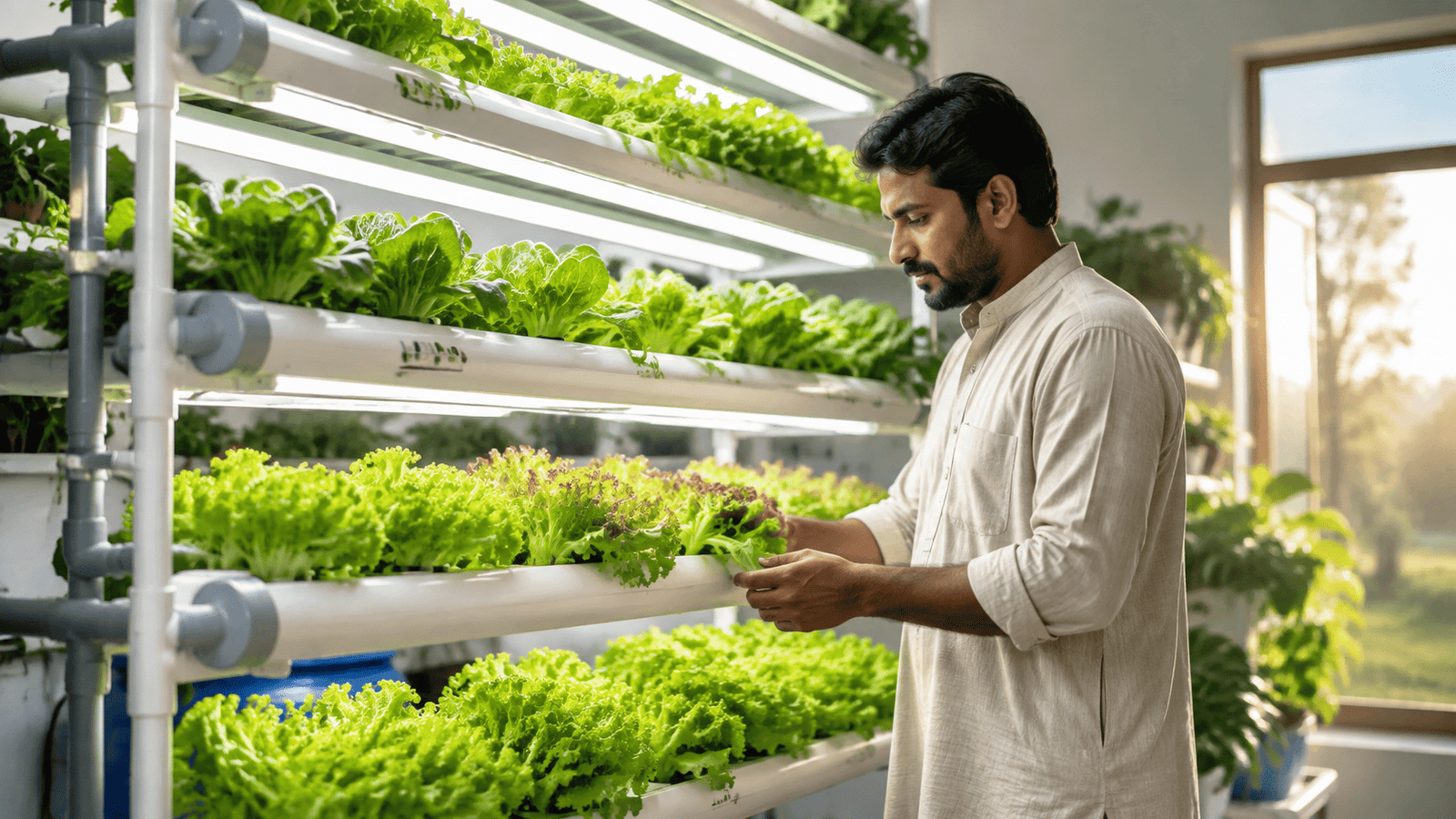
Starting a vertical farming business means committing serious capital to racks, lighting, and climate control before a single crop reaches the market — and then running a facility that behaves more like a small manufacturing operation than a traditional farm. The businesses that survive their first two years are usually the ones that picked a narrow crop focus, sized their facility to a confirmed buyer base rather than a growth fantasy, and kept a clear line between one-time startup spending and the recurring costs that show up every single week.
A vertical farming business combines elements of horticulture, facility engineering, food safety compliance, and B2B or retail sales. Unlike a field farm, where land and sunlight are largely fixed costs you already have, a vertical farm has to build its entire growing environment before it produces anything — racks, lighting, HVAC, water treatment, and control systems all have to be specified, purchased, and installed correctly before the first seed goes in.
That upfront engineering work means the business plan has to account for a longer runway to first revenue than most people expect, plus a commissioning period where the facility's climate and irrigation systems get tuned before yields stabilize.
Before committing to a facility, it's worth confirming who will actually buy the crop and at what price. Vertical farm operators generally sell through one or more of these channels:
Talking to potential buyers before building is far cheaper than discovering a demand gap after the facility is running. Local chefs, grocery buyers, and existing CEA operators are useful sources for realistic pricing expectations in your area.
Most new vertical farms start with a narrow crop lineup — commonly lettuce varieties, leafy greens, or culinary herbs — rather than a broad catalog. Fewer crops mean simpler system tuning, since lighting and nutrient settings can be optimized for a specific plant rather than compromised across many.
See our crop comparison guide for how different crops perform across space, light, and market demand — this matters directly for which buyers you can realistically serve and at what volume.
Facility choice affects almost every other cost in the business. Key considerations include:
System selection — racks, lighting, HVAC, irrigation, and automation — should follow from the crop and target volume, not the other way around. Our overview of how vertical farming works covers the core systems in more detail; the startup-specific consideration is matching system sophistication to what your team can actually operate and maintain. A highly automated facility with a small, undertrained staff can end up less productive than a simpler system that's well understood by everyone running it.
Labor in a vertical farm covers seeding, transplanting, monitoring, harvesting, and packaging — activities that are only partly automated even in well-equipped facilities. Packaging needs to meet food safety standards for the sales channel you're targeting, and cold storage capacity should be sized to your harvest volume and delivery schedule, not just current sales.
Distribution logistics — who delivers, how often, and in what temperature-controlled conditions — should be worked out before harvest begins, since leafy greens and herbs degrade quickly without proper cold chain handling.
Keeping these three categories distinct is one of the most important habits for a new vertical farming business.
| Category | Type | Examples |
|---|---|---|
| Facility buildout | Startup (one-time) | Leasehold improvements, electrical upgrades, plumbing |
| Racks and growing systems | Startup (one-time) | Shelving, trays, gutters, irrigation plumbing |
| Lighting and HVAC equipment | Startup (one-time) | LED fixtures, climate control units, dehumidifiers |
| Sensors and automation | Startup (one-time) | Environmental sensors, control software, dosing pumps |
| Electricity | Operating (recurring) | Lighting and HVAC power draw |
| Labor | Operating (recurring) | Growing staff, harvest, packaging |
| Seeds and nutrients | Operating (recurring) | Seed stock, nutrient concentrate, pH adjusters |
| Packaging and cold storage | Operating (recurring) | Packaging materials, refrigeration running cost |
| Sales revenue | Revenue | Wholesale, food-service, or direct-to-consumer sales |
Pricing should be anchored to what your target buyers already pay for comparable produce, adjusted for any premium your product genuinely offers — shorter shelf time to sale, local sourcing, or specific quality attributes. Break-even depends on the relationship between your recurring operating costs, your harvest volume, and your realistic sale price; it's a calculation specific to your facility rather than a fixed timeline. Our profitability framework article walks through how to build that calculation for your own numbers.
Major risk factors include equipment failure affecting an entire crop cycle at once, electricity price volatility, buyer concentration (relying on very few large customers), and the technical learning curve of running a new facility. A written risk management plan — backup power, redundant pumps, diversified buyers — reduces exposure to any single point of failure.
Startup costs vary enormously by facility size, location, and system choice, ranging from a modest buildout for a small operation to a much larger investment for an automated commercial facility. There's no single figure that applies across the industry — it needs to be estimated for your specific plan.
Most new operators start with one or two fast-cycling, well-understood crops such as lettuce or culinary herbs, rather than a broad catalog, to simplify system tuning and reduce operational risk.
Some horticultural knowledge is essential, but it can come from hands-on experience, formal training, or hiring a grower with a CEA background. What matters most is that someone on the team genuinely understands the crop's needs, not just the equipment.
It can be, but profitability depends heavily on crop choice, local electricity costs, facility efficiency, and market access. It should not be assumed or promised — see our dedicated profitability framework for how to evaluate a specific plan.
Timelines vary with facility size and permitting requirements, but most new operators should budget time for site preparation, system installation, and a commissioning period before production stabilizes — this is often longer than first-time operators expect.
Yes. Many operators start with a small pilot system to test crop performance, buyer interest, and operational routines before committing to a full commercial buildout.
A vertical farming business succeeds or struggles based on decisions made before the first harvest — which crops, which buyers, which facility, and which systems. Keeping startup costs, operating costs, and revenue clearly separated in your planning makes it much easier to see whether a given facility size and crop choice actually pencils out, rather than discovering the gap after the equipment is already installed.
Want the next article in this series delivered straight to your inbox?
Subscribe to Farmers AdvisoryData sources: USDA Agricultural Marketing Resource Center, controlled environment agriculture business resources; Cornell University Controlled Environment Agriculture program publications; U.S. Small Business Administration general small business planning guidance; University of Arizona Controlled Environment Agriculture Center resources. Figures represent general planning categories and vary by facility, region, and business model. Current as of August 5, 2026.