 Farmers Advisory
Farmers Advisory
Farmers Advisory
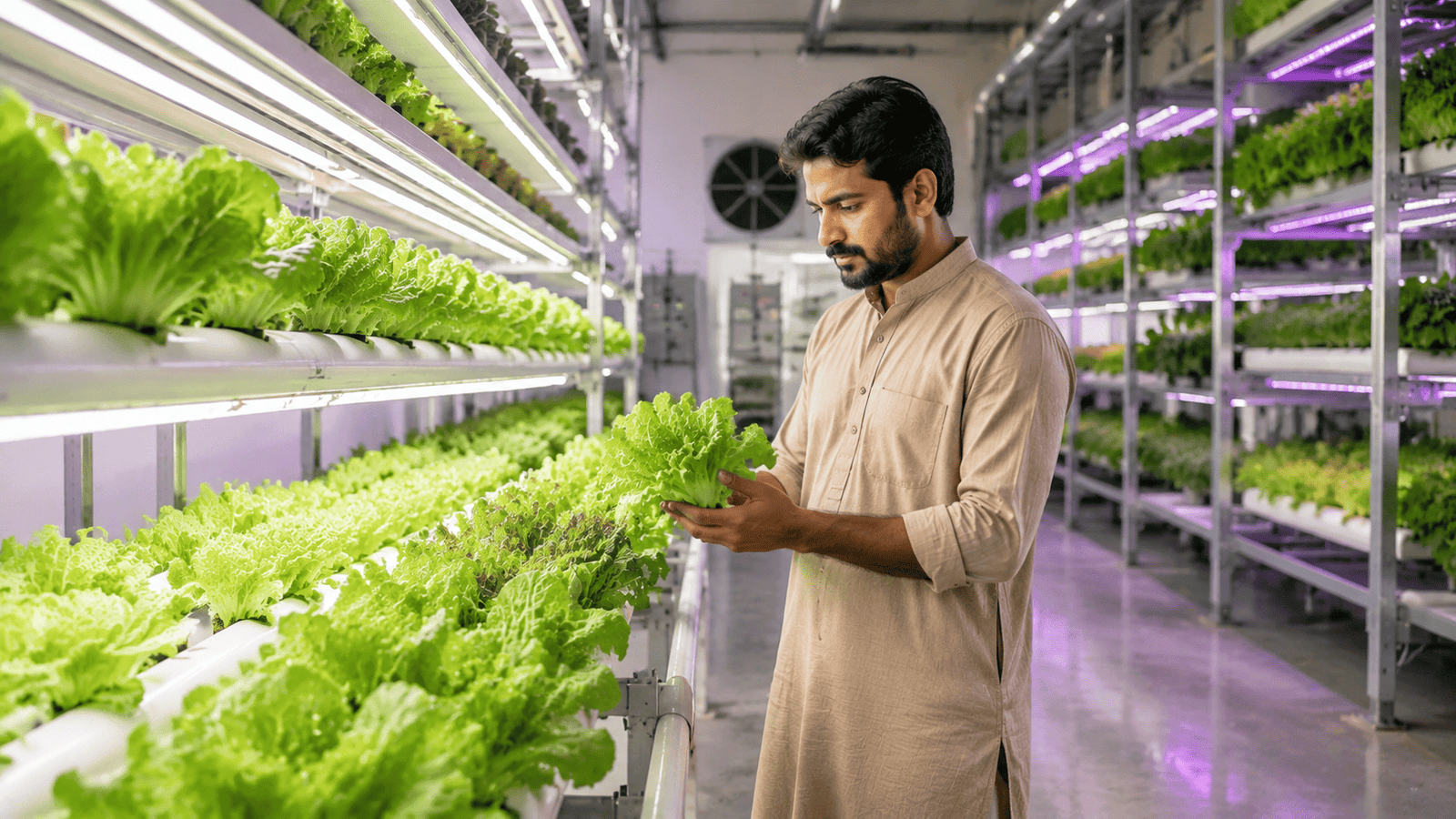
Vertical farming gets pitched as a clean solution to land scarcity and unpredictable weather, and in some ways it is — but it trades outdoor risks for a different set of indoor ones. Electricity bills replace rainfall as the dominant cost variable, a single sensor failure can wipe out a crop cycle in hours instead of days, and a facility that looks efficient on paper can still lose money if the business side isn't dialed in. This guide walks through the challenges of vertical farming that actually show up in operating facilities — not hypothetical ones — and the practical solutions growers use to manage each.
| Challenge | Primary Impact | When It Typically Surfaces |
|---|---|---|
| Electricity and lighting costs | Operating margin | Ongoing, worsens with poor fixture efficiency |
| Startup capital | Ability to launch or scale | Pre-launch and expansion phases |
| HVAC and climate control | Crop quality, energy spend | Seasonal load shifts, high-density racks |
| Equipment failure | Crop loss, downtime | Random, more frequent with poor maintenance |
| Root-zone disease / nutrient imbalance | Yield, crop loss | Weeks into a poorly monitored cycle |
| Pest outbreaks | Yield, crop loss, quarantine | Introduced via seed, staff, or airflow |
| Labor and technical knowledge | Consistency, error rate | Staff turnover, rapid hiring |
| Market pricing pressure | Revenue, margin | Ongoing, tied to field-grown supply |
| Scaling consistency | Product quality across sites | Multi-site or rapid expansion |
| Food safety / supply chain | Compliance, brand risk | Ongoing, spikes during recalls or audits |
Why it happens: Unlike a greenhouse or open field, a vertical farm supplies most or all of its light artificially, and dense rack systems multiply the number of fixtures needed per square foot of growing area. HVAC then has to remove the heat that lighting generates, compounding the load. Facilities in regions with high commercial electricity rates feel this most acutely.
Practical solutions:
Why it happens: Racks, lighting, climate control, water and nutrient systems, and building retrofits all require upfront investment before a single crop generates revenue. Vertical farming's capital intensity is one of its clearest disadvantages compared to low-tech field production.
Practical solutions:
Why it happens: Dense planting, high-intensity lighting, and continuous transpiration from thousands of plants generate heat and humidity loads that most conventional HVAC systems weren't designed for. Undersized systems struggle to hold stable temperature and humidity, which directly affects crop quality and disease pressure.
Practical solutions:
Why it happens: Vertical farms depend on continuous mechanical and electronic operation — pumps, dosing systems, fans, and sensors all need to keep working without the natural buffer that soil provides in traditional growing.
Practical solutions:
Why it happens: Recirculating hydroponic and aeroponic systems move water and nutrients across many plants at once, so a pathogen or an imbalance in pH, EC, or dissolved oxygen can spread through the whole system rather than staying confined to one plant.
Practical solutions:
Why it happens: A controlled environment doesn't mean a sterile one. Pests are typically introduced through seed stock, staff clothing, incoming plant material, or gaps in air filtration — and once inside, they can spread quickly with no natural predators present to slow them.
Practical solutions:
Why it happens: Running a vertical farm requires a mix of agronomic knowledge and technical skill — reading sensor data, troubleshooting dosing systems, and recognizing early crop stress — that's harder to hire for than general farm labor, and turnover can leave gaps in institutional knowledge.
Practical solutions:
Why it happens: Vertical farms often compete directly with field-grown produce on price, even though their production costs are structured differently. Buyers accustomed to commodity pricing may not pay a premium for indoor-grown quality or consistency unless that value is actively communicated and demonstrated.
Practical solutions:
Why it happens: Processes that work reliably in a single pilot room don't always translate cleanly to a larger facility or multiple sites — airflow patterns, light uniformity, and staff workflows all behave differently at scale.
Practical solutions:
Why it happens: Indoor growing reduces some contamination risks tied to open fields but introduces others — recirculating water systems, shared equipment, and dense planting can spread contamination quickly if sanitation lapses. Facilities are also dependent on external suppliers for seed, nutrients, and packaging, which introduces supply chain risk outside their direct control.
Practical solutions:
Electricity cost is typically the largest and most persistent operating challenge, driven mainly by lighting and the HVAC load needed to manage the heat lighting produces.
Not inherently, but failures can happen faster and affect more plants at once, since recirculating systems and shared environments spread problems like disease or equipment failure quickly if not caught early.
No. A closed environment changes which pests and pathogens are common but does not eliminate the risk, and outbreaks can spread quickly through recirculated air and water if not managed.
A combination of high energy costs, capital-intensive infrastructure, and pricing pressure from field-grown produce can compress margins, especially when energy costs are underestimated at the planning stage.
Common approaches include preventive maintenance schedules, redundant critical systems, remote sensor alerts, and keeping spare parts for common failure points on site.
Both matter, but finding staff with the combined agronomic and technical skill to run sensor-based, automated systems is frequently cited as harder than sourcing the equipment itself.
None of these challenges are reasons to avoid vertical farming outright, but treating it as a problem-free alternative to traditional agriculture sets operators up for avoidable losses. The facilities that hold up over time are the ones that plan for electricity costs realistically, build redundancy into critical systems, invest in staff training, and secure buyers before scaling production — not the ones with the newest technology. Anticipating these pressure points before they surface is usually cheaper than solving them after a crop cycle has already been lost.
Want more vertical farming insights delivered to your inbox every week?
Subscribe to Farmers AdvisoryData sources: USDA Agricultural Research Service controlled-environment agriculture publications; Cornell Controlled Environment Agriculture program resources; university extension guidance on hydroponic system sanitation and root-zone disease management; and industry reporting on commercial vertical farm operating costs. Figures and practices represent general guidance and vary by facility design, crop, climate, and local electricity pricing. Current as of August 5, 2026.