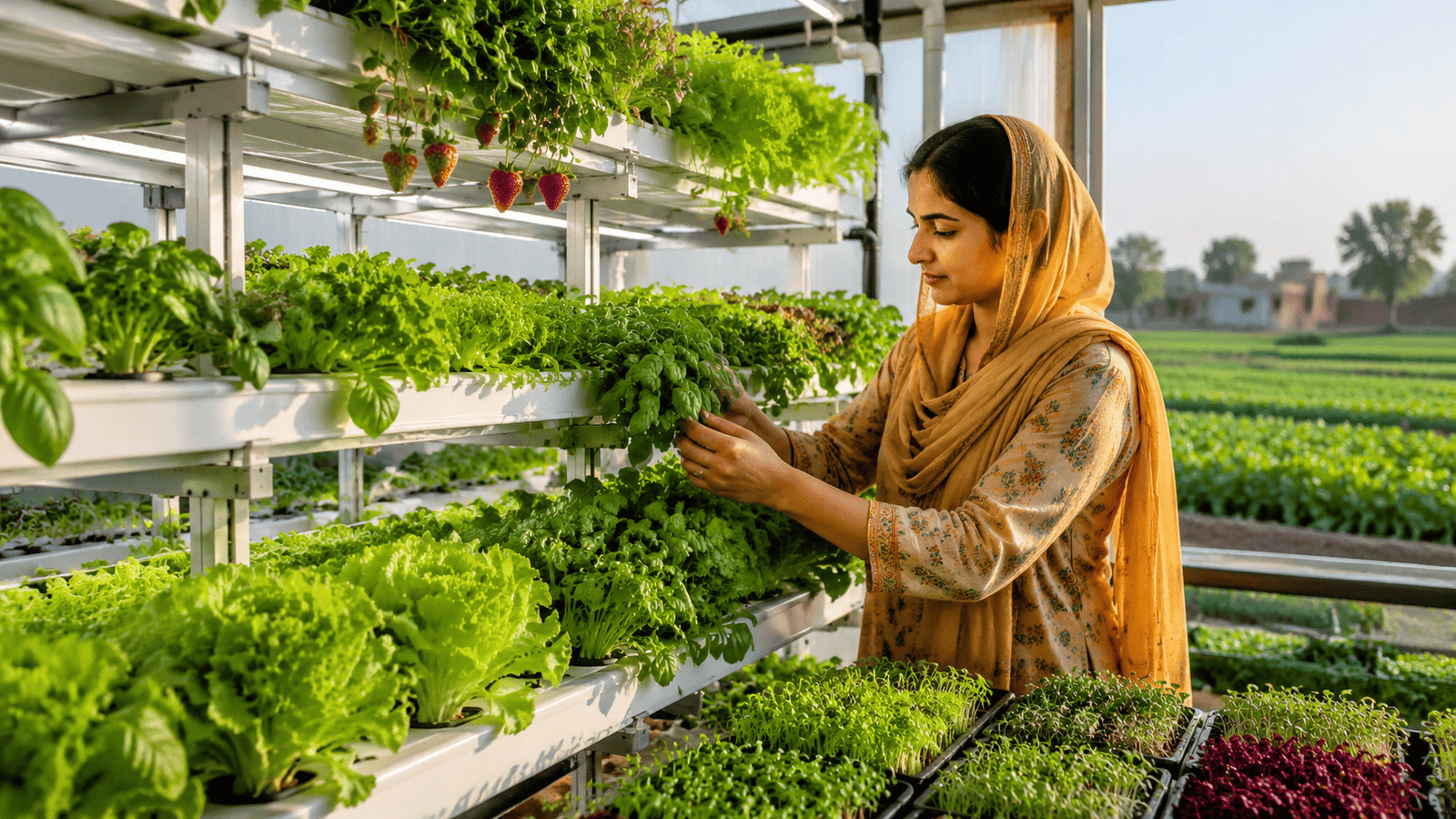
Vertical Farming for Urban Areas: A Practical Guide (2026)
By Farmers Advisory Editorial Team ·
Published August 5, 2026 · Updated August 5, 2026 · 10 min read ·
Category: Vertical Farming
The buildings that work best for urban vertical farming usually share three traits: reliable power access, adequate floor load capacity, and proximity to buyers.
Cities don't have farmland, but they do have something vertical farming can use instead: vacant
warehouses, underused rooftops, and buildings close to the people who eat the food grown in them.
That proximity is the real appeal of vertical farming in urban areas — shorter
transport distances, fresher product, and a growing method that doesn't need open land. It isn't,
however, automatically the right fit for every city building. This guide covers where urban vertical
farming genuinely makes sense, the practical constraints that decide feasibility, and where it tends
to fall short.
Key Takeaways
Urban vertical farming works best in buildings with strong floor load capacity, reliable three-phase power access, and proximity to buyers — not just cheap or available space.
Rooftops, warehouses, and shipping containers each suit different scales; rooftops face structural and weather limits, warehouses offer the most control, and containers suit small pilot operations.
Local zoning, food handling, and building codes vary significantly by city and should be checked before signing a lease, not after.
Proximity to restaurants, specialty grocers, and direct-to-consumer buyers is often the actual commercial advantage of an urban location, not lower costs.
Urban vertical farming isn't automatically viable — buildings with weak power infrastructure, poor structural capacity, or no nearby market for fresh produce are usually poor candidates.
Urban Site Types Compared
Common Urban Vertical Farming Site Types
Site Type
Typical Scale
Main Advantage
Main Limitation
Rooftop
Small to medium
Uses otherwise unused space, some natural light access
Limited growing area, tight climate control margins
Small storefront / basement
Small
Direct customer visibility, low rent in some markets
Limited floor area, ventilation retrofits often needed
1. Why Vertical Farming Suits Urban Areas
Vertical farming doesn't need arable land, which is exactly what cities lack. What cities have
instead is underused vertical space — vacant retail units, warehouse floors, and rooftops — combined
with a dense population of potential buyers within a short delivery radius.
Growing food close to where it's eaten shortens the supply chain and can improve freshness at delivery
Repurposing vacant or underused buildings can be more capital-efficient than building new agricultural infrastructure
Urban buyers — restaurants, specialty grocers, and direct-to-consumer customers — are often willing to pay for freshness and consistency that long-distance shipping can't match
2. Working With Urban Space Constraints
Urban buildings weren't designed with agriculture in mind, so most retrofits involve compromises.
Ceiling height limits how many rack levels a space can support
Column spacing and load-bearing walls can restrict rack layout more than the raw square footage suggests
Loading dock access matters for moving growing media, packaging, and finished product efficiently
Elevator size and door widths can limit equipment that can physically be brought into upper-floor spaces
3. Rooftop Vertical Farming
Rooftops offer visibility and sometimes natural light, but they come with constraints that aren't
always obvious from ground level.
Structural engineers need to confirm the roof can bear the combined weight of racks, growing media, water, and equipment before installation
Wind exposure is typically higher on rooftops than at street level, which affects structure selection and greenhouse-style covering if used
Access for maintenance, harvest, and equipment delivery needs a clear plan, since rooftop logistics are harder than ground-floor logistics
Rooftop greenhouses can supplement artificial lighting with natural sunlight, reducing electricity costs compared to a fully enclosed indoor system
💡 Quick Tip
Get a structural engineer's sign-off before committing to a rooftop site, not after signing a lease. Retrofitting for load capacity after the fact is far more expensive than confirming it up front.
4. Warehouses and Indoor Facilities
Warehouses are generally the most flexible urban option, since floor loads, ceiling heights, and
utility access are usually easier to work with than repurposed retail or rooftop spaces.
Fully enclosed environments give the most consistent control over light, temperature, and humidity
Larger floor plates support higher-density rack layouts and more efficient automation
Retrofitting an existing warehouse for power, water, and drainage still typically requires significant upfront investment
Location relative to buyers still matters — a warehouse on the city outskirts may reduce the freshness and delivery-time advantage that justified going urban in the first place
5. Shipping Containers and Small Buildings
Repurposed shipping containers and small buildings suit pilot operations, small-batch specialty
crops, or businesses testing demand before committing to a larger facility.
Lower upfront cost and faster setup than a full warehouse retrofit
Portable — a container unit can be relocated if a site doesn't work out commercially
Limited growing area caps production volume, which can make per-unit costs harder to bring down at small scale
Tighter internal volume means climate control has less margin for error than in a larger facility
6. Water, Electricity, and Climate Control Access
Utility access is one of the most commonly underestimated constraints in urban vertical farming
site selection.
Confirm the building has, or can be upgraded to, sufficient electrical service for lighting, HVAC, and pumps — older urban buildings often need panel upgrades
Check water access and drainage capacity, since hydroponic systems need reliable supply and a way to manage runoff or wastewater
Verify HVAC capacity or retrofit budget, since most commercial buildings weren't designed for the heat and humidity loads a growing operation generates
7. Local Regulations and Food Safety
⚠️ Common Mistake
Assuming a commercial or industrial zoning designation automatically permits food production. Zoning rules, food handling permits, and building codes for agricultural or food-processing use vary by city and sometimes by district within the same city.
Check local zoning rules for agricultural or food production use before signing a lease
Confirm food handling and safety permit requirements with the relevant local health authority
Building code requirements for ventilation, drainage, and electrical systems may differ from standard commercial retrofits
8. Noise and Structural Considerations
HVAC and pump equipment can generate noticeable noise, which matters more in mixed-use buildings with residential neighbors than in standalone industrial sites
Vibration from equipment can be a concern in older buildings, particularly upper floors of converted structures
Structural assessment should cover not just static rack weight but also the added load of water-filled reservoirs and growing media
9. Distribution: Restaurants, Markets, and Direct Sales
The commercial case for an urban location often rests more on distribution advantages than on
production cost savings.
Short delivery distances to restaurants and specialty grocers support same-day or next-day delivery of highly perishable crops like leafy greens and herbs
Farmers markets and direct-to-consumer sales can work well from a visible urban location, particularly for a facility that welcomes visitors or offers on-site pickup
Community-supported agriculture models can operate from a compact urban facility more easily than from a distant rural farm
10. When Urban Vertical Farming Doesn't Make Sense
Not every urban building or market supports a viable vertical farm.
Buildings with inadequate electrical service and no realistic budget for upgrades
Sites with structural limitations that can't support rack, water, and equipment loads without a costly retrofit
Locations with no nearby buyer base willing to pay for the freshness or consistency premium that offsets higher urban operating costs
Markets already well served by lower-cost field-grown produce for the specific crop being considered
✅ Urban Site
Shorter distance to buyers, fresher delivery
Reuses vacant or underused buildings
Visibility for direct sales and brand building
❌ Rural / Peri-Urban Site
Lower real estate and utility costs in many regions
Fewer structural and zoning retrofit hurdles
Longer transport distance to urban buyers
Frequently Asked Questions
Is vertical farming suitable for every urban building?
No. Suitability depends on floor load capacity, electrical service, water access, and local
zoning — not every commercial or industrial building can support it without a significant retrofit.
Is rooftop or warehouse vertical farming better for cities?
Warehouses generally offer more control and easier scaling, while rooftops can reduce lighting
costs through natural light but face stricter structural and weather limitations.
Do I need special permits for urban vertical farming?
In most cities, yes — food handling permits and zoning approval for agricultural or food
production use are typically required and vary by city and district.
What crops work best for urban vertical farms?
Fast-growing, highly perishable crops such as leafy greens, herbs, and microgreens are common
choices, since their short shelf life makes proximity to buyers especially valuable.
Is urban vertical farming cheaper than a rural facility?
Not usually. Urban real estate and retrofit costs are often higher; the advantage is typically
shorter distribution distances and closer proximity to buyers, not lower costs.
Conclusion
Urban vertical farming earns its place when a building's electrical capacity, structural load, and
location genuinely support it — not simply because a vacant space happens to be available. The
operators who succeed tend to treat site selection as seriously as crop selection, checking power,
water, zoning, and buyer proximity before signing a lease rather than working around surprises after
the fact. Done that way, an urban site's real advantage isn't cheaper production — it's getting fresher
product to nearby buyers faster than a rural facility ever could.
Want more vertical farming insights delivered to your inbox every week?
Data sources: USDA Agricultural Research Service controlled-environment agriculture publications;
Cornell Controlled Environment Agriculture program resources; municipal zoning and food facility
permitting guidance (varies by city); and industry reporting on urban and rooftop vertical farm
projects. Figures and practices represent general guidance and vary by building type, city
regulations, and local market conditions. Current as of August 5, 2026.
 Farmers Advisory