 Farmers Advisory
Farmers Advisory
Farmers Advisory
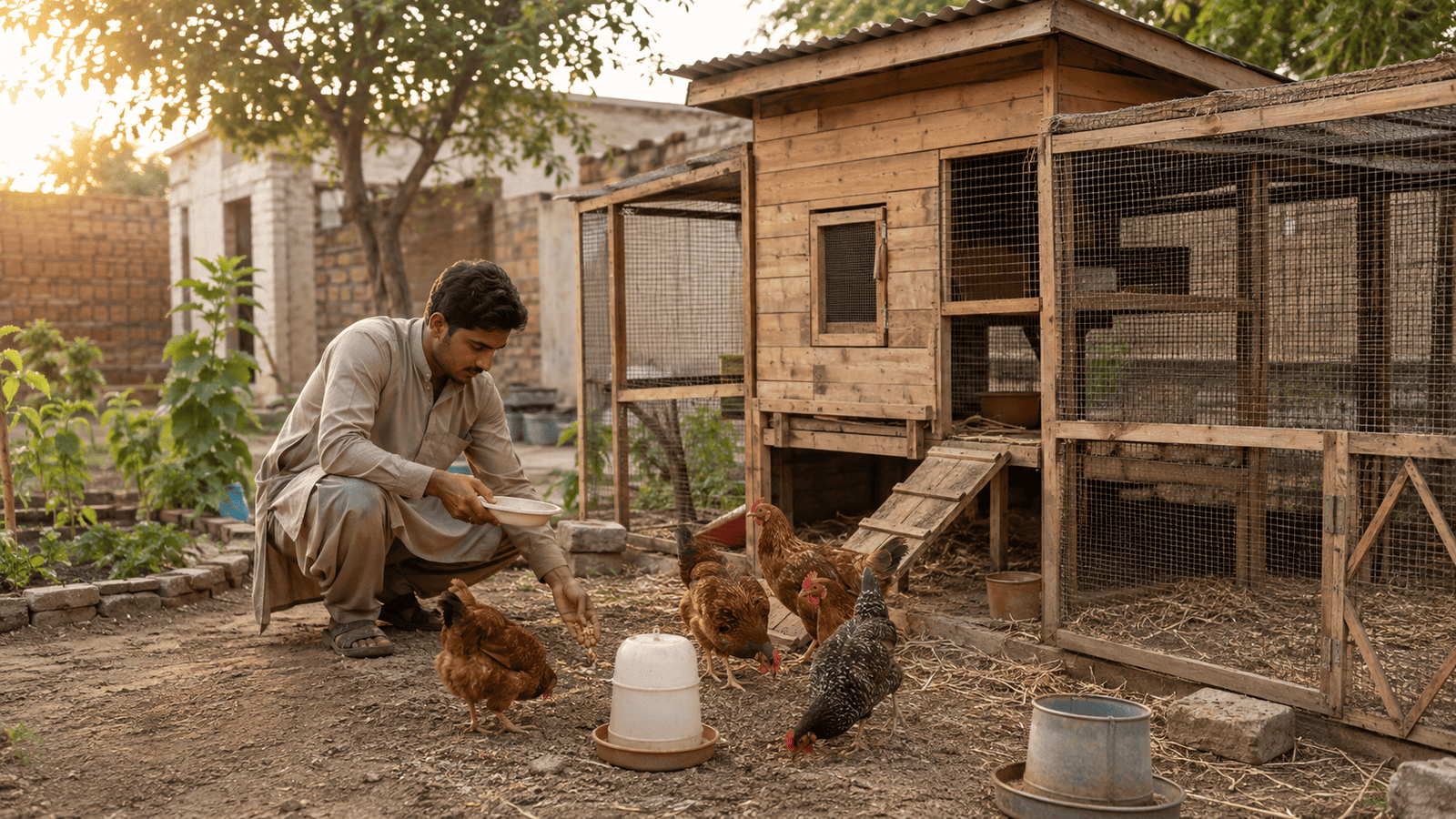
Urban and suburban chicken keeping has grown into one of the most popular entry points into agriculture, driven by demand for fresh eggs and more self-sufficient living. But before you bring chicks home, two things matter more than anything else: knowing your local regulations, and sizing your coop correctly for the flock you actually want. This guide covers exactly what beginners need for backyard poultry farming in 2026 — legal requirements, space planning, flock size, and starter equipment.
| Factor | Recommended Benchmark |
|---|---|
| Indoor coop space per bird | 3-4 sq ft (up to 5 sq ft for extra comfort) |
| Outdoor run space per bird | 8-10 sq ft |
| Roosting bar space per hen | 8 inches |
| Nesting boxes | 1 box per 3-4 hens |
| Common municipal flock limit | 5-6 hens (varies widely by city) |
| Common coop setback from property line | 10-15 feet |
| Time to first egg | 16-24 weeks after hatching |
There is no single federal or state mandate governing backyard poultry in the US — rules vary significantly between states, counties, cities, and even individual homeowner associations (HOAs). Before buying a single chick, confirm:
Beyond legal limits, flock size should be driven by your actual space and goals. A useful planning approach: decide your target egg supply first, then work backward — remembering that chicks take 16-24 weeks before laying, so the flock size you choose today determines your egg supply months from now, not immediately.
Indoor coop space directly affects flock health and behavior. Recommendations generally range from 3-4 square feet per bird (some sources suggest up to 5 for extra comfort), with undersized coops reliably linked to increased pecking and aggressive behavior as birds compete for limited space around feeders, perches, and floor area.
Beyond the coop itself, chickens need adequate outdoor space to move, forage, and dust-bathe. Most guidance recommends 8-10 square feet of run space per bird for confined flocks; free-ranging chickens can tolerate a slightly larger flock relative to a fixed run, but indoor coop space requirements remain unchanged regardless of outdoor access.
Predator-proofing is one of the most commonly underestimated parts of backyard coop design. A well-designed coop should protect birds from digging predators (raccoons, foxes) as well as aerial threats (hawks), which typically means burying wire mesh around the coop perimeter and fully enclosing the run rather than relying on open-top fencing alone.
| Flock Size | Minimum Indoor Coop Space | Minimum Outdoor Run Space |
|---|---|---|
| 3 hens | ~10 sq ft | 24-30 sq ft |
| 4-6 hens | 16-24 sq ft | 32-60 sq ft |
| 7-8 hens | 28-32 sq ft | 56-80 sq ft |
A commonly used beginner DIY design is a 4x12 ft (48 sq ft) walk-in coop, suitable for roughly 4-8 hens and typically buildable by a beginner in a single weekend using standard, affordable materials.
Most guidance recommends 3-4 square feet of indoor coop space per chicken, with some sources suggesting up to 5 square feet for extra comfort, plus 8-10 square feet of outdoor run space per bird.
Many towns limit backyard flocks to 5-6 hens and commonly prohibit roosters due to noise concerns, though this varies significantly by city, county, and HOA.
It depends on your location. Some municipalities require a permit to own chickens or a building permit for coops over a certain size, so checking with your local government before building is essential.
A common requirement is 10-15 feet from property lines, often combined with a rule that the coop must be located in the rear yard, though exact setback distances vary by municipality.
Chicks typically take 16-24 weeks before they begin laying eggs, and backyard hens generally continue laying well for 3-4 years before production naturally declines.
Successful backyard poultry farming starts before you bring home a single chick: confirming local regulations, sizing your coop and run correctly for your target flock, and setting up predator-proof housing from day one. Get these fundamentals right, and the day-to-day of keeping chickens — feeding, collecting eggs, basic health monitoring — becomes a manageable, rewarding routine rather than a source of ongoing problems.
Want more poultry farming tips delivered to your inbox every week?
Subscribe to Farmers AdvisoryData sources: Garvee backyard chicken coop laws by state guide (March 2026); Chicken Coop Company backyard flock size guide (May 2026); The Hen House Collection chicken coop size guide (June 2026); Farmers' Almanac raising backyard chickens guide (June 2026); Feathered Farm Life backyard poultry 101 guide; AgriTopic backyard poultry setup guide (May 2026); and CityHubGo DIY coop and state laws guide (April 2026). Regulations vary significantly by state, county, city, and HOA — always verify current local requirements before building a coop. Current as of July 10, 2026.