 Farmers Advisory
Farmers Advisory
Farmers Advisory
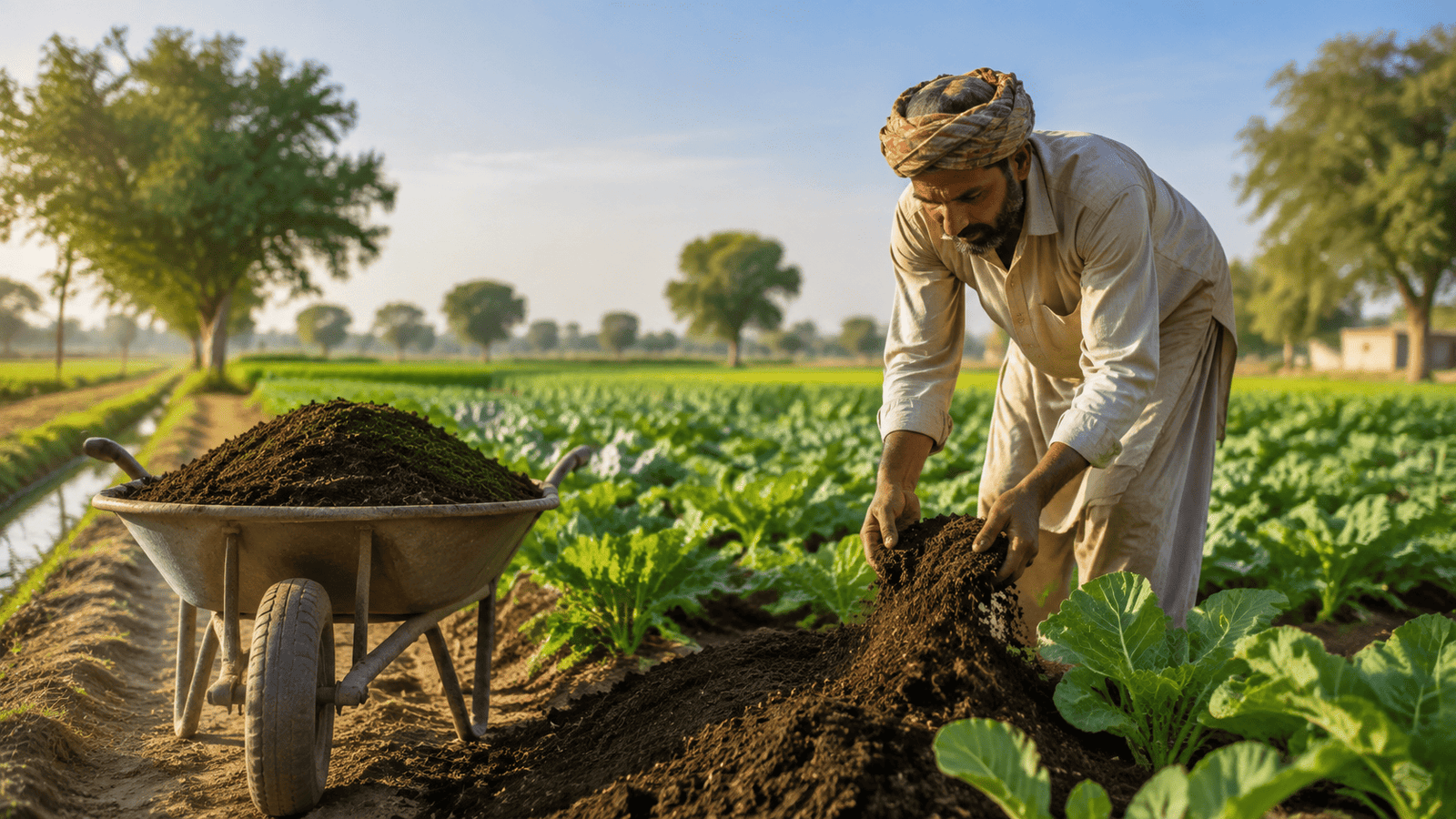
Organic fertilizers feed crops by building soil biology and slowly releasing nutrients, rather than delivering an immediate synthetic dose. That difference changes how they should be chosen, timed, and applied. This guide covers the best organic fertilizers for healthy crops — compost, manure, vermicompost, green manure, and mineral amendments — along with how to match a source to what a soil test shows, since no single organic fertilizer is right for every crop or soil.
| Source | Primary Nutrient(s) | Release Speed | Best Use |
|---|---|---|---|
| Compost | Balanced N-P-K plus micronutrients | Slow, steady | General soil building, most crops |
| Aged farmyard manure | Nitrogen, some phosphorus | Moderate | Heavy-feeding crops, pre-season |
| Vermicompost | Balanced nutrients, high biological activity | Slow, steady | Transplants, container crops, top-dressing |
| Legume green manure | Nitrogen (fixed biologically) | Moderate, after incorporation | Pre-season nitrogen for following crop |
| Rock phosphate | Phosphorus | Very slow | Long-term phosphorus deficiency correction |
| Gypsum | Calcium, sulfur | Moderate | Compacted or sodic soils |
Compost is the broadest, most widely applicable organic fertilizer, supplying a balanced mix of nutrients along with organic matter that improves soil structure, water retention, and microbial activity. Well-finished compost is dark, crumbly, and earthy-smelling; immature compost can rob soil nitrogen as it continues breaking down and may still carry weed seeds or pathogens, so maturity matters as much as the ingredients used.
Manure supplies a strong dose of nitrogen along with other nutrients, but fresh manure carries real pathogen and burn risk and should be composted or aged for a defined period before application near food crops, particularly ones eaten raw. Different animal manures vary in nutrient concentration and salt content, so the right choice and rate depend on both the manure source and what the soil test shows.
Vermicompost — compost produced through worm digestion — tends to have finer texture, higher biological activity, and more readily available nutrients than standard compost, making it well suited to transplants, container growing, and targeted top-dressing. It's typically more resource-intensive to produce at scale, so it's often used as a supplement rather than the sole fertility source on larger farms.
Legume cover crops (clover, vetch, field peas, and others) fix atmospheric nitrogen through root nodule bacteria and release it into the soil when incorporated or left to decompose, making them a targeted, low-cost nitrogen source ahead of a nitrogen-hungry cash crop. Non-legume cover crops add organic matter and suppress weeds but don't contribute meaningful fixed nitrogen on their own.
Some nutrient deficiencies are better corrected with slow-release mineral amendments than with compost or manure alone. Rock phosphate addresses phosphorus deficiency over a longer timeframe; lime corrects acidic soil pH; gypsum can help loosen compacted or sodic soils and supply calcium and sulfur. These are typically used to correct a specific deficiency identified by soil testing rather than as a general-purpose fertilizer.
Every fertilizer decision in an organic system should start from what a soil test actually shows, not from habit or what was used the previous season. A test identifies pH, existing nutrient levels, and organic matter content, which determines both which amendment is actually needed and how much — applying nutrients a soil already has in surplus wastes money and can create new imbalances.
"Organic" doesn't mean risk-free in unlimited quantities. Overapplying nitrogen-rich manure or compost can cause excess vegetative growth at the expense of fruiting, nutrient runoff into waterways, and — in the case of unfinished compost or fresh manure — real food-safety risk. Rates should be based on soil test results and crop need, not simply "more is better."
Well-finished compost is the most broadly applicable organic fertilizer for general soil building across most crops, though specific deficiencies may still need a targeted amendment identified by soil testing.
This depends on whether the manure is raw or composted and on food-safety guidance for the specific crop, particularly ones eaten raw. Manure should generally be composted or aged and applied well ahead of harvest rather than close to it — check current food-safety guidance for exact intervals.
Yes. Overapplication can cause nutrient imbalances, excess vegetative growth, and runoff, even though the sources are natural. Rates should be based on soil test results, not applied without limit.
Compost is decomposed organic matter from a mix of plant and sometimes animal-based materials, offering a balanced nutrient profile. Manure is animal waste, generally higher in nitrogen, and needs proper composting or aging before use near food crops.
It's strongly recommended. A soil test shows existing nutrient levels and pH, which determines which amendment is actually needed rather than guessing or repeating a prior year's input program.
Approved input lists vary by certifying body and standard. Compost, aged manure, and many mineral amendments are commonly approved, but growers pursuing certification should confirm any specific product or amendment against their certifier's current approved list before applying it.
The best organic fertilizer isn't a single product — it's whichever combination of compost, manure, green manure, and mineral amendments actually matches what a soil test shows a specific field needs. Compost and cover crops handle general fertility building over time; manure and targeted amendments correct specific gaps. Treating fertility as an ongoing, test-driven program rather than a fixed recipe is what keeps organic crops consistently well-fed without the waste or risk that comes from overapplying inputs blindly.
Want more organic farming guidance delivered to your inbox every week?
Subscribe to Farmers AdvisoryGeneral guidance based on published agricultural extension resources on organic soil fertility. Application rates, nutrient content, and approved-input status vary by fertilizer source, crop, soil type, and certifying body — confirm specific rates with a soil test and, where relevant, an approved inputs list. Current as of August 5, 2026.