 Farmers Advisory
Farmers Advisory
Farmers Advisory
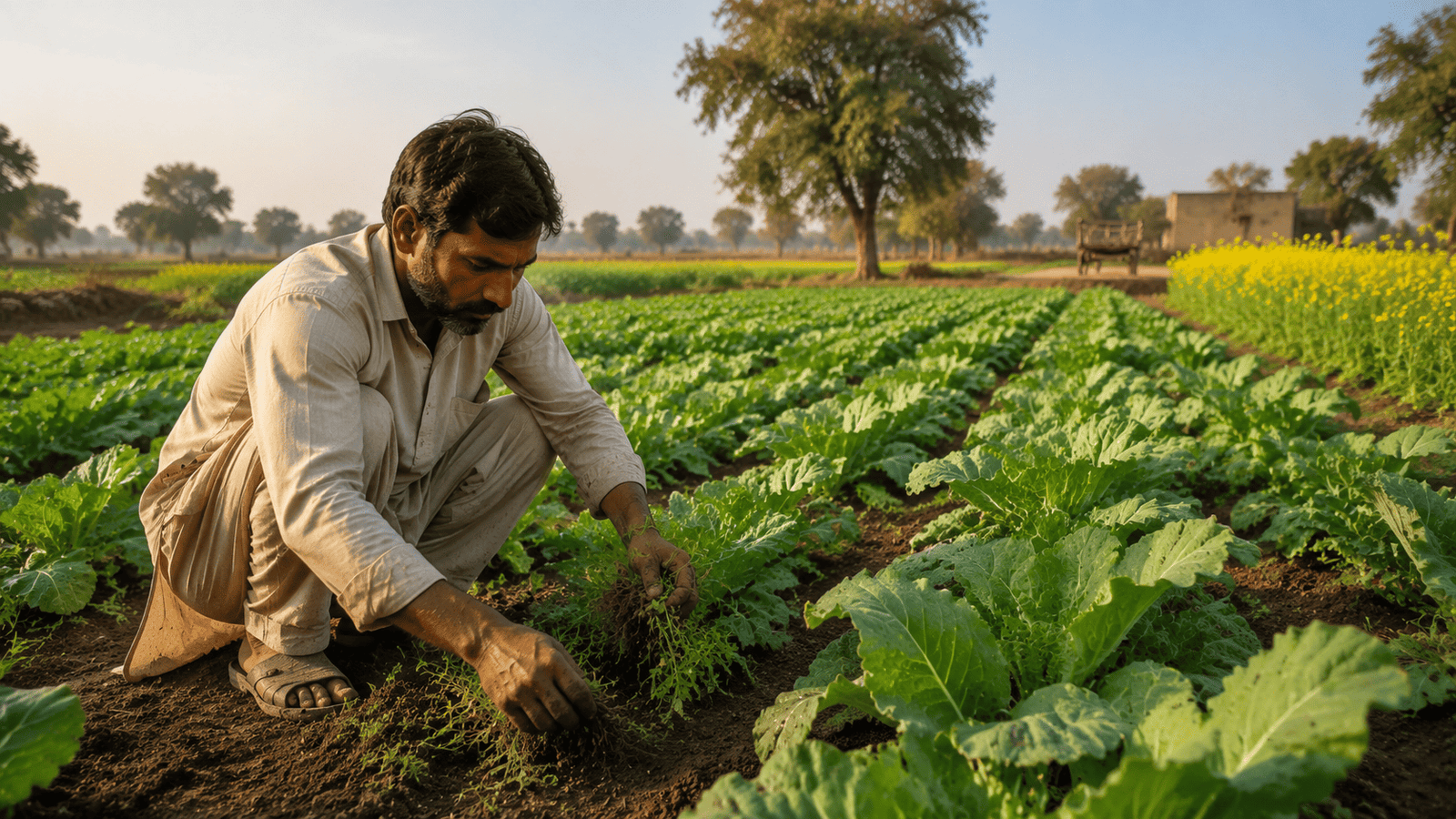
Organic farming isn't universally harder or easier than conventional farming — it trades one set of problems for another. Synthetic fertilizers and pesticides are off the table, which shifts more weight onto planning, labor, and biological management. None of the challenges of organic farming covered here are unsolvable, but each requires a specific, deliberate response rather than hoping the problem resolves itself. This guide walks through the most common obstacles organic farmers face and practical ways to work through each one.
Why it happens: most certification standards require a multi-year conversion period, commonly around two to three years, during which the farm must follow organic practices but can't yet sell at organic prices, while soil biology is also still rebuilding after previous conventional management.
Practical solution: budget the transition years as a distinct financial phase separate from steady-state organic operation, and consider staggering conversion across fields rather than converting the whole farm simultaneously, so some acreage remains at full conventional or full organic production throughout.
Why it happens: without herbicides, weeds compete for water, light, and nutrients largely unchecked unless actively managed through other means.
Practical solution: combine mulching, timely mechanical cultivation, cover cropping, and stale seedbed techniques (pre-germinating and killing a flush of weeds before planting the actual crop). Consistent, early-season cultivation before weeds set seed prevents much larger problems later in the season.
Why it happens: synthetic pesticides that offer fast, broad-spectrum control aren't available, so prevention and biological methods have to carry more of the load.
Practical solution: build prevention into the system from the start — resistant varieties, crop rotation, beneficial insect habitat, and regular field monitoring catch problems while they're still manageable. Approved organic inputs remain available for targeted intervention once monitoring identifies a genuine threshold-crossing problem, rather than as a routine preventive spray.
Why it happens: organic nutrient sources like compost and manure release nutrients more gradually than synthetic fertilizers, which can create timing mismatches if a crop needs a fast nutrient boost at a specific growth stage.
Practical solution: soil test regularly and plan amendments well ahead of when the crop will need them, since organic nutrient sources need lead time to become plant-available. Pairing slower-release compost or manure with faster-acting approved amendments for specific deficiencies can smooth out timing gaps.
Why it happens: mechanical and manual weed control, closer pest monitoring, and more intensive rotation planning generally require more hands-on hours than a conventional system relying on synthetic sprays.
Practical solution: invest in appropriately scaled cultivation equipment to reduce manual labor where the farm's budget allows, and stagger planting schedules to spread labor peaks rather than concentrating all critical tasks into the same narrow window.
Why it happens: certification standards require detailed, ongoing documentation of inputs, practices, and sales, which can feel like a significant administrative burden layered on top of actual farm work.
Practical solution: start recordkeeping from day one, even before deciding whether to certify, and use a consistent system (digital or paper) rather than reconstructing records after the fact. See our organic certification guide for a full walkthrough of the process.
Why it happens: wholesale organic buyers may have volume or consistency requirements a small farm can't easily meet, while direct sales channels require marketing effort and proximity to customers willing to pay a premium.
Practical solution: identify the sales channel before harvest rather than after, and build relationships with buyers, CSA members, or market customers throughout the season rather than only at harvest time. Diversifying across a few channels reduces dependence on any single buyer.
Why it happens: yields on organic systems can vary more season to season than conventional systems, particularly while soil fertility and pest management systems are still maturing, or when weather stresses coincide with a system that has fewer synthetic buffers.
Practical solution: diversify crops so a poor season for one crop doesn't sink the whole farm's income, and track yield trends over several seasons rather than judging the system based on any single year.
Why it happens: organic-approved fertilizers, seed, and pest control products aren't stocked as universally as conventional equivalents, and availability can vary significantly by region.
Practical solution: source key inputs — particularly compost and manure — on-farm or from nearby suppliers where possible to reduce dependence on purchased, potentially hard-to-source products, and order specialty organic inputs well ahead of the season rather than at the point of need.
Why it happens: without synthetic post-harvest treatments, organic produce often has a shorter shelf life, and weather-driven pest or disease pressure has fewer synthetic backstops than in conventional systems.
Practical solution: cool produce promptly after harvest, handle it gently to avoid bruising that shortens shelf life further, and build weather resilience into the farm plan through diversified plantings and, where feasible, season-extension tools like row cover or high tunnels.
| Challenge | Why It Happens | Practical Solution |
|---|---|---|
| Transition period | Organic-level costs without organic-level prices during conversion | Budget it as its own phase; consider staggered field conversion |
| Weed pressure | No herbicides to fall back on | Mulching, timely cultivation, cover crops, stale seedbeds |
| Pest and disease | No broad-spectrum synthetic pesticides | Prevention, monitoring, resistant varieties, targeted approved inputs |
| Nutrient availability | Organic sources release nutrients more slowly | Soil test and amend well ahead of crop need |
| Labor requirements | More manual/mechanical management replaces chemical shortcuts | Appropriate equipment; stagger planting to spread labor peaks |
| Certification/recordkeeping | Detailed documentation required by standards | Start records from day one with a consistent system |
| Market access | Wholesale volume requirements or limited direct-sale reach | Line up buyers/channels before harvest; diversify channels |
| Yield variability | Maturing soil biology and fewer synthetic buffers | Diversify crops; judge trends over multiple seasons |
| Input availability | Regional variation in organic-approved product supply | Source on-farm where possible; order specialty inputs early |
| Weather/post-harvest | Shorter shelf life without synthetic treatments | Prompt cooling, gentle handling, season-extension tools |
There's no single universal answer, but the transition period and weed management are commonly cited as the most demanding phases, since both require sustained effort before the payoff (organic pricing and manageable weed pressure) is fully realized.
Often, yes, particularly for weed and pest management, since organic systems generally substitute manual and mechanical labor for chemical control methods.
Not always. Yield differences vary significantly by crop, region, and how mature the organic system is; the gap is often more pronounced during transition and can narrow considerably in well-managed, established systems.
Budgeting the transition as a distinct financial phase, and staggering conversion across fields rather than converting all acreage simultaneously, both help spread out and reduce transition-period risk.
It's more of an administrative challenge than an agronomic one — the core difficulty is consistent recordkeeping and documentation, which a reliable system from day one largely solves.
Yes, though the specific tools differ — small farms often rely more on direct sales and diversified plantings, while large farms lean more on mechanical cultivation equipment and wholesale relationships.
No. The specific mix and severity of challenges depends heavily on crop, region, farm size, and market — a diversified vegetable operation and a large grain farm will typically experience these challenges quite differently.
None of the challenges covered here are unique to organic farming in the sense of being unsolvable — they're simply challenges that organic systems face without the synthetic shortcuts conventional farming relies on. Weeds, pests, fertility gaps, labor demands, and market access all have practical, well-established solutions; the common thread is that each one needs to be planned for in advance rather than addressed reactively once it's already a problem. Farms that treat these as expected parts of the system, budgeted and planned for from the start, tend to navigate them far more smoothly than farms that discover them one at a time.
Want more organic farming guidance delivered to your inbox every week?
Subscribe to Farmers AdvisoryGeneral guidance drawn from publicly available agricultural extension and organic-standards resources, including university extension services and organic certification organizations. Severity and specifics of these challenges vary by crop, region, farm size, and market — consult a local agricultural extension office for guidance tailored to your situation. Current as of August 5, 2026.