 Farmers Advisory
Farmers Advisory
Farmers Advisory
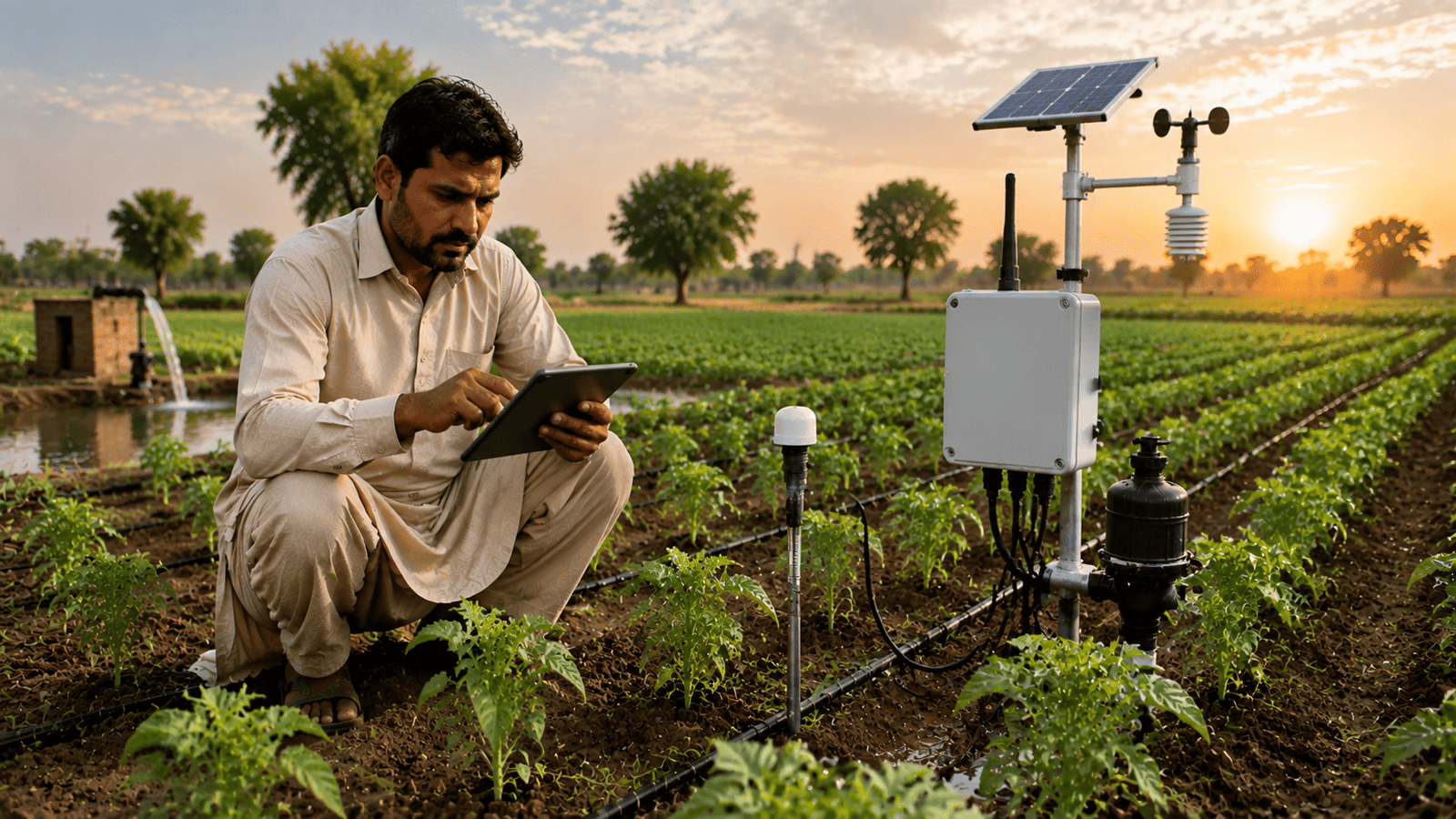
"How much does drip irrigation cost per acre?" doesn't have one honest answer, because two farms with identical acreage can end up with very different bills depending on row spacing, how far water has to travel, and how much filtration and automation the water source demands. What this guide provides instead is a complete cost framework: every component that goes into a drip system, what drives its price up or down, and a worked example using clearly labeled assumptions so you can substitute your own local prices and get a realistic number for your farm.
Before pricing anything, it helps to understand why the same system type can cost very different amounts on two different farms.
| Component | What Drives Its Cost | Notes |
|---|---|---|
| Water source development | Well depth, pond construction, or connection fee | Skip if a suitable source already exists |
| Pump | Required flow rate and pressure, energy source (electric, diesel, solar) | Sized to total system demand, not just one zone |
| Storage tank / reservoir | Whether the source can deliver on-demand or needs buffering | Not always required |
| Filtration system | Water quality — sediment, organic matter, or mineral load | Undersizing filtration causes costly clogging later |
| Pressure regulators and valves | Number of zones, elevation changes | More zones generally means more valves |
| Mainline and submain pipe | Distance from source to field, and field internal layout | Diameter driven by total flow, not just distance |
| Lateral drip lines and emitters | Row spacing, emitter spacing, total row length | Usually the largest line item on close-spaced row crops |
| Fertigation equipment | Whether fertigation is included and injector type | Optional at setup; can be added later |
| Automation and controllers | Level of automation — none, basic timers, or smart controllers | Optional; adds cost but reduces labor |
| Installation labor | Field prep, trenching, assembly, local labor rates | Can be significant on large or complex layouts |
Setup cost is only part of the budget. Ongoing costs determine what the system actually costs to run season after season.
A reliable estimate is built from the ground up, not quoted as a flat rate. The general structure looks like this:
Applying this requires working out the actual quantity of each component your specific field layout needs — length of mainline, number of emitters, pump size — rather than assuming a generic quantity that may not match your row spacing or field shape.
The figures below are illustrative placeholders meant to demonstrate the calculation method, not current market prices. Replace each unit cost with a verified local quote before budgeting against it.
| Component | Quantity Assumption | Unit Cost Placeholder | Formula |
|---|---|---|---|
| Lateral drip line | ~7,260 linear ft (rows 3 ft apart on 1 acre) | Cost per linear ft (local quote) | Quantity × unit cost |
| Emitters | ~2,420 emitters (12-inch spacing) | Cost per emitter (local quote) | Quantity × unit cost |
| Mainline/submain pipe | Length depends on source distance | Cost per linear ft by diameter (local quote) | Length × unit cost |
| Filtration unit | 1 unit sized to total flow | Cost by filter type and capacity (local quote) | Flat unit cost |
| Pump | 1 unit sized to total flow and pressure need | Cost by pump size (local quote) | Flat unit cost |
| Valves and pressure regulators | Number of zones planned | Cost per valve/regulator (local quote) | Quantity × unit cost |
| Installation labor | Hours estimated from layout complexity | Local hourly or contract labor rate | Hours × rate |
Summing each row's result gives the total setup cost for that one acre. On a larger farm, mainline, pump, and filtration costs are shared across more acres, which is why per-acre cost often falls as total irrigated area increases — a smaller farm carries the same fixed infrastructure cost over fewer acres.
There is no single accurate average, since cost depends heavily on crop spacing, water source, terrain, and automation level. Building a component-by-component estimate for your specific field gives a far more reliable number than any generic average.
It varies by crop and field conditions. Closely spaced row crops can require more drip line and emitters than a comparable sprinkler layout, while orchard or vineyard spacing often favors drip on a per-acre materials basis. Get itemized quotes for both to compare fairly.
For close-spaced row crops, lateral line and emitters are often the largest line item. For farms with a poor water source or a long distance to the field, pump, filtration, and mainline costs can dominate instead.
Drip systems generally use water more efficiently than many surface or sprinkler methods, but the specific payback period depends on local water cost, crop value, and the system's actual efficiency in practice. It should be assessed for your specific farm rather than assumed.
Basic layouts are within reach of a capable farmer, but pump sizing, filtration selection, and pressure zone design benefit from at least a consultation with an irrigation designer to avoid costly mistakes.
Not by default. Fertigation injectors and related equipment are typically a separate line item that can be added at initial setup or installed later as a system upgrade.
A trustworthy drip irrigation budget is built, not quoted. Start with your field's actual layout — row spacing, distance to water, water quality, and how many zones you need — and price each component against current local rates rather than a generic per-acre figure pulled from somewhere else. The water-delivery infrastructure (pump, filtration, mainline) is frequently the larger share of cost on farms with a challenging water source, so budget for the whole system, not just the visible drip tape in the field.
Want more irrigation planning and budgeting guides delivered to your inbox every week?
Subscribe to Farmers AdvisoryData sources: USDA Natural Resources Conservation Service, irrigation system cost-share and design guidance; university extension irrigation economics bulletins (Texas A&M AgriLife Extension, Kansas State University Extension, University of California Cooperative Extension); FAO Irrigation and Drainage Paper series on system design and economics. Cost figures in this article are illustrative placeholders for calculation purposes only, not current market prices — verify actual costs with local suppliers. Current as of July 10, 2026.