 Farmers Advisory
Farmers Advisory
Farmers Advisory
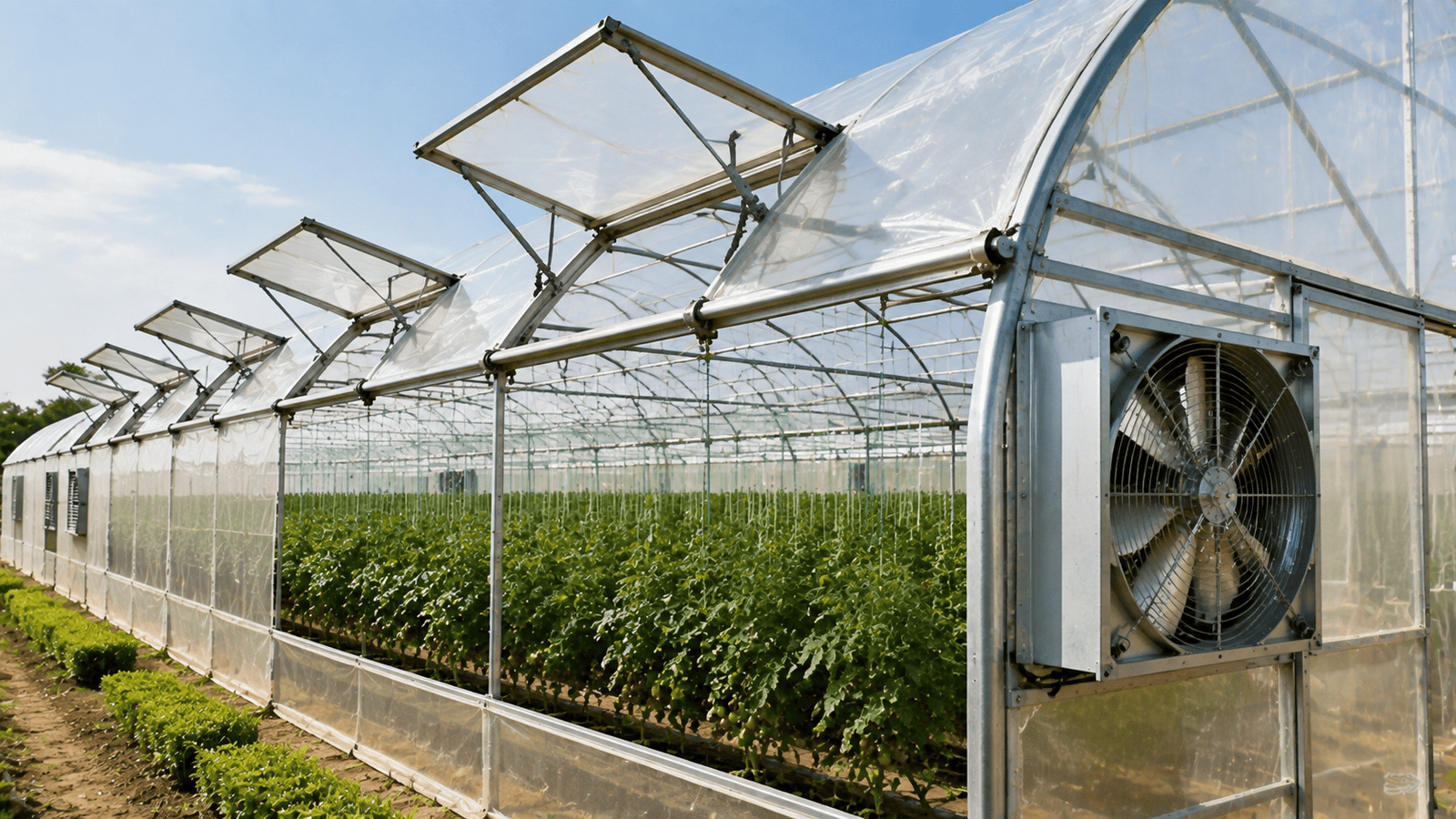
Greenhouse farming gives you control over temperature, humidity, water, and pests at the cost of higher investment and more daily management. Open field farming costs less to start and scales more cheaply per acre, but leaves the crop exposed to weather, pests, and season length. Neither approach is universally better — the right choice depends on your climate, capital, target crops, and market. This guide compares both systems across the factors that actually decide profitability, so you can match the system to your situation rather than a generic recommendation.
| Factor | Greenhouse Farming | Open Field Farming |
|---|---|---|
| Initial investment | High — structure, covering, climate systems | Low to moderate — land prep and basic equipment |
| Weather exposure | Largely protected | Fully exposed |
| Water efficiency | Generally higher, targeted irrigation | Lower, more evaporation and runoff loss |
| Pest/disease pressure | Reduced, but humidity-driven disease risk if unmanaged | Higher exposure to field pests and weather-driven disease |
| Growing season | Can extend well beyond the natural season | Fixed by local climate and frost dates |
| Labor per acre | Higher — monitoring, structure upkeep, manual tasks | Lower per acre, more mechanization-friendly |
| Scalability | Expensive to scale, expands in discrete units | Cheaper to scale, expands by adding land |
| Best suited for | High-value crops, small plots, unfavorable climates | Land-extensive crops, favorable climates, lower margins |
Open field farming has a lower barrier to entry. Beyond land, water access, and basic tillage or irrigation equipment, there's no structure to build. Greenhouse farming requires the structure itself — frame, covering, foundation — plus irrigation, ventilation, and often heating or cooling systems before a single seed goes in the ground. That upfront cost buys growing space that produces year-round or near year-round, rather than one crop cycle per season.
Land requirements differ too. A greenhouse concentrates production into a smaller, intensively managed footprint, which matters where land is scarce or expensive. Open field farming needs more land to generate comparable output, but that land typically costs far less per square foot to bring into production than a covered structure.
This is the core trade-off. A greenhouse lets you manage temperature, humidity, and light exposure within a range you choose, and it physically blocks hail, frost, heavy rain, and wind damage. Open field crops take whatever the season delivers — a late frost, an unseasonal heatwave, or a hailstorm can wipe out a harvest with no recourse.
That protection isn't free of risk. A poorly ventilated greenhouse can trap heat and humidity to levels that stress plants or encourage fungal disease faster than an open field would. Climate control is a tool, not a guarantee — it only helps if it's actually managed.
Greenhouses typically use water more efficiently because irrigation — drip lines, fertigation systems — delivers water directly to the root zone with minimal loss to wind, evaporation, or runoff. Open field irrigation, especially flood or overhead sprinkler systems, loses more water to evaporation and uneven distribution, though drip irrigation can close much of that gap in the field as well.
The efficiency advantage of a greenhouse scales with how well the irrigation system is designed — a basic hose-and-can setup inside a greenhouse won't necessarily outperform a well-designed drip system in an open field.
A greenhouse structure physically excludes many flying and crawling pests, and screening on vents and doors keeps most of the rest out. Open field crops are exposed to whatever pest populations exist regionally, with no barrier beyond crop rotation, netting, or spraying.
Disease pressure follows a similar pattern with a twist: high humidity inside a poorly ventilated greenhouse can accelerate fungal diseases like powdery mildew and botrytis beyond what the same crop would experience in an open, breezier field.
Greenhouses allow multiple crop cycles per year for many vegetables by extending the growing season beyond local frost dates, and controlled conditions can push yield per plant higher for crops like tomatoes and cucumbers. Open field farming is locked to one or two cycles per year in most climates, determined by frost-free days and rainfall patterns.
Yield comparisons are crop- and climate-specific — a greenhouse doesn't automatically outyield an open field for every crop, and land-extensive crops like maize, wheat, or forage are rarely grown in greenhouses at all because the economics don't support it.
Greenhouse labor tends to be more intensive per unit of area — monitoring vents, checking irrigation lines, managing pruning and training, and maintaining the structure itself. Open field operations more readily adopt large-scale mechanization — tractors, combine harvesters, boom sprayers — which lowers labor per acre as scale increases.
Energy use also diverges. A greenhouse using heating, cooling fans, or supplemental lighting carries an ongoing energy cost that an open field simply doesn't have. Automation — sensors, automated vents, fertigation controllers — can offset labor costs in both systems, but the technology itself adds to the greenhouse's upfront investment.
Greenhouse farming generally targets higher-value crops sold at a premium — off-season vegetables, specialty herbs, or produce marketed for consistent quality — because the higher cost structure needs a higher price point to justify it. Open field farming works economically at lower margins per unit because the cost base per acre is lower, making it viable for staple and commodity crops.
Actual profitability for either system depends on variables specific to your operation: local energy and land prices, labor costs, the crop you grow, your yield, and the price your market pays. A responsible profitability estimate always runs the numbers for your own inputs rather than borrowing a figure from another region or scale.
Consider a greenhouse when you're growing high-value crops on limited land, farming in a climate with a short or unpredictable season, or targeting off-season market prices that justify the extra cost. Consider open field farming when you're growing land-extensive or lower-margin crops, have access to enough affordable land, and your local climate already suits the crop's natural season without much intervention.
Many growers don't have to pick one exclusively — starting with a small greenhouse for nursery seedlings or a high-value cash crop, alongside open field production for everything else, is a common and lower-risk way to test both systems before committing further capital to either.
It depends on the crop, market, and cost structure. Greenhouses can be more profitable for high-value, climate-sensitive crops sold at a premium, but the higher investment and operating costs mean profitability isn't automatic — it has to be calculated for your specific situation.
No. Greenhouses can raise yield per plant for crops like tomatoes and cucumbers through climate control, but land-extensive crops such as grains are rarely grown in greenhouses because the economics don't favor it at that scale.
Greenhouses generally use water more efficiently because irrigation is targeted and shielded from wind and evaporation, though a well-designed drip system in an open field can narrow that gap considerably.
No. Greenhouses exclude many pests physically, but an infestation that gets inside can spread quickly since natural predators and weather that would otherwise help control it are also kept out.
Yes. Many growers use a greenhouse for seedlings or high-value crops and open field production for land-extensive crops, spreading risk and capital across both systems.
Open field farming usually has a lower barrier to entry because it doesn't require building and equipping a structure first. A small, low-cost greenhouse can still be a reasonable starting point if the target crop and market justify it.
Greenhouse farming and open field farming solve different problems. A greenhouse buys control — over climate, pests, and season length — at the cost of higher investment and closer daily management. An open field trades that control for lower cost and easier scaling, accepting whatever the weather and regional pest pressure deliver. The right choice comes down to your crop, your climate, your capital, and the market you're selling into, and for many growers, the real answer is running both systems for the parts of the operation each one suits best.
Want more greenhouse farming guides delivered to your inbox every week?
Subscribe to Farmers AdvisoryData sources: USDA Agricultural Marketing Resource Center, protected agriculture and controlled environment agriculture overviews; Cornell University Controlled Environment Agriculture program publications; University of Arizona Cooperative Extension, greenhouse crop production guidance; Penn State Extension, greenhouse vegetable production resources; FAO, greenhouse and protected cultivation technical notes. Figures represent general guidance and vary by climate, crop, scale, and management. Current as of August 5, 2026.