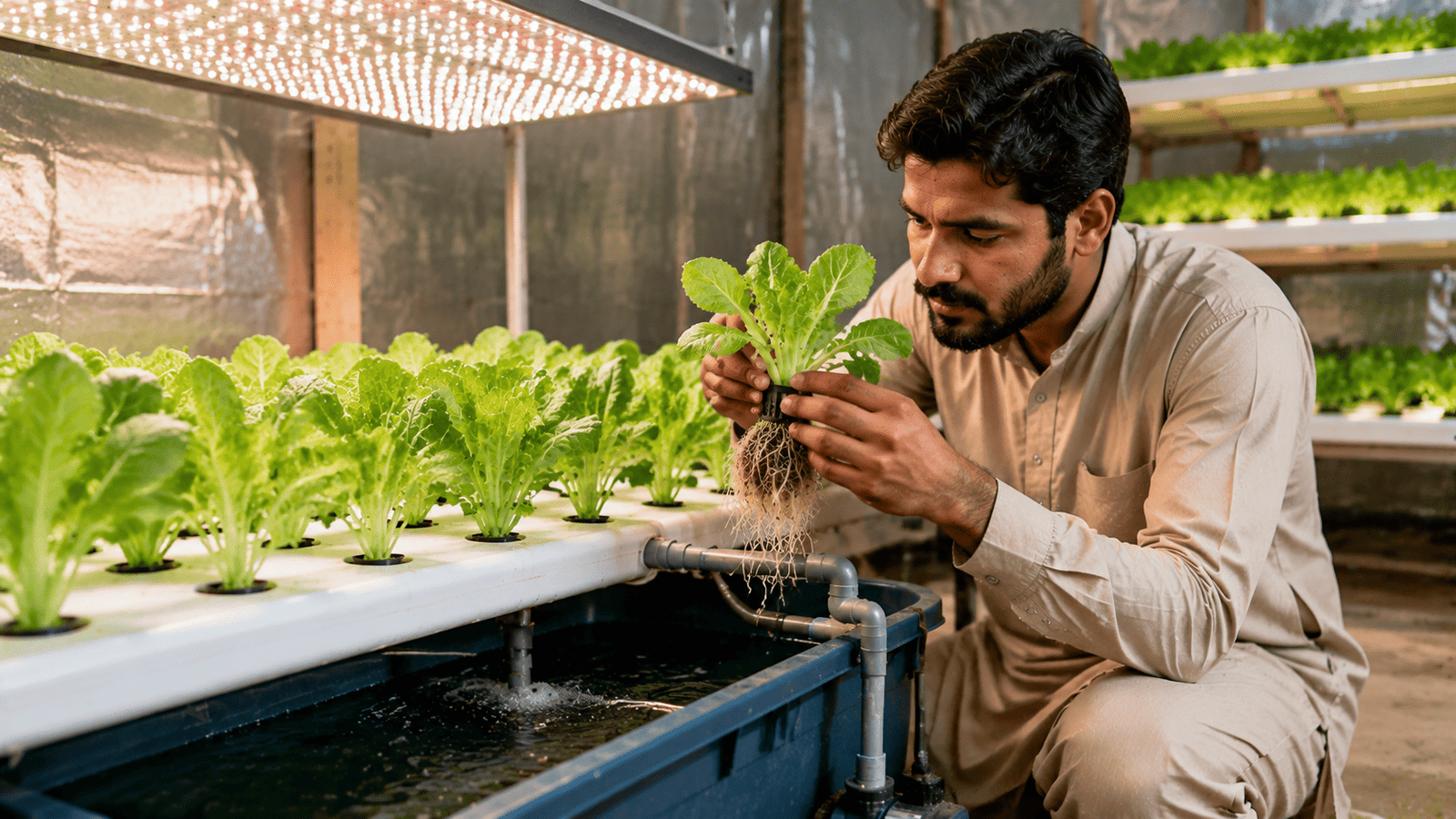
How Much Does a Hydroponic Setup Cost? A 2026 Budget Breakdown
By Farmers Advisory Editorial Team ·
Published August 5, 2026 · Updated August 5, 2026 · 11 min read ·
Category: Hydroponic Farming
A DIY DWC bucket and a fully automated commercial vertical farm are both "hydroponic setups" — the cost gap between them is enormous.
"How much does a hydroponic setup cost?" has an answer ranging from under fifty dollars to well into
five figures, depending entirely on scale and ambition. This guide breaks down hydroponic setup
cost in 2026 across small DIY builds, home indoor and outdoor systems, and larger setups —
covering both the upfront equipment and the recurring costs that continue after installation, since
prices vary by country, brand, and scale and shouldn't be taken as a fixed number.
Key Takeaways
A basic DIY DWC bucket system can be built for well under $100 in most regions, while pre-built beginner kits typically run higher.
Recurring costs — nutrients and electricity — add up over time and should be budgeted for alongside the upfront equipment cost.
Grow lights are one of the biggest cost and electricity variables for indoor setups; outdoor or balcony systems using natural light can skip this cost entirely.
Larger and automated systems scale cost significantly with plant count, automation features, and climate control.
Country, local electricity rates, and DIY vs pre-built choices all cause real prices to vary substantially — treat any number here as a starting range, not a quote.
Hydroponic Setup Cost by Scale
Approximate Hydroponic Setup Cost Ranges by Scale (2026, USD)
Setup Type
Typical Upfront Cost
Typical Monthly Running Cost
Small DIY (single DWC bucket)
Roughly $10-$50
Minimal (small pump/light only)
Pre-built beginner kit
Roughly $100-$300
Roughly $15-$40
Larger home indoor system
Several hundred dollars and up
Higher, driven mainly by lighting
Advanced/automated home system
Can run into the thousands
Varies with automation and scale
Small commercial-leaning setup
Can run into the tens of thousands
Substantial, driven by scale and climate control
⚠️ Important
These figures are general ranges compiled from current hydroponic industry and retail sources as of mid-2026, not fixed prices. Country, brand, retailer, and exchange rates all shift real costs — verify current local pricing before budgeting a purchase.
1. Small DIY Setup
A single-bucket DWC system built from a food-safe container, an aquarium air pump, an air stone, and
net pots is the cheapest realistic entry point into hydroponics, and can be assembled very inexpensively
using parts that are often already on hand or available at a hardware or pet store.
Reservoir/container: often repurposed, low or no added cost
Air pump and air stone: a small aquarium pump is inexpensive and widely available
Net pots and growing medium: low cost for a small number of plants
Nutrient concentrate: a small bottle covers many gallons of solution over multiple cycles
2. Home Indoor Setup
Indoor setups add a grow light, which is typically the single largest line item beyond the base
system, plus potentially a small fan for airflow and a more capable pH/EC meter.
Pre-built countertop or small tower kits with an integrated light bundle the components together, generally at a premium over an equivalent DIY build
Grow light wattage and quality directly affects both purchase price and ongoing electricity cost
Indoor setups running longer light cycles for fruiting crops will see higher recurring electricity costs than a leafy-green setup on a shorter light cycle
3. Home Outdoor/Balcony Setup
Outdoor or balcony systems that rely on natural sunlight skip the grow light cost entirely, which is
often the single biggest saving compared to an indoor setup — though they add exposure to weather, pests,
and temperature swings that indoor systems don't face.
💡 Quick Tip
If your space genuinely gets 6+ hours of usable direct sunlight, skipping a grow light is often the single largest cost reduction available to a beginner setup.
4. Larger and Commercial-Leaning Setups
Once a system moves beyond a handful of plants, costs scale with plant count, automation, and climate
control rather than a simple linear multiple of the beginner cost.
Multi-tier or vertical systems add structural cost alongside more pumps, lighting, and plumbing
Climate control (heating, cooling, dehumidification) becomes a significant line item at larger scale, both upfront and in ongoing electricity use
Small commercial-leaning setups can run from the low thousands to tens of thousands of dollars depending on automation level, structure, and climate control needs
5. What Drives the Cost of Each Component
Reservoir and structure: material and size — food-safe plastic totes are cheaper than purpose-built systems with integrated plumbing
Pumps (air and water): capacity and reliability; larger or higher-flow pumps cost more and use more electricity
Grow lights: spectrum quality and wattage; efficient LED fixtures cost more upfront but generally use less electricity over time than older lighting technology
Meters (pH, EC/TDS): accuracy and durability; basic handheld meters are inexpensive, while lab-grade or continuous-monitoring meters cost considerably more
Nutrients: brand and concentrate strength; a concentrated formula covers more reservoir volume per bottle than a diluted one
6. Recurring Costs After Setup
Electricity: driven mainly by grow lights (if indoors) and pump run-time; local electricity rates directly affect this cost, so the same system can cost noticeably more or less to run depending on where you live
Nutrients: ongoing but generally modest per cycle for small home systems
Replacement parts: air stones, tubing, and occasionally pumps wear out and need periodic replacement
Water: generally modest for small systems, more significant at scale, though recirculating systems typically use water more efficiently than open irrigation
7. What Makes Cost Vary So Much
Country and region: equipment availability and pricing differ substantially between markets
Brand: pre-built branded kits typically cost more than equivalent DIY-assembled components
System type: passive wick systems need no pump at all, while NFT and drip systems require pumps and plumbing
Scale: cost doesn't scale perfectly linearly — larger systems often unlock some efficiencies but add automation and climate-control costs too
New vs DIY/secondhand equipment: repurposed containers and secondhand pumps can meaningfully reduce upfront cost
Indoor vs outdoor: indoor setups add lighting cost that outdoor setups with adequate sunlight can skip
DIY vs Pre-Built Kits
✅ DIY Build
Lowest upfront cost, especially with repurposed containers
Fully customizable to your specific space and crop
Builds practical troubleshooting knowledge from day one
❌ Pre-Built Kit
Higher upfront cost for the convenience of an integrated system
Faster to set up, less trial and error
Often includes a light and pump already sized correctly together
Frequently Asked Questions
What's the cheapest way to start hydroponic farming?
A DIY deep water culture bucket built from a repurposed food-safe container, a small aquarium air
pump, and basic net pots is generally the cheapest realistic entry point, often well under $100.
What's the biggest ongoing cost in a hydroponic system?
For indoor setups, electricity for grow lights is typically the largest recurring cost, followed
by nutrient concentrate.
Do outdoor hydroponic setups cost less than indoor ones?
Often yes, mainly because they can skip the cost and electricity use of grow lights if the location
gets adequate natural sunlight, though they take on more weather and pest exposure in exchange.
How much does a small commercial hydroponic setup cost?
Costs vary enormously based on automation, structure, and climate control, ranging from the low
thousands for a modest setup to tens of thousands of dollars for a more automated or climate-controlled operation.
Is a pre-built hydroponic kit worth the extra cost over DIY?
It depends on your priorities — pre-built kits cost more but save assembly time and reduce the
risk of mismatched components, while DIY builds cost less but require more research and troubleshooting.
Conclusion
Hydroponic setup cost spans an enormous range because "hydroponic setup" describes everything from a
ten-dollar DIY bucket to an automated multi-tier commercial installation. For a first attempt, a small DIY
DWC build keeps both the upfront cost and the risk low, while recurring costs — mainly electricity and
nutrients — stay manageable at that scale. Treat any specific figure as a starting range rather than a
quote, and check current local pricing before committing to a purchase.
Want more hydroponic farming guides delivered to your inbox every week?
Cost ranges compiled from current hydroponic retail and industry sources published in 2026, including
DiscountHydro's 2026 home hydroponics cost comparison, Soil Free Harvest's hydroponic system cost
breakdown guide, Grow It Depot's DIY hydroponic systems budget guide, and industry roundups of home
hydroponic system pricing. Figures represent general ranges only and vary by country, brand, retailer,
and scale. Current as of August 5, 2026.
 Farmers Advisory