Hydroponics vs Soil Farming Cost Comparison (2026)
By Farmers Advisory Editorial Team ·
Published August 5, 2026 · Updated August 5, 2026 · 11 min read ·
Category: Hydroponic Farming
Hydroponics typically costs more to start and more to run day-to-day, while soil farming carries more variable costs tied to land, climate, and pest pressure.
"Which is cheaper, hydroponics or soil?" doesn't have a single answer — it depends on scale, crop,
climate, and how you value your own labor and water. This guide breaks down hydroponics vs soil
farming cost across startup investment, recurring operating expenses, and the factors that
influence yield and revenue, so you can weigh the real tradeoffs rather than relying on a blanket claim
that one approach is automatically cheaper or more profitable than the other.
Key Takeaways
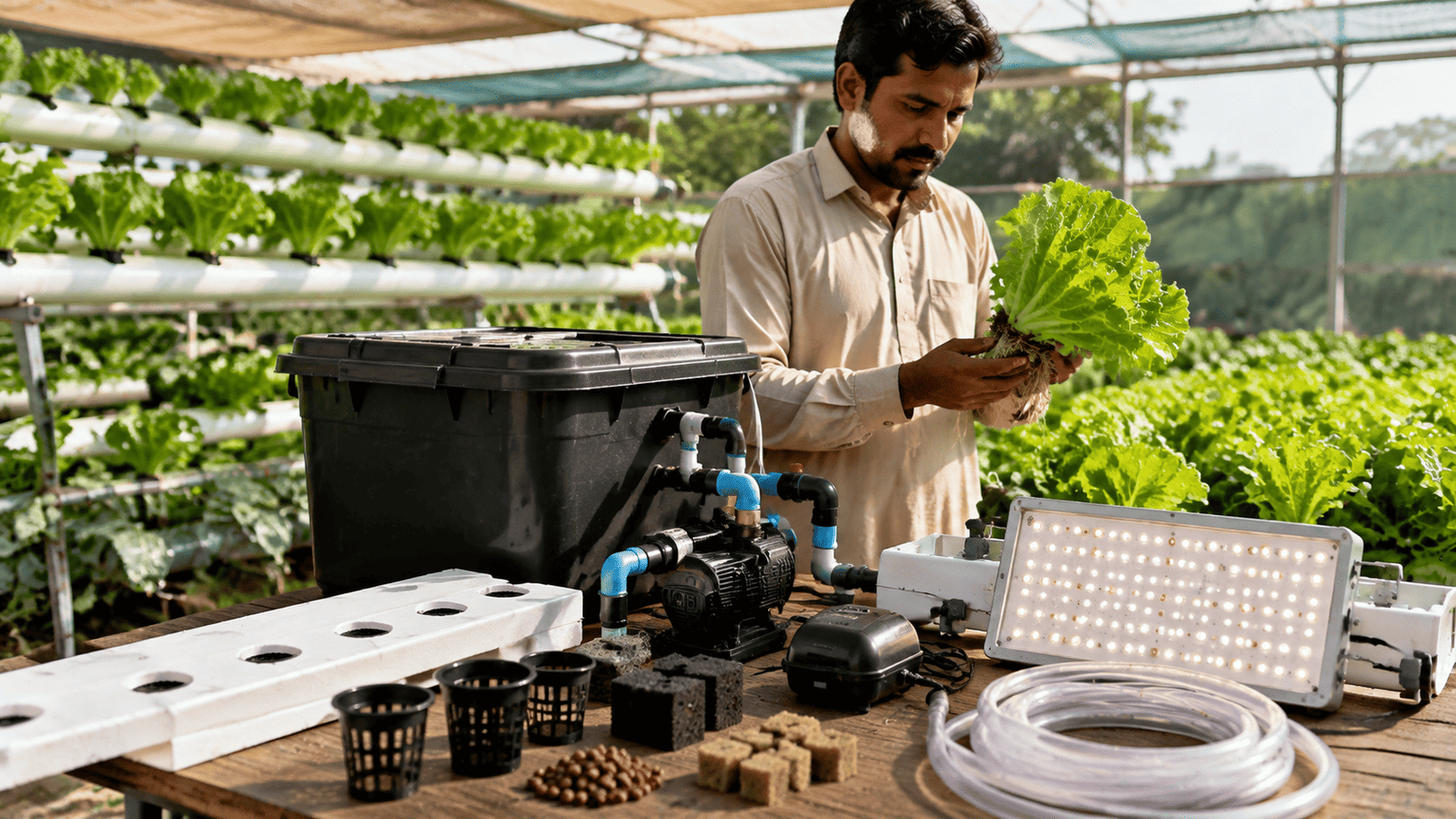
Hydroponic systems generally require higher startup investment than soil farming due to equipment like pumps, reservoirs, and grow lights.
Soil farming has lower equipment costs but more variable recurring costs tied to weather, pests, and soil amendments.
Electricity is a recurring hydroponic cost (pumps, lighting, climate control) that soil farming largely avoids outdoors.
Hydroponics can produce more yield per square foot in controlled conditions, but that space efficiency comes with a higher energy and equipment cost per plant.
Neither system is automatically cheaper or more profitable — the answer depends on crop choice, scale, local utility costs, and climate.
Cost Comparison Table
Hydroponics vs Soil Farming: Cost Factors (2026)
Cost Factor
Hydroponics
Soil Farming
Initial equipment
Higher (pumps, reservoirs, meters, lighting)
Lower (tools, beds, irrigation)
Growing medium/soil prep
Inert medium, generally reusable
Ongoing soil amendment and fertility management
Water use
Often lower via recirculation
Variable, higher losses to runoff and evaporation
Electricity
Recurring cost for pumps/lighting/climate control
Minimal for outdoor plots
Pest/disease management
Lower soil-borne disease risk
Ongoing exposure to soil pests and pathogens
Labor
Frequent monitoring (pH, EC, equipment checks)
Seasonal labor peaks (planting, weeding, harvest)
Weather dependency
Low if indoors/controlled
High for outdoor operations
Space efficiency
Can be higher with vertical/dense layouts
Limited by land footprint
💡 Quick Tip
Separate your comparison into three buckets — startup cost, recurring cost, and potential revenue — rather than one combined number. Conflating them is the most common reason cost comparisons mislead people.
1. Startup Costs
Hydroponic systems generally require more upfront investment than an equivalent soil plot, since
reservoirs, pumps, air stones, pH and EC meters, and (for indoor setups) grow lights all add cost that
soil growing doesn't require. Soil farming's largest upfront costs tend to be land access or preparation,
irrigation infrastructure, and initial soil amendments if the existing soil needs significant improvement.
A small home hydroponic setup can start cheaply, but scaling up multiplies equipment costs directly with plant count
Soil farming's startup cost is highly dependent on whether land is already available and how much soil remediation it needs
Indoor hydroponic setups add lighting and climate-control costs that outdoor soil farming typically doesn't need
2. Recurring Operating Costs
Hydroponics: nutrient concentrate, electricity for pumps and lights, occasional equipment replacement (air stones, tubing, meters calibration solution)
Soil farming: fertilizer and soil amendments, pest and weed management, seasonal seed purchases, irrigation water
Hydroponic nutrient costs are generally predictable per cycle, while soil input costs can vary more with weather-driven pest and disease pressure
3. Labor and Time
Labor patterns differ more than they align. Hydroponic systems demand frequent, small check-ins — pH
and EC monitoring, equipment inspection — spread evenly across the growing cycle. Soil farming labor tends
to concentrate in bursts around planting, weeding, and harvest, with lighter demands in between.
4. Water and Electricity Use
Recirculating hydroponic systems can use water more efficiently than open-field soil irrigation, since less is lost to runoff, evaporation, and deep percolation past the root zone
Electricity is a recurring hydroponic cost that outdoor soil farming largely avoids — pumps, and especially grow lighting for indoor setups, can be a meaningful ongoing expense
Local electricity rates significantly affect whether indoor hydroponics is cost-competitive with soil farming in a given region
5. Yield and Space Efficiency
Hydroponic systems, particularly vertical or densely stacked setups, can produce more yield per square foot than an equivalent soil footprint
That density comes at a cost — more plants per square foot generally means more lighting, more nutrient solution, and more equipment per unit of growing area
Soil farming yield is more directly tied to available land and natural soil fertility, with fewer equipment costs scaling alongside it
⚠️ Common Mistake
Comparing hydroponic yield-per-square-foot against soil farming without also comparing the equipment and electricity cost required to achieve that density. Higher yield density doesn't automatically mean higher profit per plant.
6. Risk and Scalability
Hydroponic systems carry equipment-failure risk (pump or power failure) that soil farming doesn't share, but avoid many soil-borne disease and pest risks
Soil farming carries weather and climate risk that indoor hydroponics largely avoids, but outdoor hydroponic setups still face it
Scaling hydroponics generally means proportionally scaling equipment cost; scaling soil farming generally means proportionally scaling land, labor, and input cost
7. So Which Actually Costs More?
There's no universal answer. A small hydroponic herb setup on a countertop can be cheaper than
preparing and maintaining an in-ground bed in poor soil. A large outdoor soil plot with good existing soil
and free rainfall can be far cheaper to run than an equivalent indoor hydroponic operation with high local
electricity rates. The honest comparison has to account for local land access, utility costs, climate,
crop choice, and scale — not a single average figure.
Cost Tradeoffs at a Glance
✅ Hydroponics
Often more water-efficient through recirculation
Avoids most soil-borne pests and diseases
Can achieve higher yield density in a small footprint
❌ Soil Farming
Lower equipment and electricity costs
No dependency on pumps or power for basic operation
More exposed to weather and soil-borne pest/disease costs
Frequently Asked Questions
Is hydroponics cheaper than soil farming?
Not automatically. Hydroponics generally has higher startup and electricity costs, while soil
farming has more variable costs tied to weather, pests, and land access. Which is cheaper depends on
scale, crop, and local conditions.
Does hydroponics save water compared to soil farming?
Recirculating hydroponic systems can use water more efficiently than open-field irrigation, since
less is lost to runoff and evaporation, though actual savings vary by system and climate.
What's the biggest recurring hydroponic expense?
Electricity for pumps and, particularly for indoor setups, grow lighting is typically one of the
largest recurring hydroponic costs, alongside nutrient concentrate.
Is hydroponic yield really higher than soil farming?
Hydroponic systems can achieve higher yield per square foot in controlled, dense setups, but this
comes with proportionally higher equipment and energy costs — it's not automatically more profitable.
Which has lower startup costs, hydroponics or soil farming?
Soil farming generally has lower equipment costs to start, though its total startup cost depends
heavily on land access and how much the existing soil needs to be improved.
Conclusion
Hydroponics and soil farming trade one set of costs for another rather than one being universally
cheaper. Hydroponics generally front-loads cost into equipment and shifts recurring cost toward
electricity and nutrients, while soil farming keeps startup costs lower but carries more exposure to
weather, pests, and variable input costs. The right choice comes down to your specific crop, scale,
climate, and local utility rates — not a general rule that applies everywhere equally.
Want more hydroponic farming guides delivered to your inbox every week?
General guidance referenced from university extension and controlled-environment agriculture programs,
including Cornell University's Controlled Environment Agriculture program, University of Arizona's
Controlled Environment Agriculture Center, and USDA Economic Research Service publications on
specialty crop production. Cost figures vary substantially by region, scale, crop, and utility rates —
no universal cost comparison applies to every operation. Current as of August 5, 2026.
 Farmers Advisory