 Farmers Advisory
Farmers Advisory
Farmers Advisory
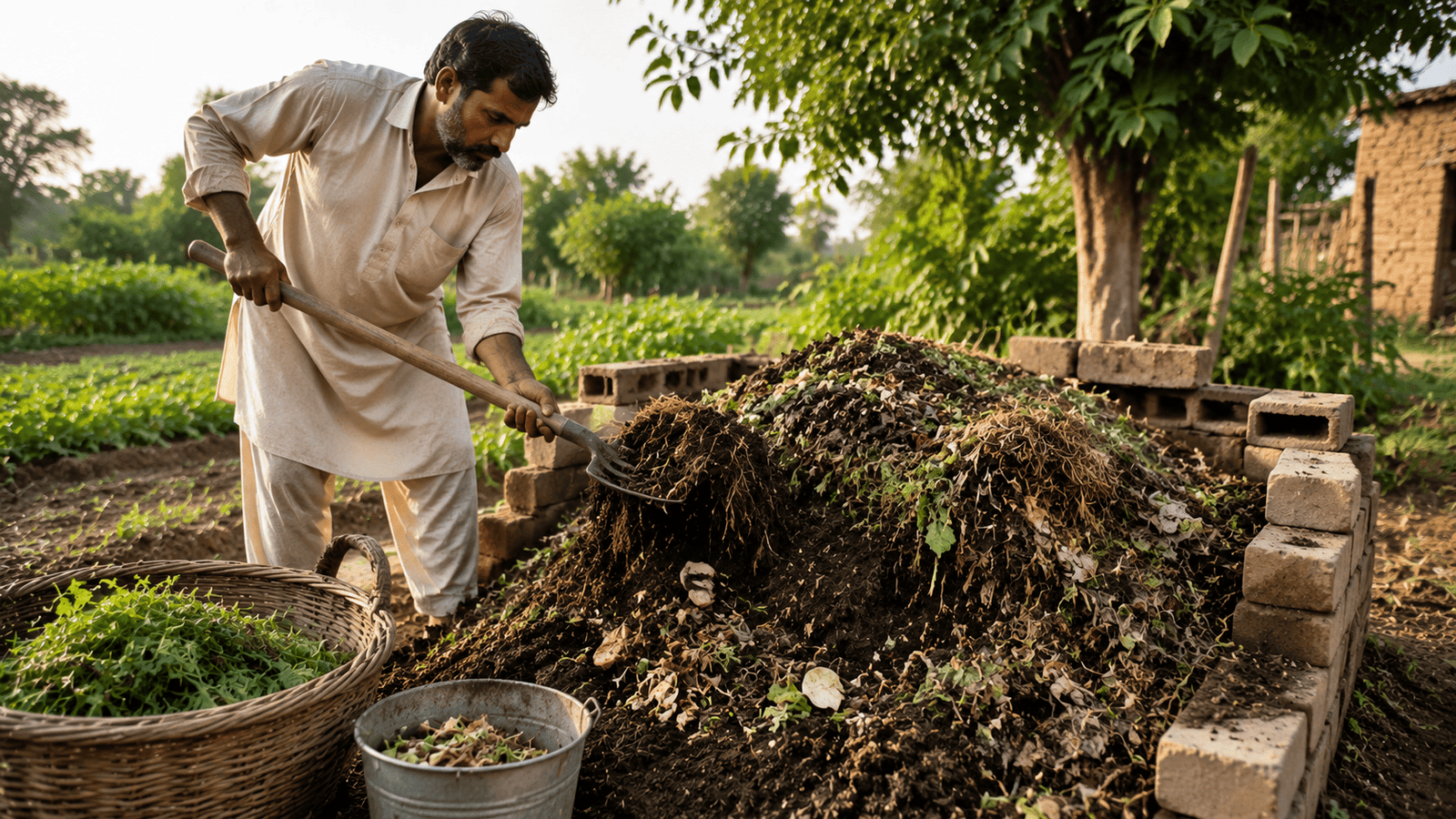
Composting turns kitchen scraps and yard waste into one of the most useful soil amendments a grower can make for free. This guide covers how to make organic compost at home — what materials to use, how to balance carbon and nitrogen, moisture and aeration, how long it takes, and how to troubleshoot a pile that isn't breaking down the way it should — written for someone starting their first pile with no prior composting experience.
| Type | Examples | Provides |
|---|---|---|
| Green (nitrogen) | Fruit/vegetable scraps, coffee grounds, fresh grass clippings, plant trimmings | Nitrogen, moisture |
| Brown (carbon) | Dry leaves, straw, cardboard, shredded paper, wood chips | Carbon, structure, aeration |
Compost is organic material broken down by microorganisms into a stable, nutrient-rich soil amendment. Adding it to soil improves structure, water retention, and microbial activity, and supplies a broad, slow-release range of nutrients — benefits that go well beyond what any single fertilizer input can offer.
Greens supply nitrogen and tend to be moist (fresh kitchen scraps, grass clippings); browns supply carbon and tend to be dry (dead leaves, straw, cardboard). A rough starting ratio is about one part greens to two or three parts browns by volume — too many greens produces a smelly, slimy pile, while too many browns slows decomposition to a crawl.
The pile should feel like a wrung-out sponge — damp but not dripping. Both oxygen and moisture are needed for the aerobic microorganisms that do most of the decomposition work; without enough of either, the pile stalls or starts to smell. Turning the pile introduces oxygen and helps distribute moisture evenly through the material.
Turning every one to two weeks with a garden fork or compost aerator speeds the process by mixing outer, cooler material into the hot center and reintroducing oxygen throughout. An actively decomposing pile heats up noticeably — often well above ambient temperature at its core — which is a good sign that microbial activity is strong; a pile that never heats up is usually too small, too dry, or too carbon-heavy.
Timeframes vary widely depending on management intensity, material size, and climate. A well-managed "hot" pile — turned regularly, properly balanced, chopped materials — can finish in roughly one to three months. A passive pile that's built once and left alone can take six months to a year or longer to fully break down.
| Problem | Likely Cause | Fix |
|---|---|---|
| Bad, sour, or ammonia-like odor | Too wet or too much green material, not enough airflow | Add dry browns, turn the pile to add oxygen |
| Pile isn't breaking down | Too dry, too many browns, or pieces too large | Add water, add greens, chop materials smaller |
| Pile is soggy and compacted | Too much moisture, poor drainage or aeration | Turn frequently, add dry browns, improve drainage under the pile |
| Pests (rodents, flies) | Meat, dairy, or exposed food scraps | Bury food scraps under browns, avoid prohibited materials |
Finished compost is dark brown to black, crumbly, and smells like fresh earth — not sour, ammonia-like, or rotten. Original materials should no longer be recognizable, and the pile should have cooled back down to roughly ambient temperature, signaling that active decomposition has largely finished.
A well-managed, regularly turned pile can finish in roughly one to three months. A passive, rarely turned pile can take six months to a year or more.
Usually too much moisture, too many green materials, or not enough airflow. Add dry browns and turn the pile to reintroduce oxygen.
Generally no for a standard home pile — meat, dairy, and fats attract pests and decompose poorly without industrial-scale hot composting conditions.
Every one to two weeks for an actively managed hot pile. Turning speeds decomposition by adding oxygen and redistributing heat and moisture.
Finished compost is dark, crumbly, smells like earth, and no longer shows recognizable pieces of the original materials.
No — a simple pile works fine, though an enclosed bin or tumbler can help retain heat and moisture and keep the process tidier in smaller yards.
Home composting comes down to a handful of fundamentals: a reasonable balance of greens and browns, enough moisture without waterlogging, regular turning for oxygen, and patience while microorganisms do the actual work. Most beginner problems — odor, a stalled pile, pests — trace back to skipping one of these basics rather than any deeper skill gap. Get them right, and a backyard compost pile turns food scraps and yard waste into one of the most valuable, completely free soil inputs available.
Want more organic farming guidance delivered to your inbox every week?
Subscribe to Farmers AdvisoryGeneral guidance based on published composting resources from agricultural extension services. Composting timelines and outcomes vary by climate, materials, pile size, and management intensity. Current as of August 5, 2026.