 Farmers Advisory
Farmers Advisory
Farmers Advisory
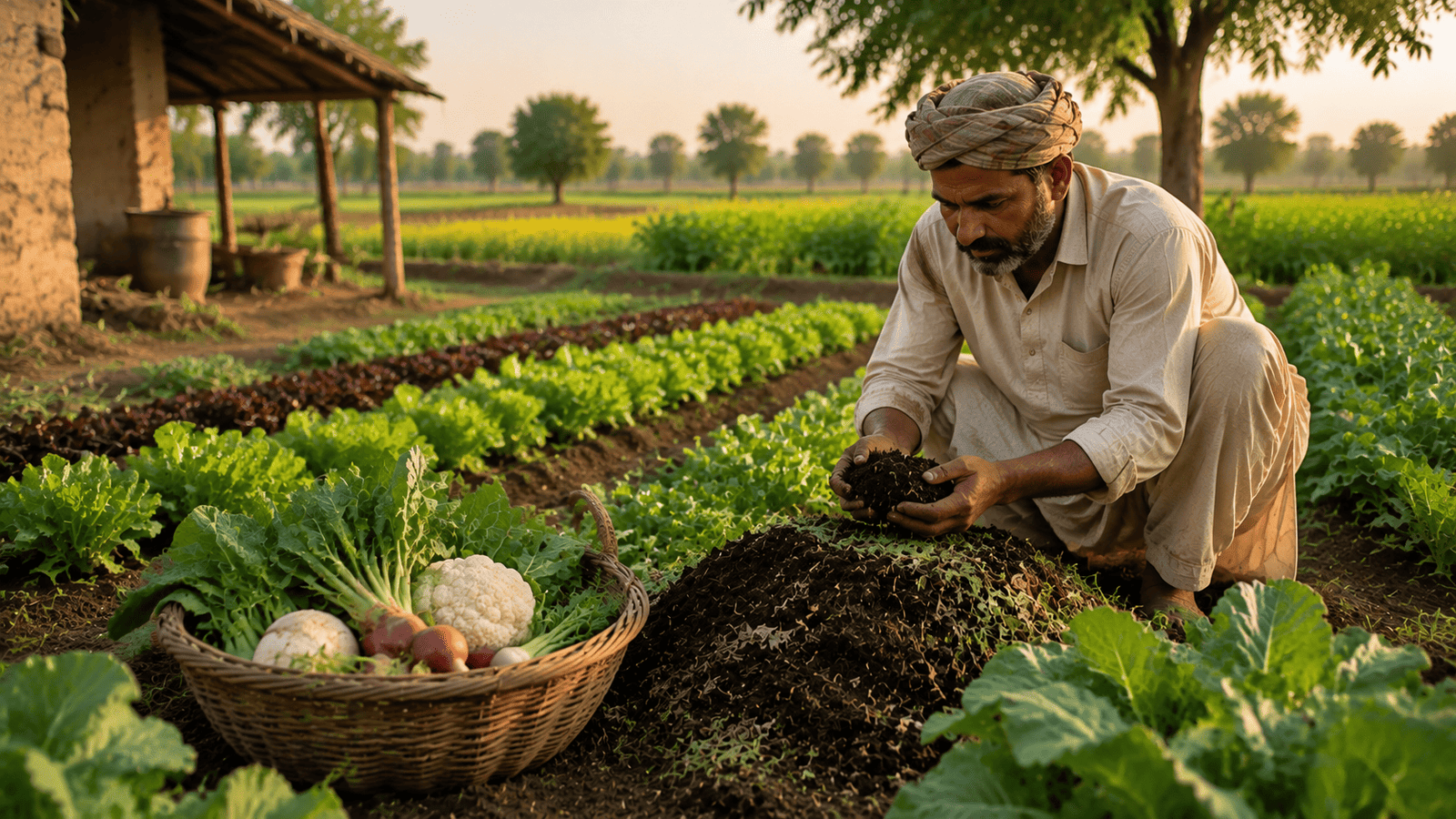
There's no single yes-or-no answer to whether organic farming is more profitable than conventional farming — it depends on the crop, the farm's scale, local input and labor costs, market access, and how long the farm has been in organic production. Organic systems frequently command a price premium, but they also often carry higher labor costs, certification fees, and, especially during transition, lower yields. This guide breaks profitability into its real components — revenue, costs, and net margin — so you can evaluate the question for your own farm rather than relying on a blanket claim.
These two figures get conflated constantly, and the mix-up is where a lot of misleading claims about organic profitability come from.
Any claim that organic farming is "more profitable" (or less) is only meaningful once it's clear which of these two figures — and over what time period — is actually being discussed.
Two forces work in opposite directions on organic revenue:
Whether the premium outweighs any yield gap depends entirely on the specific crop and market — there is no universal ratio that applies across all situations.
The conversion period — commonly around two to three years under many certification standards — is usually the toughest stretch financially. During this time, a farm is typically managing the field organically (with organic-level costs) but cannot yet sell the crop at the organic price premium, since certification hasn't been granted. This combination of organic-level costs without organic-level revenue is the main reason profitability often looks weakest in the first one to three years, improving once certified sales and mature soil fertility are both in place.
How a crop is sold has a major effect on how much of the price premium the farmer actually keeps.
Smaller, diversified operations often lean on direct sales channels where the organic premium is easier to capture, while larger operations growing commodity organic grains or row crops typically sell into wholesale markets with thinner but more volume-driven margins. Crop choice matters just as much: high-value specialty crops (many fruits and vegetables) tend to show a more favorable premium-to-cost ratio than bulk commodity crops, though this varies by specific market conditions and should be verified against current local pricing rather than assumed.
Profitability discussions often focus on a single season, but a few longer-term factors matter too:
| Factor | Organic | Conventional |
|---|---|---|
| Price per unit | Often carries a premium; size varies by crop and market | Set by conventional commodity or retail pricing |
| Yield | Can be lower, especially during transition; gap varies by crop | Generally more predictable once inputs are optimized |
| Input costs | Varies; can be lower with on-farm compost/manure, higher with purchased organic-approved products | Predictable synthetic input pricing, subject to market swings |
| Labor costs | Typically higher due to manual/mechanical weed and pest management | Typically lower per acre due to chemical efficiency |
| Certification/compliance costs | Application, inspection, and recordkeeping fees apply | None for certification, though other compliance costs may apply |
| Market access | Strongest via direct sales; wholesale premiums are thinner | Broad, established commodity and retail channels |
No. Profitability depends on crop, scale, market access, and how the farm sells its product. Organic systems often have higher revenue potential through price premiums but also often carry higher labor and certification costs.
Because it only reflects revenue. A crop can carry a strong premium and still have a thin or negative margin if input, labor, and certification costs are high enough to offset it.
It's typically the least profitable phase, since the farm carries organic-level costs without yet qualifying for organic-level prices, and yields can also be temporarily lower during this time.
High-value specialty crops sold through direct channels often show a more favorable premium-to-cost ratio than bulk commodity crops, though this depends on current local market conditions and should be checked directly rather than assumed.
Direct sales channels like farmers markets and CSAs generally let a farm capture more of the retail premium than selling through wholesale organic distributors, who also take a margin.
Not necessarily. It depends on whether fertility inputs are sourced on-farm (lower cost) or purchased (which can cost more or less than synthetic equivalents depending on the specific product).
Track gross revenue and every cost category — inputs, labor, certification, and marketing — separately for your specific crops and market, rather than relying on general industry figures, since profitability varies too much by location and operation to generalize reliably.
Whether organic farming pays off comes down to the same question any farm business faces: does revenue clear costs by a comfortable margin, and over what time horizon. Organic systems often start behind on that question during transition and can pull ahead once price premiums, direct market access, and mature soil fertility all line up — but none of those three things is automatic. The most reliable answer isn't a general statistic; it's tracking your own revenue and cost categories, for your own crop and market, season over season.
Want more organic farming guidance delivered to your inbox every week?
Subscribe to Farmers AdvisoryGeneral guidance drawn from publicly available agricultural extension and farm-economics resources. Price premiums, yields, and cost structures vary significantly by crop, region, farm size, and market channel — figures in this article are described qualitatively rather than as fixed statistics, and farmers should verify current local pricing and cost data before making financial decisions. Current as of August 5, 2026.