 Farmers Advisory
Farmers Advisory
Farmers Advisory
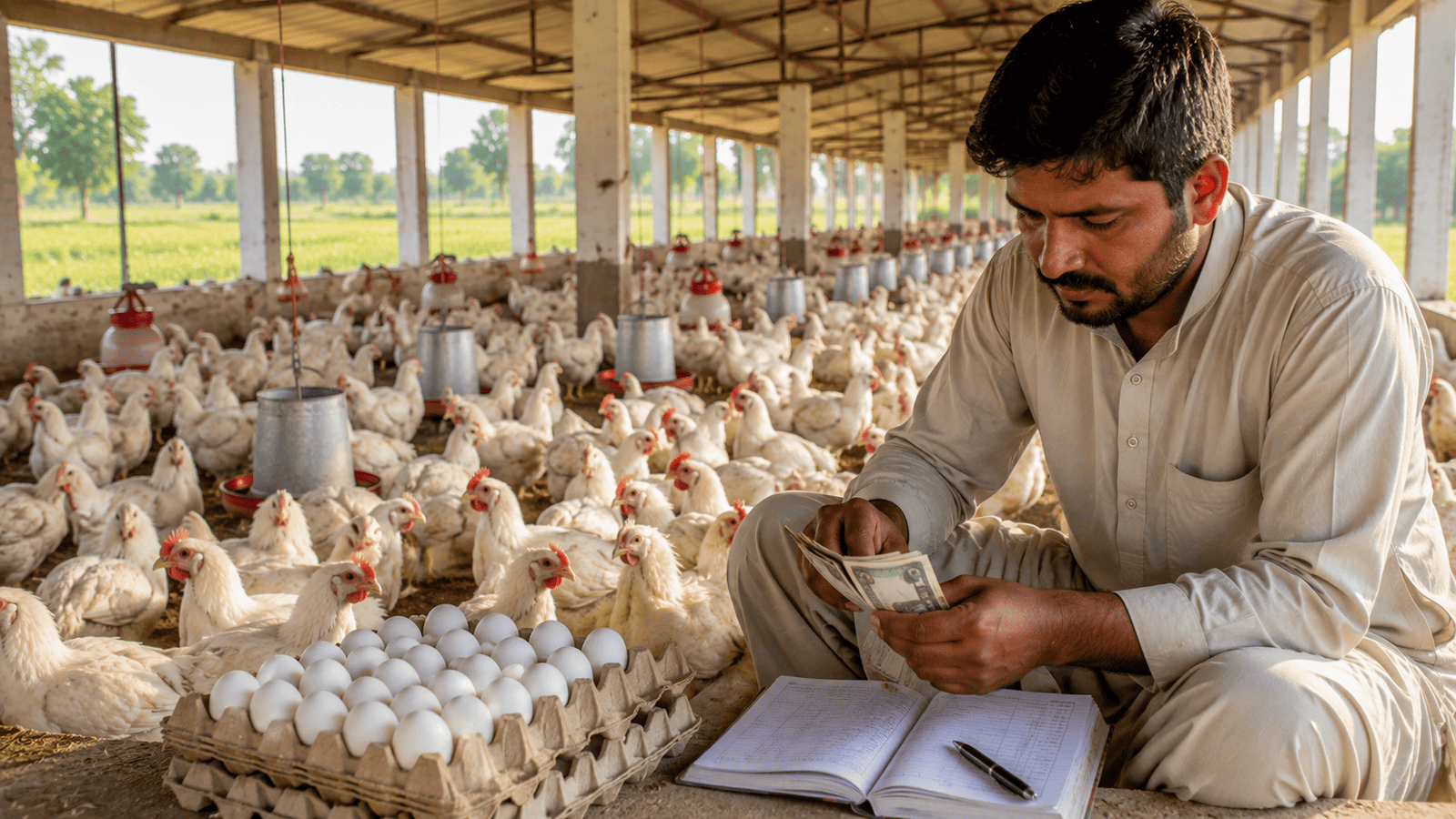
If your laying hens aren't producing as many eggs as they should, the problem is often sitting right in the feed trough. Egg production depends directly on getting the correct balance of protein, energy, calcium, and amino acids in your birds' daily ration. This guide covers exact poultry feed formulation for maximum egg production — the nutrient targets, a sample layer feed formula, and the mistakes that quietly cut yield without farmers noticing.
| Nutrient | Target Range | Why It Matters |
|---|---|---|
| Crude Protein | 15-18% | Builds egg white and supports daily egg mass |
| Calcium | 3.6-4.2% | Forms eggshell; each egg uses ~2g of calcium |
| Available Phosphorus | 0.38-0.45% | Works with calcium for shell and bone strength |
| Metabolizable Energy | 2,650-2,800 kcal/kg | Fuels daily activity and sustained laying |
| Methionine | 0.38-0.45% | First-limiting amino acid for egg mass |
| Lysine | 0.72-0.78% | Supports protein synthesis for egg formation |
Laying hens don't need the same formula throughout their life — their nutrient needs shift sharply as they approach and enter egg production. Grower feed typically runs 14-15% protein with low calcium. As hens approach 18-20 weeks, a pre-lay diet raises calcium from around 1.2% up to 2.2%, preparing the skeleton for the sudden calcium demand of daily shell formation. Once hens begin laying, or reach 18-20 weeks of age, a full layer feed with 3.6-4.2% calcium takes over.
| Stage | Age | Protein | Calcium |
|---|---|---|---|
| Grower/Developer | 6-17 weeks | 14-15% | ~1% |
| Pre-Lay | 17-19 weeks | 16-17% | 1.2-2.2% |
| Layer (Peak Production) | 18-20+ weeks | 15-18% | 3.6-4.2% |
Here is a practical, balanced starting formula for hens in full egg production, built around maize and soybean meal as the base:
Calcium is the single most production-critical mineral in layer feed. Each egg uses approximately 2 grams of calcium for the shell alone, and most of that calcium is deposited overnight while the shell hardens. This is why many commercial layer feeds blend fine and coarse limestone particles — the coarser particles (0.8-2.0 mm) digest more slowly, releasing calcium steadily through the night when hens need it most. Keeping the calcium-to-phosphorus ratio between roughly 8:1 and 10:1 matters too: going above 10:1 can reduce feed intake, while dropping below 8:1 may weaken shell thickness by up to 12%.
Protein percentage alone doesn't guarantee good egg output — the amino acid profile inside that protein matters just as much. Methionine is the first-limiting amino acid in most corn-soy layer diets and needs to sit around 0.38-0.45%, while lysine typically runs 0.72-0.78%. Shifting either value by just 0.1% can move daily egg mass by 2-3 grams per hen, making these two amino acids a high-leverage place to fine-tune an existing formula rather than overhauling the whole ration.
Hens eat less in hot weather, so each mouthful of feed needs to carry more nutrition to make up the difference.
Layer hens typically need 15-18% crude protein during peak production, with methionine at 0.38-0.45% and lysine at 0.72-0.78% to properly support daily egg mass.
Layer feed should supply 3.6-4.2% calcium, since each egg uses roughly 2 grams of calcium for shell formation, with particle sizes between 0.8-2.0 mm for steady overnight absorption.
Weak shells are usually caused by insufficient calcium, an unbalanced calcium-to-phosphorus ratio, or heat stress reducing overall feed intake.
Kitchen scraps can be a minor supplement but shouldn't replace a formulated feed, since they lack the consistent protein, calcium, and amino acid levels needed for steady egg production.
Yes. Energy levels and amino acids like methionine and lysine directly influence egg mass — shifting methionine by just 0.1% can change egg mass by 2-3 grams per hen per day.
Maximum egg production comes down to hitting a narrow set of nutrient targets consistently: 15-18% protein, 3.6-4.2% calcium, the right methionine-to-lysine balance, and a calcium-to-phosphorus ratio that stays within 8:1 to 10:1. Getting this formula right, and adjusting it by growth stage and climate, will do more for your egg yield than almost any other single management decision on the farm.
Want to calculate the exact feed formula and cost for your flock size?
Try the Poultry Feed CalculatorData sources: ABC Machinery layer feed formulation guide (2026); Oregon State University Extension Service laying hen feeding guide; PMC split-feeding strategy study on laying hens (2026); Kalmbach Feeds backyard laying hen feeding guide; PMC lysine and layer performance study; Feed Access layer feed formulation guide; PelletizerMill layer feed formulation guide (2026). Figures represent typical industry ranges and vary by breed, region, and management system. Current as of July 20, 2026.