 Farmers Advisory
Farmers Advisory
Farmers Advisory
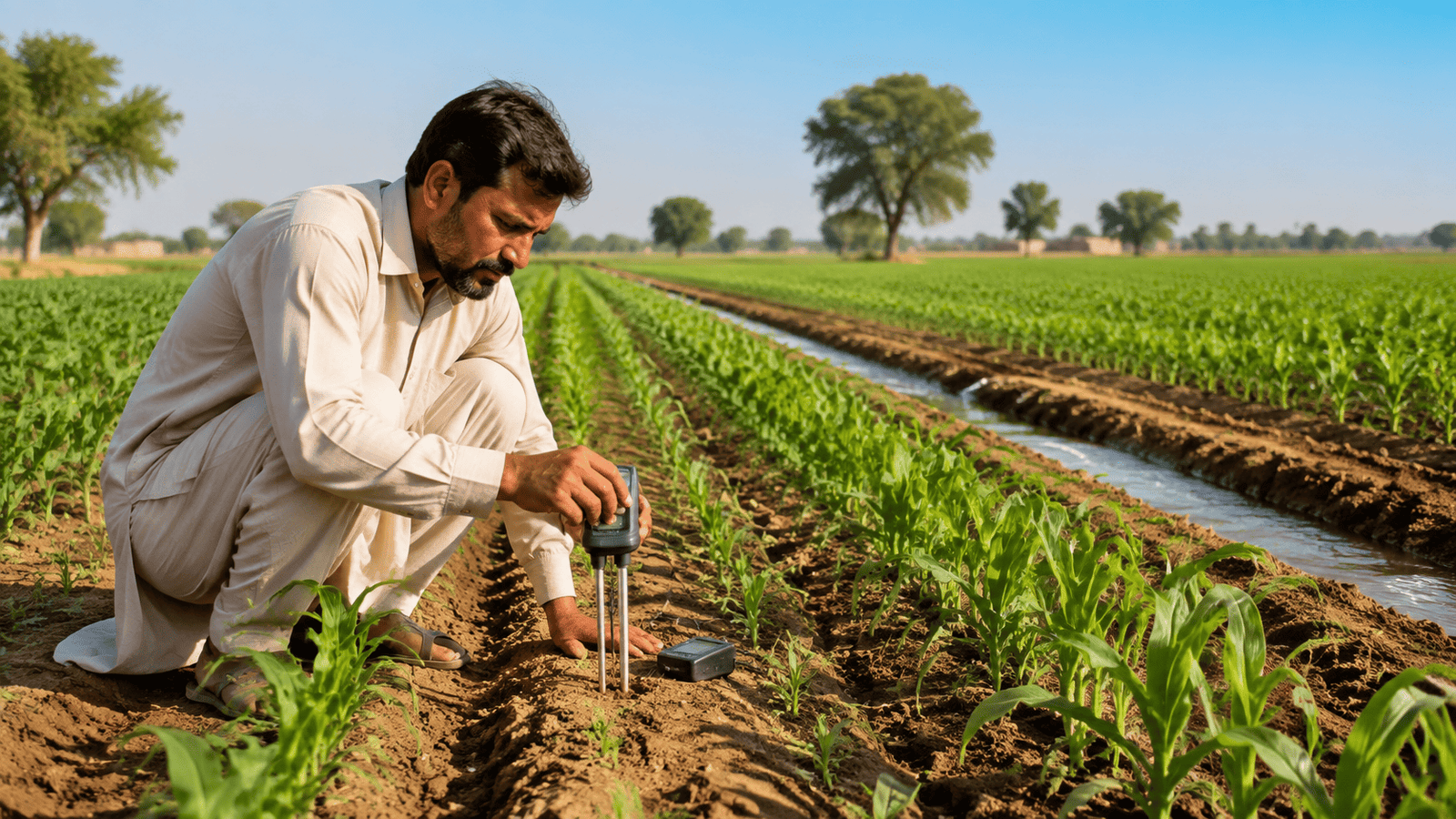
Choosing an irrigation system is really a series of trade-offs: water-use efficiency against upfront cost, labor demand against automation, and land suitability against equipment complexity. Farmers weighing types of irrigation systems for the first time often assume one method must be objectively superior, but surface irrigation still makes sense on large, flat rice paddies just as drip irrigation makes sense on a hillside orchard. This guide walks through the major irrigation methods used on farms today, how each works, which crops and soils they suit, and what they cost to install and run.
| System | Water-Use Efficiency | Relative Initial Cost | Best Suited To |
|---|---|---|---|
| Surface (furrow/basin/border) | Low-moderate | Low | Flat land, gravity-fed water, rice, row crops |
| Sprinkler (including center-pivot) | Moderate-high | Moderate | Cereals, forage, pasture, medium-large fields |
| Drip / micro-irrigation | High | Moderate-high | Row crops, orchards, vineyards, vegetables |
| Subsurface drip | High | High | Row crops on flat, uniform fields; long-term installations |
| Micro-sprinklers | Moderate-high | Moderate | Orchards, groves, nurseries |
Irrigation is the controlled application of water to land to support crop growth, supplementing or replacing rainfall. It matters because rainfall alone is rarely reliable enough in timing or quantity to guarantee consistent yields, particularly in semi-arid regions or during a crop's most water-sensitive growth stages. An irrigation system is the physical infrastructure — pumps, pipes, channels, emitters, or sprinklers — that moves water from its source to the field and applies it to the crop.
Every irrigation method has to solve the same basic problem: getting water from a source to the root zone in a way that is affordable, manageable with available labor, and appropriate for the soil and terrain in question. The methods below differ mainly in how they solve that problem, not in whether one is inherently more advanced than another.
Surface irrigation applies water directly to the soil surface and lets gravity move it across the field. It is the oldest form of irrigation still in wide use and remains common where land is flat and water is abundant or gravity-fed.
Water flows along small channels (furrows) between crop rows, soaking sideways and downward into the root zone. It suits row crops like maize, cotton, and vegetables planted on ridges.
Fields are divided into level, diked basins that are flooded and allowed to soak. This is the standard method for paddy rice and works well on flat land with heavier soils that hold standing water.
Water is released across long, gently sloped strips bordered by low ridges. It suits close-growing crops such as wheat, alfalfa, and pasture on uniformly graded land.
Sprinkler irrigation sprays pressurized water through the air, mimicking rainfall. Water is pumped through a network of pipes to rotating or fixed sprinkler heads. It works on a much wider range of terrain and soil types than surface irrigation, including sloped or sandy land where furrows would erode or drain too fast.
Set costs vary with pump size, pipe network length, and number of sprinkler heads, so a fixed per-acre figure would be misleading without stating those assumptions.
Drip irrigation delivers water in small, frequent amounts directly to the base of each plant through a network of tubing and emitters. Because water goes straight to the root zone rather than across the whole field surface, evaporation and runoff losses are much lower than with surface or sprinkler methods.
Drip systems are covered in more depth, including a full design walkthrough, in our guide on designing a drip irrigation system for a small farm.
Micro-sprinklers sit between drip and conventional sprinklers — small, low-pressure sprinkler heads that wet a defined area around each plant rather than the entire field. They are common in orchards and groves where tree roots spread wider than a single drip line would cover.
Center-pivot systems rotate a long sprinkler arm around a central pivot point, irrigating a circular area that can span dozens or hundreds of acres. Linear-move systems travel in a straight line across rectangular fields instead of rotating. Both are mechanized, largely automated, and suited to large-scale grain, forage, and row-crop production.
Subsurface drip irrigation (SDI) buries drip tubing below the soil surface, delivering water directly to the root zone with virtually no surface evaporation. It is well suited to long-term installations on flat, uniform fields growing row crops season after season.
Any of the methods above can be operated manually — a farmer opening valves, moving pipes, or releasing water by hand — or automated with timers, soil moisture sensors, and remote-controlled valves. Manual systems cost less upfront but demand more labor and are more prone to human error in timing. Automated systems reduce labor and can improve consistency, but add cost and require some technical know-how to install and maintain. We cover this distinction in more detail in our guide to smart irrigation technology.
There is no universally "best" irrigation system. A rice grower on flat, heavy clay with abundant gravity-fed water has little reason to install drip irrigation, while a hillside vineyard with a limited water allocation has little reason to flood-irrigate. The right choice depends on:
For a full breakdown of two of the most commonly compared options, see our article on drip irrigation vs sprinkler irrigation.
Drip and subsurface drip irrigation generally achieve the highest water-use efficiency because water is applied directly to the root zone with minimal evaporation or runoff, though actual efficiency depends heavily on system design and maintenance.
Surface irrigation methods like furrow and basin irrigation typically have the lowest equipment cost since they rely on gravity flow rather than pumps and pressurized pipe networks, but they require precise land leveling to work well.
Yes. Many farms combine methods — for example, sprinkler or center-pivot irrigation on cereal fields and drip irrigation on a vegetable or orchard block — matching each system to the crop and field it serves.
Generally no. Center-pivot systems are designed for large, uniform fields and carry a high initial cost that is difficult to justify on small or irregularly shaped plots.
Sprinkler irrigation typically has higher evaporation and wind-drift losses than drip irrigation, but a well-managed sprinkler system can still outperform a poorly maintained or poorly designed drip system.
Drip irrigation is widely used for vegetables because it targets the root zone directly and supports fertigation, though sprinkler systems are also common for closely spaced or germinating vegetable crops that need surface moisture.
Picking an irrigation system starts with the field, not the catalog. Flat, gravity-fed land growing rice or close-planted cereals still favors surface or sprinkler methods; widely spaced, high-value crops on variable terrain generally favor drip or micro-irrigation. Matching the system to the crop, soil, water source, and budget — rather than assuming one method is always superior — is what actually determines whether an irrigation investment pays off.
Want more irrigated farming guidance delivered to your inbox every week?
Subscribe to Farmers AdvisoryData sources: FAO Irrigation and Drainage Papers on irrigation methods and system selection; USDA Natural Resources Conservation Service irrigation guides; university extension irrigation-system fact sheets. Figures represent general guidance; actual system performance and cost vary by farm, region, and equipment supplier. Current as of August 6, 2026.