 Farmers Advisory
Farmers Advisory
Farmers Advisory
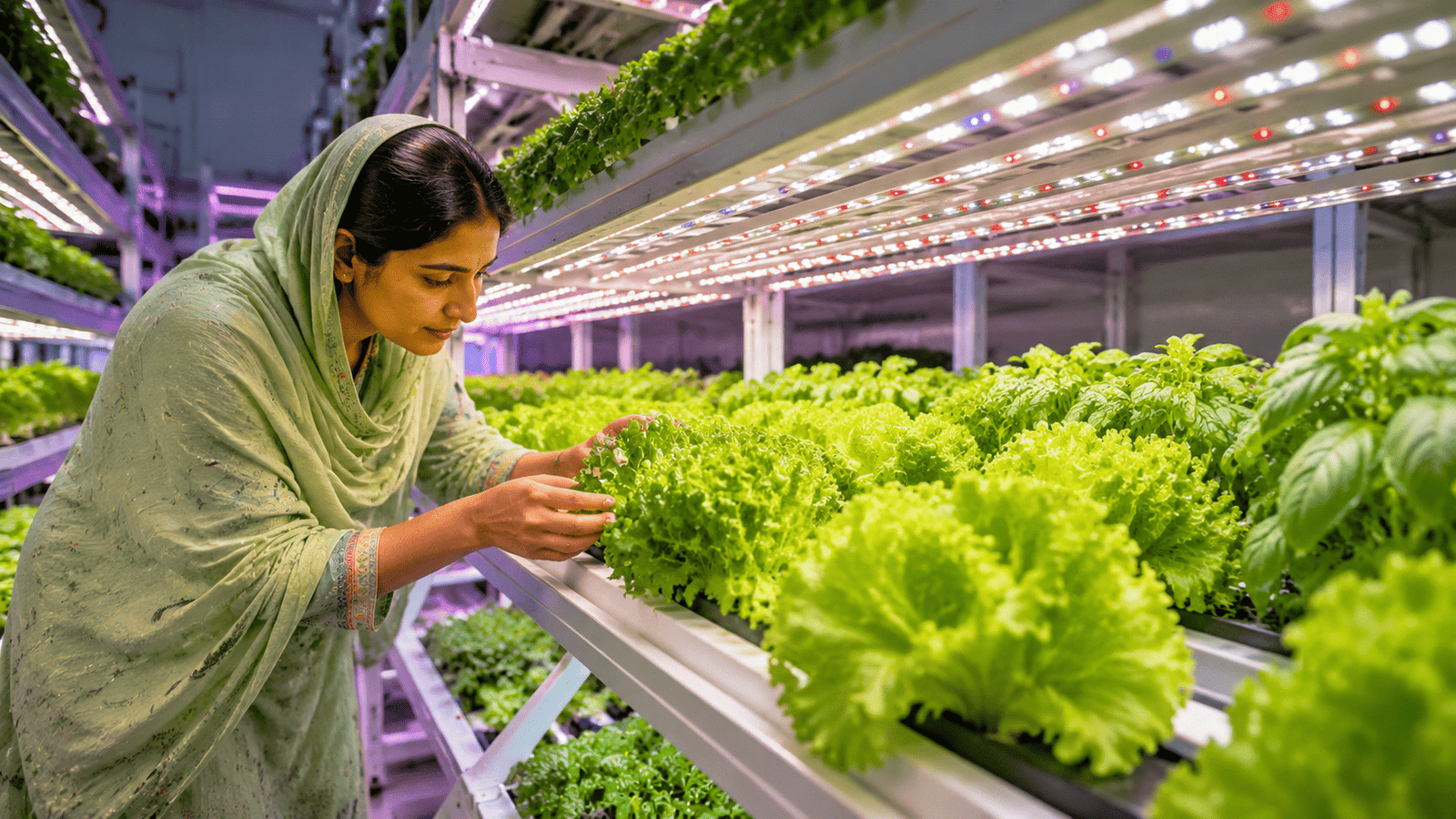
Sensors, automated irrigation, and LED lighting controls are now standard equipment in commercial vertical farming, while computer vision, predictive analytics, and automated harvesting remain earlier-stage technologies that are being piloted and refined rather than universally deployed. The distinction matters for anyone evaluating a facility or vendor: a system built entirely around well-proven monitoring and dosing technology behaves very differently, in both reliability and cost, than one leaning heavily on emerging robotics or AI-driven decision-making.
These technologies are widely deployed in commercial vertical farms today and are generally considered proven rather than experimental.
Temperature, humidity, and CO₂ sensors are standard in essentially every commercial vertical farm, providing the continuous readings that climate control systems act on. pH and EC (electrical conductivity) sensors monitor nutrient solution chemistry and are similarly well established.
Automated dosing pumps that adjust nutrient concentration and pH based on sensor readings are common in facilities of almost any size, replacing manual solution mixing with programmable, repeatable dosing schedules.
Programmable lighting schedules, and increasingly dimmable or spectrum-adjustable LED fixtures, let operators tune light intensity and duration to a specific crop and growth stage without manual fixture changes. See our dedicated lighting guide for how PPFD and DLI factor into these settings.
HVAC systems tied into sensor networks automatically adjust temperature and humidity setpoints, reducing the need for manual climate monitoring around the clock.
These technologies are actively being developed and piloted across the industry, with growing but not yet universal commercial adoption.
Camera systems paired with machine learning models can flag early signs of plant stress, disease, or growth abnormalities faster than routine visual inspection alone. Industry coverage of urban and vertical farming describes AI-powered climate and crop monitoring systems becoming an increasingly central part of facility operations, though adoption levels vary by report and facility type, and these systems generally supplement rather than replace trained growers.
Some facilities use historical sensor and yield data to forecast harvest timing or flag developing problems before they visibly affect the crop. This is an active area of development rather than a fully standardized practice across the industry.
Robotic systems for seeding, transplanting, and harvesting exist and are used at some larger facilities, but full automation of harvest — particularly for delicate crops like leafy greens — remains more limited than automated irrigation or lighting. Many facilities still rely on manual or semi-automated harvesting.
Automated tray movement between growing zones, nurseries, and harvest stations is used in some larger, purpose-built facilities to reduce manual handling, though it represents a significant capital investment that smaller operations often forgo.
Farm management software has moved from generic dashboards toward more integrated systems that track everything from seed inventory through to distribution. Industry coverage of the sector notes a shift toward bespoke, integrated operating systems rather than generic farm management software, reflecting a broader trend toward centralizing data across a facility's full operation rather than managing each system separately.
Cloud-based platforms that aggregate sensor data for analysis are increasingly common, and vendors in the space describe this centralized data view as a growing differentiator between facilities, though the extent of adoption again varies by operator size and region.
| Technology | Maturity | Typical Use |
|---|---|---|
| Environmental sensors (temp, humidity, CO₂) | Mature | Standard in nearly all commercial facilities |
| Automated nutrient dosing | Mature | Common across most facility sizes |
| Programmable LED lighting | Mature | Standard in commercial installations |
| HVAC automation | Mature | Common in commercial facilities |
| Computer vision crop monitoring | Emerging | Growing adoption, not yet universal |
| Predictive yield analytics | Emerging | Active development, selective use |
| Automated harvesting robotics | Emerging | Limited to some larger facilities |
The right automation level for a given facility depends on scale, budget, and staff capability rather than simply adopting whatever is newest. A smaller operation is often better served by mastering the mature technologies — sensors, dosing, lighting schedules — thoroughly before layering on emerging systems that require more specialized troubleshooting when something goes wrong. Larger, well-capitalized facilities are generally better positioned to absorb the learning curve and occasional reliability issues that come with less-established robotics or AI systems.
AI-assisted monitoring and climate control are growing in adoption and are increasingly common in the industry, but adoption levels vary by report and facility, and AI generally supplements rather than replaces trained growers.
Some larger facilities use robotics for seeding, transplanting, or partial harvest automation, but full automated harvesting — especially for delicate leafy greens — remains more limited than established technologies like automated irrigation.
Temperature, humidity, CO₂, pH, and EC sensors are standard across nearly all commercial vertical farms, since they feed directly into automated climate and nutrient dosing systems.
Not necessarily. Mastering mature, well-proven technologies like sensors and automated dosing is often more valuable for a smaller operation than adopting expensive emerging systems before the basics are running reliably.
The industry is moving from generic dashboard tools toward more integrated software that connects seeding, monitoring, and distribution data in one system, though the pace of this shift varies by operator.
Vertical farming technology splits fairly cleanly into a mature core — sensors, dosing, lighting, and HVAC automation — and a faster-moving emerging layer of computer vision, predictive analytics, and robotics that's still being proven out across the industry. Getting the mature layer right is usually the better first investment for most facilities, with emerging technology added deliberately once the basics are reliable rather than adopted as a shortcut around them.
Want the next article in this series delivered straight to your inbox?
Subscribe to Farmers AdvisoryData sources: Grand View Research, Vertical Farming Market Size and Share Report (2026); MarketsandMarkets, Vertical Farming Technology Innovation overview (July 2026); Coherent Market Insights, Vertical Farming Market Share and Opportunities report (2026); industry coverage of automated vertical farming technology stacks (2026). Figures on technology adoption vary by source and facility, and represent general industry reporting rather than a single verified figure. Current as of August 5, 2026.