 Farmers Advisory
Farmers Advisory
Farmers Advisory
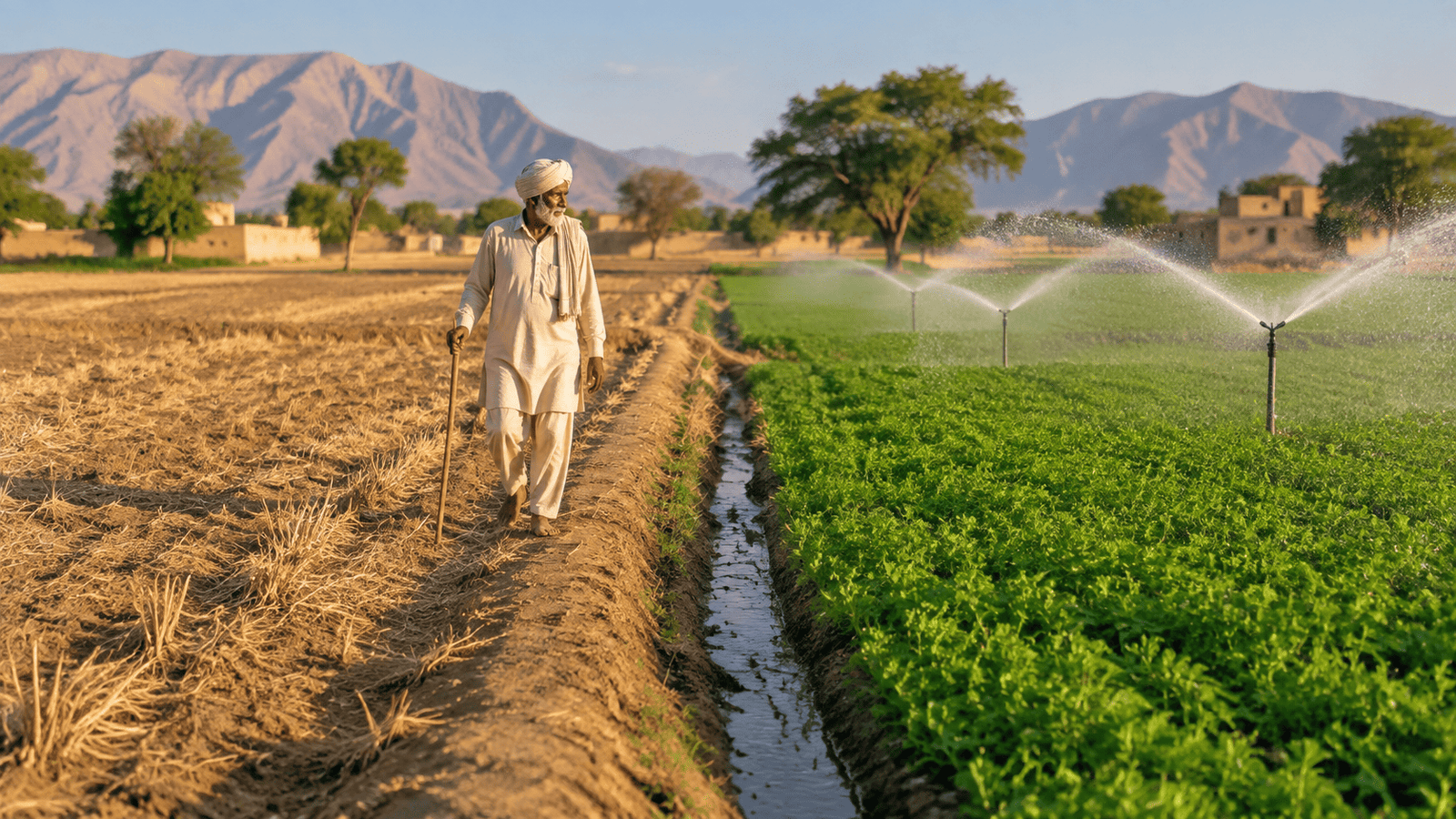
Dryland farming carries a distinct set of recurring problems — not just low rainfall, but the erosion, low soil fertility, pest pressure, and financial risk that tend to follow from it. None of these have a single universal fix, but most respond well to a combination of short-term management and longer-term soil and system changes. This guide works through the major challenges dryland farmers face and the practical responses that have shown up consistently across dry farming regions.
Cause: Dryland regions by definition receive limited annual rainfall, and that rainfall is often unevenly distributed across the growing season rather than arriving steadily.
Impact: Crops face water stress at unpredictable points in their growth cycle, which can reduce germination rates, stunt vegetative growth, or cut yields sharply if stress hits during flowering or grain fill.
Solution: Match planting dates to the typical start of reliable rains rather than the calendar, choose crop varieties suited to the local rainfall pattern and season length, and use soil-moisture-conserving practices like mulching and reduced tillage to stretch available water further.
Prevention: Build a multi-year picture of local rainfall timing and variability, and plan crop choice and planting windows around that pattern rather than around a single good or bad season.
Cause: High temperatures and low humidity, common in many dryland regions, accelerate evaporation from both the soil surface and the crop itself.
Impact: Soil moisture disappears faster than in cooler climates, and crops can suffer heat stress during sensitive stages like flowering, independent of how much total rainfall they received.
Solution: Ground cover through residue or mulch reduces surface evaporation, and windbreaks reduce the wind speed that accelerates moisture loss. Choosing varieties with documented heat tolerance during flowering helps where heat spikes are a recurring local issue.
Prevention: Track which growth stages in your typical planting window overlap with peak local temperatures, and select varieties and planting dates that shift sensitive stages away from that period where possible.
Cause: Bare soil, common between crops or after heavy tillage, is vulnerable to both wind and water erosion, especially on sloped land or during intense rainfall events.
Impact: Erosion removes topsoil — the layer richest in organic matter and nutrients — gradually reducing the field's long-term productive capacity, sometimes irreversibly on severely eroded land.
Solution: Maintain ground cover through residue retention or cover crops where suitable, reduce tillage intensity, and use contour-based field layouts or bunds on sloped land, sized appropriately for the local slope and soil.
Prevention: Avoid leaving soil bare for extended periods between crops, and treat any erosion-control structure as something to be engineered for the specific field's slope and drainage rather than copied from elsewhere.
Cause: Repeated tillage, residue removal, and limited organic inputs gradually deplete soil organic matter, which reduces the soil's ability to absorb and store rainfall.
Impact: More rainfall runs off instead of soaking in, worsening both water shortage and erosion in the same field.
Solution: Reduce tillage, retain residue, and add organic amendments where locally available. These changes build soil organic matter gradually, improving infiltration and water-holding capacity over several seasons.
Prevention: Treat soil organic matter as a long-term asset to protect and build continuously, rather than something to address only after a visible problem appears.
Cause: Weeds compete directly with crops for the limited soil moisture available, and this competition is more damaging in dryland systems than in well-watered ones, where water is less of a limiting factor.
Impact: Uncontrolled weeds can draw down soil moisture before the crop reaches its most water-sensitive growth stages, compounding yield losses that rainfall shortage alone would already cause.
Solution: Control weeds early in the season before they establish deep root systems, use residue or mulch to physically suppress weed germination, and time any tillage-based weed control to avoid excessive additional soil moisture loss.
Prevention: Scout fields regularly early in the season rather than waiting for visible weed pressure, since early intervention costs less moisture and effort than late-season control.
Cause: Drought-stressed crops are often more vulnerable to certain pests and diseases, and some pest populations increase under the hot, dry conditions typical of dryland regions.
Impact: Pest or disease outbreaks on already water-stressed crops can compound yield losses beyond what drought alone would cause.
Solution: Use integrated pest management — crop rotation, resistant varieties, and targeted intervention based on scouting — rather than routine blanket spraying, which adds cost without necessarily matching actual pest pressure.
Prevention: Rotate crops to break pest and disease cycles, and select locally adapted, resistant varieties where reliable data on that resistance is available.
Cause: The combined effect of limited rainfall, soil constraints, and pest/weed pressure tends to produce both lower average yields and greater year-to-year variability than irrigated systems experience.
Impact: Unstable yields make farm income and planning harder to predict, which in turn makes it harder to invest confidently in inputs or improvements.
Solution: Focus on practices that improve yield stability — appropriate variety selection, moisture conservation, and balanced nutrient management — rather than practices aimed only at maximizing yield in a good year. See our companion guide on improving yield in dryland farming for a full breakdown.
Prevention: Build yield expectations and financial planning around a realistic range that accounts for dry years, rather than around best-case results.
Cause: Yield variability directly translates into income variability, and dryland farmers may also face limited access to credit, inputs, or stable markets, particularly in remote regions.
Impact: A single severe drought year can create financial strain that affects a farm's ability to invest in the following season, creating a cycle that's hard to break without external support.
Solution: Diversify crops and income sources where feasible, explore locally available crop insurance or drought-assistance programs, and avoid overcommitting to input-heavy production plans that assume a good rainfall year.
Prevention: Build a financial buffer during good years specifically earmarked for weathering a poor season, and stay informed about locally available support programs before a crisis hits rather than during one.
Cause: Many climate assessments indicate that rainfall variability is increasing in a number of dry and semi-arid regions, alongside rising average temperatures, though the specific local effect varies significantly by region.
Impact: Historical rainfall patterns may become a less reliable guide for planning than they once were, and the frequency or severity of drought years may shift over time in ways that are difficult to predict precisely at a local scale.
Solution: Build farm systems around resilience rather than optimization for a single expected rainfall pattern — soil health, water conservation, and crop diversity all provide a buffer against a wider range of possible future conditions.
Prevention: Stay engaged with local agricultural extension services and climate advisories, which are generally better positioned to track and communicate regional climate trends than farm-level observation alone.
It helps to separate dryland farming responses into two categories. Short-term farm management covers decisions made within a single season — adjusting planting dates, applying mulch ahead of an expected dry spell, or scouting and treating a pest outbreak. These decisions matter and can meaningfully reduce damage in a difficult season, but they reset each year and don't accumulate.
Long-term resilience strategies, by contrast, build capacity over multiple seasons — improving soil organic matter, establishing windbreaks, diversifying the cropping system, and building financial buffers. These take longer to show results but compound over time, generally making the farm better equipped to handle whatever the next difficult season brings, rather than just the specific problem faced this year.
| Short-Term Management | Long-Term Resilience |
|---|---|
| Adjusting this season's planting date to rainfall onset | Building soil organic matter over multiple seasons |
| Emergency mulching ahead of a forecast dry spell | Establishing windbreaks or agroforestry |
| Treating an active pest outbreak | Rotating crops to break pest cycles long-term |
| Drawing on savings during a bad season | Diversifying income sources and crops |
Low and unpredictable rainfall is the root challenge, since it drives most of the other problems dryland farmers face, including soil erosion, weed competition, and unstable yields.
Maintaining ground cover through residue retention or cover crops, reducing tillage intensity, and using contour-based field layouts or bunds sized for the local slope all help reduce erosion.
Weeds compete directly with crops for the limited soil moisture available, and in a water-limited system that competition has a proportionally larger impact on yield than in a well-watered field.
It can, particularly when farmers manage financial risk through crop diversification, realistic yield planning, and available insurance or support programs, rather than relying on a single crop and a best-case yield assumption.
Many climate assessments point to increasing rainfall variability in a number of dry regions, though the specific local impact differs by region — this generally increases the long-term value of resilience-focused practices.
Short-term responses, like adjusting a planting date or emergency mulching, address the current season and reset each year. Long-term resilience strategies, like building soil organic matter or diversifying crops, compound over multiple seasons.
Most dryland farming challenges connect back to the same two root causes — limited rainfall and soil that can't capture and hold what does fall — but they show up as distinct problems in erosion, weed pressure, pest outbreaks, and financial risk. Addressing them well means pairing short-term, in-season responses with longer-term investments in soil health, water conservation, and farm diversification, rather than treating either alone as sufficient.
Want more dryland farming guidance delivered to your inbox every week?
Subscribe to Farmers AdvisoryGeneral guidance drawn from publicly available agricultural extension and research sources, including university extension services, national agricultural research institutions, FAO dryland and drought-risk guidance, and climate assessment summaries from established research institutions. Challenges, impacts, and solutions vary by region, soil, rainfall pattern, and farm management, and figures here represent general patterns rather than guarantees. Current as of August 6, 2026.