 Farmers Advisory
Farmers Advisory
Farmers Advisory
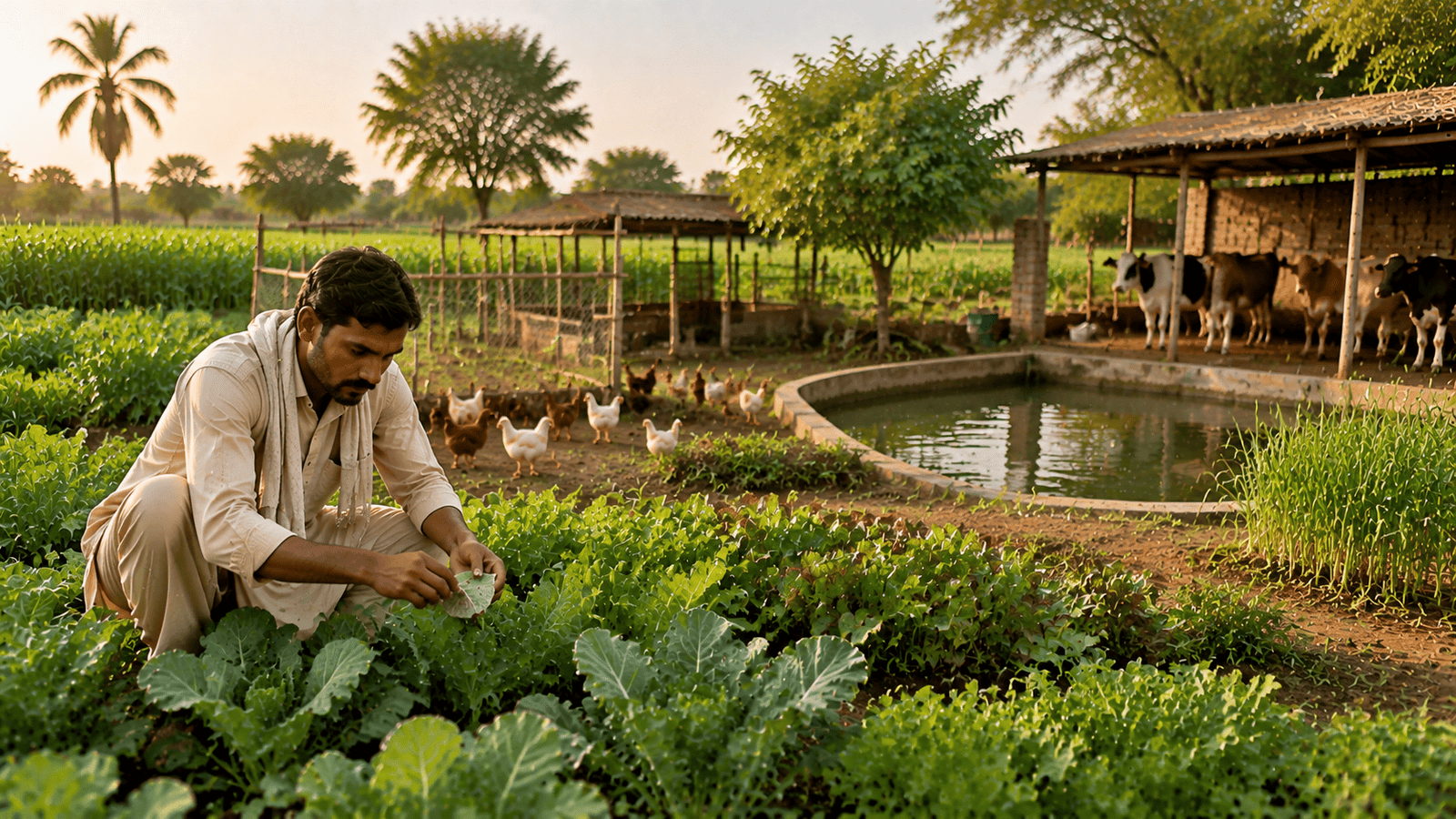
Designing an integrated farming system means matching the components you choose — crops, livestock, poultry, fish — to the land, water, climate, and labor you actually have, then planning how resources will move between them before you build anything. Skipping this planning stage is the most common reason integrated systems underperform: farmers copy a model that worked somewhere else without checking whether their own water supply, soil, or market can support it. This guide walks through the planning process step by step, from initial site assessment to ongoing monitoring.
Every design decision that follows depends on an honest read of what the site offers.
Before adding anything new, list what's already on the farm: existing livestock, current cropping pattern, standing infrastructure (sheds, fencing, a pond or the site for one), available labor, and current market relationships for whatever the farm already sells. A design that builds on existing strengths generally costs less and carries less risk than one that starts from zero on every component.
Select components that fit the assessment from steps 1 and 2, not the other way around. A fish or poultry-fish component requires reliable water and pond-suitable land; a crop-livestock model needs enough fodder-capable land to support the herd size under consideration; a three-way crop-livestock-fish system needs all of the above plus the labor and skill to manage three moving parts at once.
Once components are chosen, map the specific resource flows between them before building anything:
This is also where waste-management safeguards belong: composting schedules for manure, loading limits for pond nutrient inputs, and buffer zones between waste storage and water sources. See our guide on integrated fish-poultry farming techniques for a detailed example of nutrient loading limits in a pond-based system.
| Component Pair | Layout Priority |
|---|---|
| Crop-livestock | Animal housing near both fodder storage and the compost area; fencing between grazing zones and standing crops |
| Crop-fish | Pond positioned to receive field runoff without flooding the crop area; sediment removal access |
| Livestock/Poultry-fish | Housing positioned so manure collection and controlled pond dosing are both practical, with drainage away from drinking water sources |
In general, the shorter the physical distance between a by-product source and its destination, the more likely the resource flow actually happens in practice rather than being skipped due to inconvenience.
Assess your actual land, water, climate, and soil conditions before choosing which components to combine. Component selection should follow the assessment, not the other way around.
Compatibility depends on whether your water supply, land, labor, and market can support each component's needs — a pond-based system, for example, requires reliable water access that not every farm has.
Phasing investment — establishing one component fully before adding another — generally reduces financial and management risk compared to building everything simultaneously.
Very important. Minimizing the distance between where a by-product is generated and where it's used makes it far more likely the resource flow actually happens consistently in daily practice.
Use records of actual feed, manure, yield, and output figures from the first cycle to recalibrate land allocation, herd size, or stocking rates rather than keeping the original plan unchanged.
A workable integrated farming design is the product of assessment first, component selection second, and infrastructure last — reversing that order is where most poorly performing systems go wrong. Map what your land and water can actually support, choose components that fit rather than components that looked good elsewhere, and treat the first production cycle as a calibration period you'll adjust from. For examples of finished models across different component combinations, see our guide to integrated farming system examples.
Want more integrated farming guides delivered to your inbox every week?
Subscribe to Farmers AdvisoryGeneral background: FAO Climate-Smart Agriculture Sourcebook, Module B5 on integrated production systems; FAO Plant Production and Protection Division guidance on managing integrated crop-livestock systems; FAO Fisheries Technical Paper 407, "Integrated Agriculture-Aquaculture." Suitable components, layouts, and stocking levels vary by farm, climate, and local regulation — use this guide as a planning framework and confirm site-specific figures with local extension services. Current as of August 6, 2026.