 Farmers Advisory
Farmers Advisory
Farmers Advisory
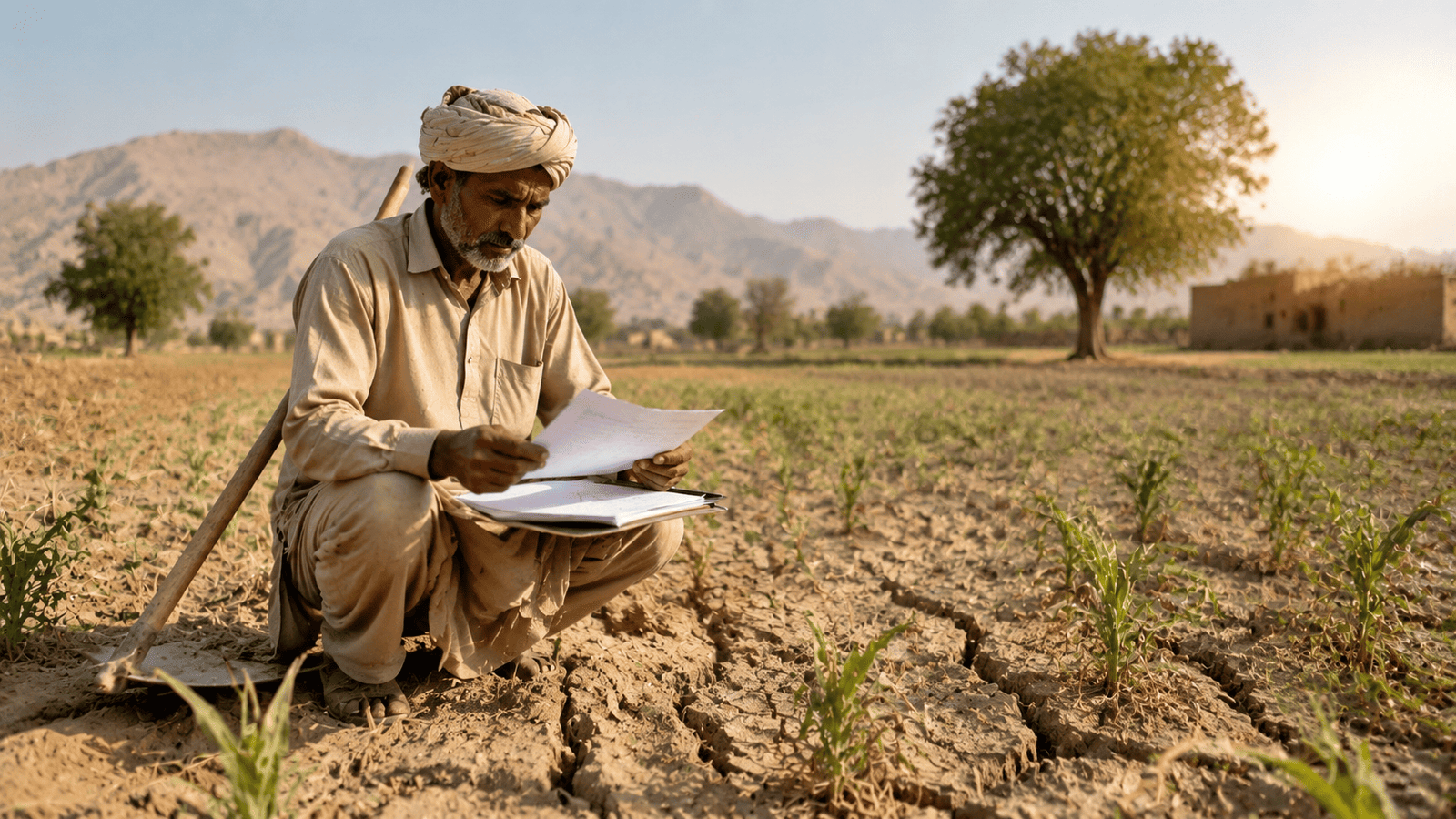
Dryland farming and irrigated farming both aim to grow a crop successfully, but they get there through different water sources, cost structures, and risk profiles. Dryland farming relies entirely on rainfall and stored soil moisture; irrigated farming supplements or replaces rainfall with water delivered from a well, canal, reservoir, or river. Neither approach is universally better — the right one depends on water availability, cost, climate, and what a region can sustain long-term. This guide compares the two systems point by point.
| Factor | Dryland Farming | Irrigated Farming |
|---|---|---|
| Water source | Rainfall and stored soil moisture only | Wells, canals, reservoirs, or rivers, often alongside rainfall |
| Initial investment | Lower — no irrigation infrastructure required | Higher — wells, pumps, pipes, or canal access needed |
| Operating costs | Lower ongoing costs | Higher — energy, water fees, and equipment maintenance |
| Yield variability | Higher, tracks rainfall year to year | Generally lower, more consistent across seasons |
| Drought risk | High — no backup water source | Lower, though dependent on the reliability of the water source itself |
| Crop flexibility | More constrained by rainfall pattern and season length | Wider range of viable crops, including higher-water-demand options |
| Water-source sustainability risk | Low — no extraction from groundwater or rivers | Can be significant if the water source is over-extracted |
The core difference between the two systems is where the crop's water comes from. A dryland farm's entire water budget for the season is set by however much rain falls and how much of it the soil can capture and hold — there is no way to add more if rainfall falls short. An irrigated farm draws water from a separate source — groundwater, a river, a canal system, or a reservoir — which can supplement or entirely replace rainfall, but that source has its own limits: a well can run dry, a canal allocation can be cut, and a reservoir can run low in a multi-year drought.
Dryland farming generally requires substantially lower upfront investment, since there's no well, pump, pipe network, or canal connection to build. Irrigated farming's infrastructure costs vary widely depending on the water source and delivery method — a simple gravity-fed canal connection costs far less to establish than a drilled well with a pump and drip system — but in most cases the investment is meaningfully higher than a comparable dryland operation. Ongoing costs follow the same pattern: irrigated farms carry recurring costs for energy or water fees and irrigation equipment maintenance that dryland farms simply don't have.
In a favorable rainfall year, well-managed dryland yields for a given crop can approach those of an irrigated system for the same crop and variety. The more consistent and meaningful difference is variability: dryland yields swing with rainfall from one season to the next, while irrigated yields are generally more stable because the water supply is, within the limits of the source, controllable. That said, irrigated farming is not risk-free — it carries its own risk if the water source itself becomes unreliable, whether from drought affecting a reservoir, aquifer depletion, or a cut to a canal allocation.
Irrigated farms can generally grow a wider range of crops, including higher-water-demand options that wouldn't survive a dryland season in the same region, because the irrigation schedule can be timed to the crop's needs rather than the other way around. Dryland farm planning works in the opposite direction — the crop and variety have to be chosen to fit the rainfall pattern that already exists, and planting date becomes far more critical since there's no way to correct a poorly timed planting with a supplemental watering.
Irrigated farming typically adds labor and energy demands that dryland farming doesn't carry — operating and maintaining pumps, managing irrigation schedules, and in some systems moving or adjusting irrigation equipment through the season. Energy costs for pumping, particularly from deep groundwater wells, can be a significant recurring expense. Dryland farming's labor and input needs center more on timing field operations to rainfall and managing the conservation practices — tillage, mulching, weed control — that protect stored soil moisture.
These are risks specific to how an irrigation system is managed, not an inevitable outcome of irrigation itself — well-managed irrigation with appropriate water allocation and drainage can operate sustainably for long periods. Similarly, dryland farming is not automatically sustainable in every respect; done without adequate soil conservation, it can still contribute to erosion and soil degradation over time.
Dryland farming tends to fit situations where irrigation water is unavailable, prohibitively expensive to access, or would come at an unsustainable cost to a shared water source, and where local rainfall — while limited — is reliable enough to support at least some crops most years. Irrigated farming tends to fit situations where a stable, legally accessible water source exists, where the investment can be justified by the crop value or yield stability gained, and where the broader water system can support the level of extraction involved without depleting it for other users. Many regions and farms also use a mix — irrigating high-value crops on part of the land while farming other fields under dryland conditions.
Not always. Irrigated farming can produce higher and more stable yields, but the added infrastructure, energy, and water costs can offset that advantage depending on crop value, water cost, and local conditions.
Not automatically. Dryland farming avoids water extraction, but it still requires proper soil conservation to avoid erosion and degradation, and irrigated systems can be managed sustainably with appropriate water allocation and drainage.
Because dryland yields depend directly on that season's rainfall, while irrigated yields are buffered by a controllable water supply that isn't as exposed to year-to-year rainfall swings.
Yes. Many farms irrigate higher-value crops on part of their land while farming other fields under dryland conditions, depending on water access and economics.
No. Irrigated farming reduces drought risk to the crop but not to the farm overall, since the water source itself — a reservoir, aquifer, or canal allocation — can also be affected by prolonged drought.
Dryland and irrigated farming are two different answers to the same underlying question — where does the crop's water come from — and each carries its own cost, risk, and sustainability profile. Dryland farming trades lower cost and no water-extraction footprint for higher yield variability and drought exposure; irrigated farming trades higher investment and resource-management responsibility for more consistent yields and crop flexibility. The better fit depends on local water availability, economics, and long-term resource sustainability rather than either system being categorically superior.
Want practical dryland farming guidance delivered to your inbox?
Subscribe to Farmers AdvisoryGeneral background: Food and Agriculture Organization (FAO), water management and irrigation resources; USDA Economic Research Service, irrigation and farm economics publications; university extension comparisons of rainfed and irrigated cropping systems. Figures and comparisons represent general guidance and vary substantially by region, crop, and water-source reliability. Current as of August 6, 2026.